
Part of the Case Operator Manuals.
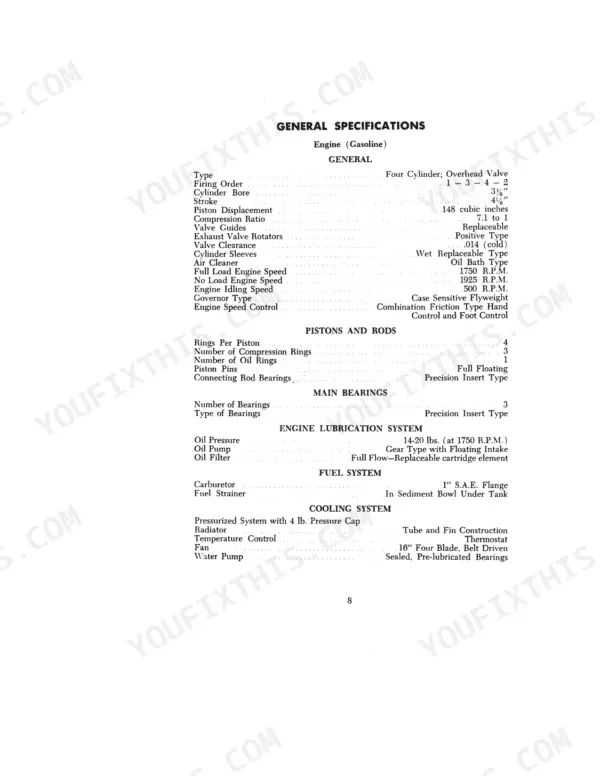
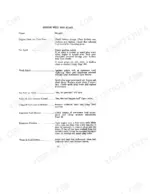
All 130 pages of the Case 440, 441 Operator Manual (OEM #9-9024) focus on one thing: keeping your Wheel Tractor running the way Case built it. Open to a pre-starting checklist written for the seat of a real tractor, a run-in procedure that walks every system through its first hours, and a controls section that puts a name to every instrument in front of you. The lubrication chapter lays out recommended lubricants, crankcase and transmission oil change schedules, and service points for the steering gear and hydraulic system from front axle to final drive. Gap the spark plugs to .025" and hold engine oil pressure between 14 and 20 lbs.; those are the Case factory numbers, not estimates. Your tractor's down. Pull up this bookmarked PDF on any device, tap to the section you need, and get back to work.
Complete the set for your 440, 441
- Repair Manual: Case 430 431 440 441 470 530 531 Tractor Shop Manual
What's Inside This Case 440, 441 Operator Manual
| System | Pages | Key Topics |
|---|---|---|
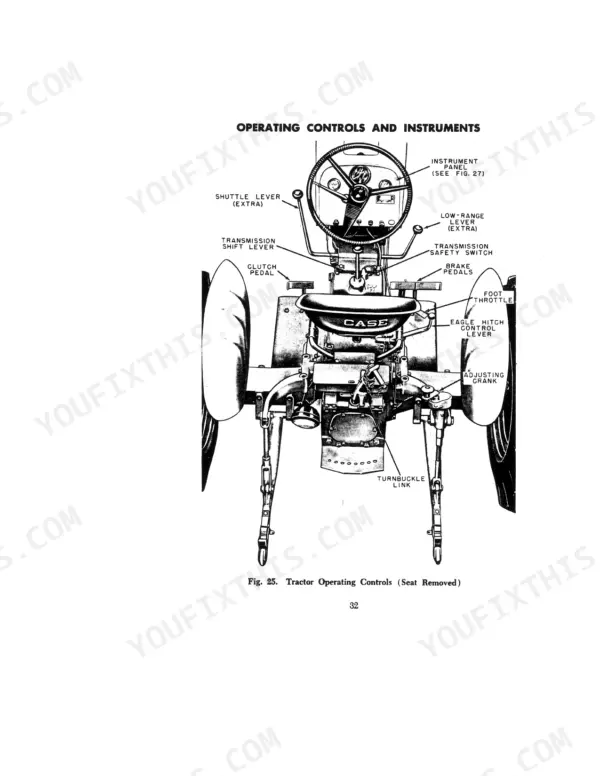
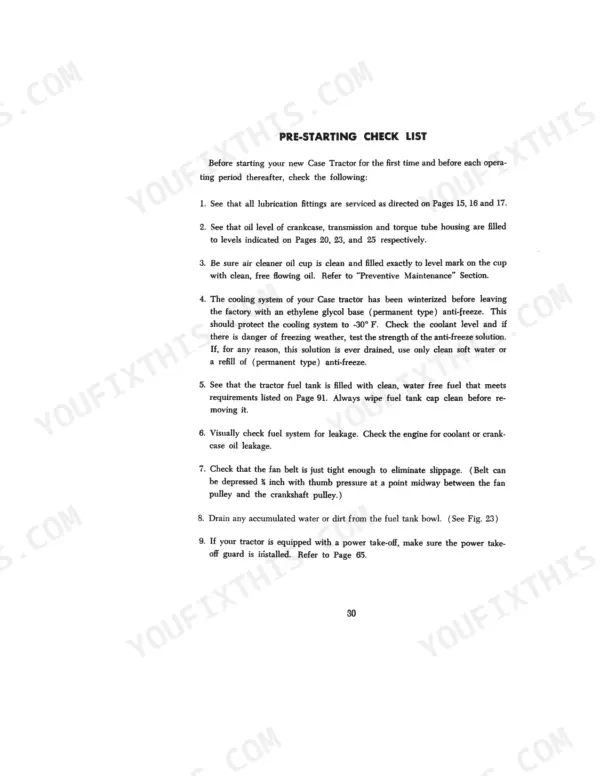
| Operators Manual | 1 | Pre-Starting Check List, Operating Controls and Instruments, Run-In Procedure, Engine Starting Procedure, Stopping Engine, Differential Brakes |
| Safety Information | 2-4 | Safety Decals, Danger, Warning, Caution, Hazard Identification, Personal Injury |
| Model 440-441 Wheel Tractors | 5 | Power-Torque Engine, Heavy-Duty Clutch, Speed Control, Cam and Lever Steering, Differential Brakes, Heavy-Duty Transmission |
| After Delivery Checkup | 6-10 | Foot Clutch, Hand Clutch, Eagle Hitch Hydraulic System, Crankcase Oil, Transmission Oil, Steering Bearing Adjustment |
| To the Purchaser | 11 | - |
| Introduction | 13-15 | Tractor Models Covered, Operator Responsibilities, Purpose of Manual, Before Operating, Delivery Inspection |
| Tractor Serial Numbers | 16 | Tractor Model, Serial Number, Engine Serial Number, Tractor Dash |
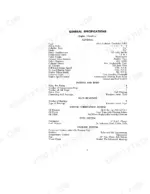
| General Specifications | 17-22 | Engine (Gasoline), Electrical and Ignition System, Constant-Running Power Take-Off, Tire and Wheel Equipment, General Dimensions |
| Lubrication | 23-37 | Recommended Lubricants, Engine Lubrication, Checking Crankcase Oil Level, Crankcase Oil Change, Grille Screen, Steering Gear Housing, Draining Transmission and Final Drive |
| Farm Accidents | 38 | Starting Tractor, Power Take-Off Shields, Drawbar, Hilly Ground Operation, Field Work, Highway Travel |
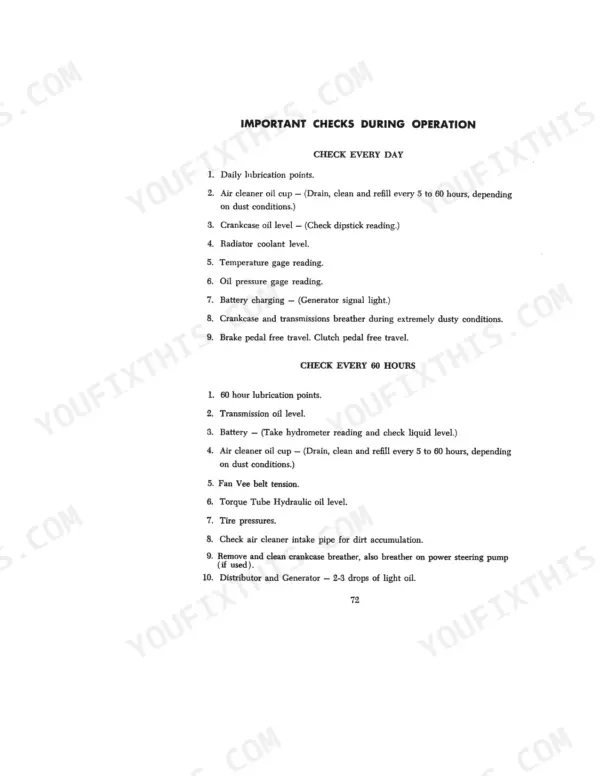
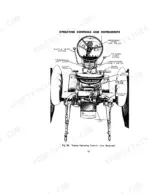
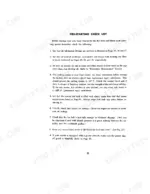
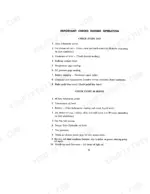
| Operating Instructions | 39-84 | Pre-Starting Check List, Service Access Openings, Operating Controls and Instruments, Instruments, Run-In Procedure, Starting Procedure, Engine Starting Procedure |
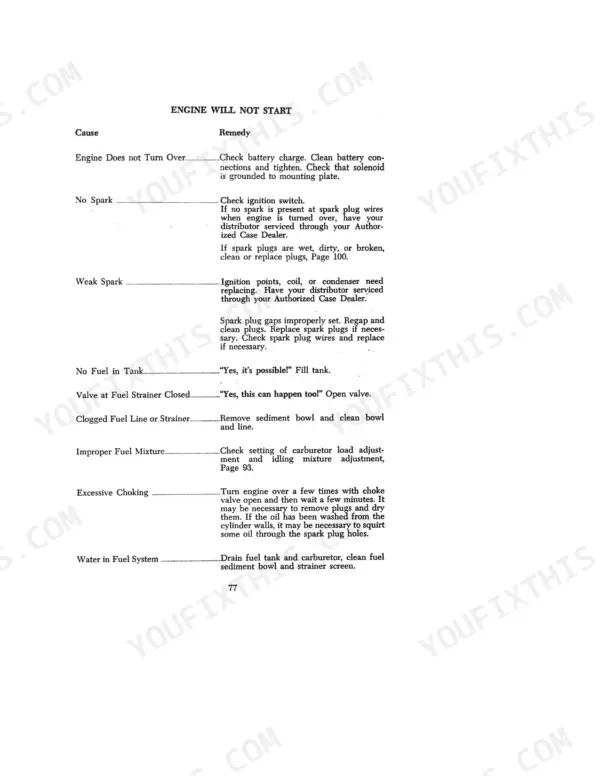
| Service Suggestions | 85-92 | Engine Will Not Start, Engine Misfiring, Engine Continues to Run After Switch Is Turned Off, Automatic Voltage Regulator and Generator, Transmission, Prevent Accidents |
| Preventive Maintenance | 93-118 | Cooling System, Condensation, Pressurized Cooling Systems, Fan Belt, Care of Radiator, Air Cleaner, Fuel Recommendations, Fuel System |
| Warranty | 122-125 | Material and Workmanship, Defective Part, Machine or Implement, Attachment or Equipment, Used Case Products |
| Setups for Upsets | 126 | Speed, Crossing Slopes, Traffic, Misuse, Downhill, Hidden Obstacles |
| Recognize Hazards | 127 | Up Slopes, Ditches, High Hitch, Mud, Loads on Front, Loads on Drawbar |
| Your Safety | 128-129 | Danger, Warning, Caution |
| Case Technical Manuals | 130 | Operators Manuals, Parts Catalogs, Service Manuals, Machine Name, Model, S.N. |
Quick Reference Specifications
| Specification | Value | Page |
|---|---|---|
| Engine Oil Pressure | 14-20 lbs. | p. 18 |
| Cooling System Pressure Cap | 4 lb. | p. 18 |
| Battery Voltage/Amp-Hr | 12 Volt, 50 Amp. Hr. | p. 19 |
| Spark Plug Gap | .025" | p. 19 |
Case 440, 441 Common Problems This Manual Covers
Transmission shifts hard or slips in cold morning starts
Allow the engine to warm up at low idle for at least 5 minutes before moving under load in cold conditions. Transmission oil thickens significantly below freezing and causes hard shifting and clutch slip until it warms. Check the transmission oil level per the lubrication chart on page 23 and verify you are using the grade recommended for your temperature range. Do not force shifts; let the oil circulate.
Manual Section: Lubrication p. 23Engine uses excessive fuel, runs rough under load
Verify the tractor is not overloaded for the gear selected; this is the leading cause of high fuel consumption. Check the choke is fully open once the engine is warm. Inspect for water in the fuel by draining a small sample from the tank into a clear glass. Review carburetor adjustment and governor operation per the service suggestions on page 85. Use only clean, fresh gasoline; stale or low-octane fuel causes both rough running and poor economy.
Manual Section: Engine Uses Too Much Fuel p. 85Frequently Asked Questions
How do you fix case 440 three-point hitch won't raise or lower after moving to field?
Check the hitch control knob position before anything else. There are two knobs near the seat: one adjusts seat spring tension, the other is the transport lock for the hitch. Rotate the hitch control knob fully counterclockwise to release the transport lock. Verify hydraulic fluid level at the sight glass on page 91 and top off if below the operating range. p. 91
How do you fix engine won't start or cranks slowly, no spark at plug?
Check the fuel shutoff valve is open and the choke is set correctly for temperature. Pull and inspect the fuel strainer for debris; a clogged strainer is the most common no-start cause. Verify spark plug gap is set to .025" (Champion D16 or AC-86 equivalent). If the engine cranks weakly, check battery terminals for corrosion; the 12V 50 Amp-Hr battery should hold charge above 12V under load. p. 87
How do you fix engine overheating during field work, temperature climbing into red?
Stop and let the engine cool before opening the cooling system. Check coolant level when cold; the pressurized cap is rated 4 lb. and should not be opened hot. Inspect the radiator and grille screen for packed debris and clean with compressed air. Verify the fan belt is not cracked or slipping. If overheating persists at normal load, check ignition timing per the service suggestions starting on page 85. p. 89
How do you fix hydraulic loader function restricted or one direction won't move?
Inspect each hydraulic coupler at the loader connection points. A coupler that is 90% seated but not fully locked will block or restrict oil flow to that function. Push each coupler firmly until the collar clicks. Check hoses for kinks at the boom pivot points. Verify hydraulic fluid is at the correct level; low fluid causes erratic or weak function on one side before both sides are affected. p. 91
How quickly can I access this manual after buying?
Instant PDF download. You get the full 130-page searchable Operator Manual immediately after payment. Open it on your laptop, tablet, or phone right in the shop.
Are there any print restrictions on this manual?
Yes. The PDF has no DRM restrictions, so print any page or section you need for your shop. Works with any standard printer.






Reviews
There are no reviews yet.