

Part of the John Deere Repair Manuals.
This is the complete John Deere factory diagnostic and repair manual (TM2138) for the 3120, 3320, 3520 and 3720 compact utility tractors. Across 1,849 pages it walks a technician through every major system: diagnosing the Yanmar diesel engine, tracing North American and European wiring schematics (including MY08 and MY13 harness layouts), repairing the mechanical power train and eHydro hydrostatic transmission, servicing the final drive and PTO, testing and repairing the hydraulic system, and overhauling the steering and brakes. This is the same material a John Deere dealer technician uses, with engine torque values, hydraulic test pressures, wear limits, and wiring diagrams called out so every repair is done to spec.
What's Inside This John Deere 3120, 3320, 3520, 3720 Manual
| System | Pages | Key Topics |
|---|---|---|
| Safety | - | |
| Specifications and Information | Metric and Inch Bolt Torque Values, O-Ring Fitting Service, Gasket Sealant, Fuel and Lubricant Specifications, Engine Oil Viscosity Grades, Coolant Requirements, Serial Number Locations | |
| Engine | Yanmar 3TNV84/3TNV88/3TNV84T/3TNV84HT Specs, Component Location, Fuel System Operation, Cooling System, Lubrication, Turbocharger, Engine Diagnostics, Compression Test, Valve Adjustment, Fuel Injection Pump Timing, Engine Repair and Rebuild | |
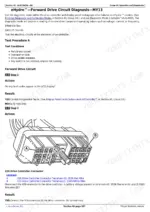
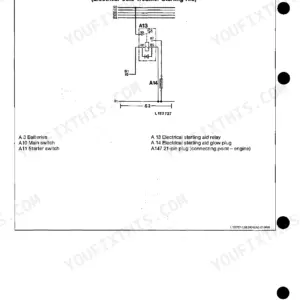
| Electrical System (Na) | North American Schematics and Harnesses, MY08 Harness Layouts, MY13 Harness Layouts, Common Schematics, Operation and Diagnostics, Tests and Adjustments, Display Panel Tests, Servicegard Tests, Service Advisor, Electrical Repair | |
| Electrical System (Eec) | European Schematics and Harnesses, MY08 Harness Layouts, MY13 Harness Layouts, Common Schematics, Eec Troubleshooting, Operation and Diagnostics | |
| Power Train (Mechanical) | Prt Specifications, Component Location, Theory of Operation, Diagnostics, Troubleshooting, Tests and Adjustments, Mechanical Power Train Repair | |
| Power Train (Hydrostatic) | eHydro Specifications, Hydrostatic Schematics, Theory of Operation, Hydrostatic Diagnostics, Troubleshooting, Tests and Adjustments, Hydrostatic Transmission Repair | |
| Power Train (Final Drive and PTO) | Final Drive Specifications, Component Location, Theory of Operation, Final Drive Diagnostics, Troubleshooting, Tests and Adjustments, Final Drive Repair, PTO Theory of Operation, PTO Repair | |
| Hydraulic System | Hydraulic Specifications, Component Location, Hydraulic Schematics, Theory of Operation, Hydraulic Diagnostics, Tests and Adjustments, Hydraulic System Repair | |
| Steering | Steering Specifications, Component Location, Theory of Operation, Steering Diagnostics, Tests and Adjustments, Steering Repair | |
| Brakes | Brake Specifications, Component Location, Theory of Operation, Brake Diagnostics, Tests and Adjustments, Brake Repair | |
| Miscellaneous | Additional Specifications, Miscellaneous Repair Procedures |
Quick Reference Specifications
| Specification | Value | Page |
|---|---|---|
| 3120 | ||
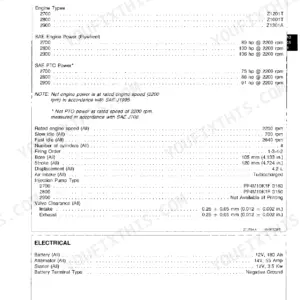
| Engine - Model 3120 | Yanmar 3TNV84, 3-cylinder, 4-cycle diesel, 1.496L (91.3 cu in), bore 84 mm, stroke 90 mm | |
| 3320 | ||
| Engine - Model 3320 | Yanmar 3TNV88, 3-cylinder, 4-cycle diesel, 1.642L (100.2 cu in), bore 88 mm, stroke 90 mm | |
| 3520 | ||
| Engine - Model 3520 | Yanmar 3TNV84T (turbocharged), 3-cylinder, 4-cycle diesel, 1.496L (91.3 cu in) | |
| 3720 | ||
| Engine - Model 3720 | Yanmar 3TNV84HT (high-output turbo), 3-cylinder, 4-cycle diesel, 1.496L (91.3 cu in) | |
| All models | ||
| Engine Torque at Rated Speed (2600 rpm) | 3120: 75.4 N.m (55.6 lb-ft) / 3320: 83.5 N.m (61.6 lb-ft) / 3520: 96.4 N.m (71.1 lb-ft) / 3720: 114.3 N.m (84.3 lb-ft) | |
| Rated Engine Speed | 2600 +/- 10 rpm | |
| Slow Idle Speed | 1000 +/- 50 rpm | |
| Cooling System Capacity | 5.3L (5.6 qt) approximate | |
| Engine Oil Capacity (with Filter) | 4.3L (4.5 qt) approximate | |
John Deere 3120, 3320, 3520, 3720 Common Problems This Manual Covers
PTO does not engage on eHydro models
Start with a bench test of the PTO solenoid (LVA13065 or model-specific equivalent) by applying 12V and listening for a click and valve opening. A failed solenoid is the most common cause and is straightforward to replace. If the solenoid passes, the fault is in the PTO valve block or internal check valve in the hydrostatic assembly. Section 80 covers PTO theory of operation and the full disassembly, inspection and repair sequence so you can isolate the exact failure point before replacing components.
Manual Section: Power Train (Hydrostatic and Final Drive)Hydrostatic drive is sluggish or will not move the tractor
Check the hydrostatic transmission fluid level and condition first - contaminated or aerated fluid is a common cause of sluggish response. If the fluid is clean, perform the pressure tests in Section 70, Group 30 to confirm whether the fault is in the charge pump, the main pump, or the control valve block. Low charge pressure points to the charge pump; low working pressure with normal charge points to the main pump or valve block. Address the confirmed failure before re-filling the system.
Manual Section: Power Train (Hydrostatic)Coolant leak from engine area on 3520 models
On 3520 tractors with the turbocharged 3TNV84T engine, coolant leaks most often trace to deteriorated hoses at the cold-start advance circuit or a weeping water pump seal. Drain the system and pressure-test the cooling circuit as described in Section 30 to locate the source before replacing parts. Cooling system capacity is 5.3L (5.6 qt); always refill with approved coolant and run the engine to operating temperature to check for additional weeps at hose clamps and the thermostat housing.
Manual Section: EngineEngine will not start or stalls after running out of fuel
These tractors use a self-bleeding fuel system that normally purges air without manual intervention. If the system will not self-prime after running dry, open the air bleed screw on the fuel strainer/water separator two to three turns, wait for a steady stream of fuel with no bubbles, then close the screw. Turn the key to ON (not START) and let the electric transfer pump run for 30 seconds to push air out of the secondary filter and injection pump, then attempt to start. The full fuel system bleeding procedure is in Section 30, Group 30.
Manual Section: EngineFrequently Asked Questions
What engines are in the John Deere 3120, 3320, 3520 and 3720 compact tractors?
The 3120 uses a naturally aspirated Yanmar 3TNV84 (1.496L, 84mm bore), the 3320 a larger Yanmar 3TNV88 (1.642L, 88mm bore), the 3520 a turbocharged 3TNV84T, and the 3720 a high-output turbo 3TNV84HT. All are 3-cylinder, 4-cycle direct-injection diesels with a 90mm stroke and a rated speed of 2600 rpm. Engine specs are in Section 30, Group 05.
Why does the PTO stop engaging on the eHydro models?
The most common cause on eHydro-equipped 3120, 3520 and 3720 tractors is a failed PTO solenoid on the hydrostatic valve assembly. The solenoid can be bench-tested with 12V for a click and open response. If the solenoid checks out, move to the PTO valve block itself. Section 80 covers PTO theory of operation and the full repair procedure so you can isolate whether the fault is electrical or hydraulic before ordering parts.
What are the engine torque specs for these tractors?
Torque at rated speed (2600 rpm) is 75.4 N.m (55.6 lb-ft) for the 3120, 83.5 N.m (61.6 lb-ft) for the 3320, 96.4 N.m (71.1 lb-ft) for the 3520, and 114.3 N.m (84.3 lb-ft) for the 3720. Maximum torque on all models occurs at 1560 rpm. Full repair torque values for fasteners, injector lines and pump mounting are in Section 30.
What are the oil and coolant capacities for these tractors?
All four models share the same cooling system capacity of approximately 5.3L (5.6 qt) and an engine oil capacity with filter of approximately 4.3L (4.5 qt). Use John Deere Plus-50 II or equivalent API CJ-4 oil for the engine. Section 20, Group 10 gives the full fuel, engine oil and hydraulic fluid specifications including viscosity grades for temperature ranges.
Does this manual cover wiring diagrams and electrical schematics?
Yes. Section 40 covers North American machines with full schematics for the original production harnesses plus separate MY08 (Model Year 2008) and MY13 (Model Year 2013) harness layouts and common schematics. Section 50 provides the same coverage for European EEC machines. Both sections include operation and diagnostics, tests and adjustments, display panel tests, SERVICEGARD and Service ADVISOR procedures, and complete electrical repair instructions.
Is this John Deere 3120 manual a PDF I download?
Instant PDF download (97 MB). You get the full 1849-page searchable Diagnostic and Repair immediately after payment. Open it on your laptop, tablet, or phone right in the shop.
Can I print specific sections of this John Deere 3120 Diagnostic and Repair?
Yes. The PDF has no DRM restrictions, so print any page or section you need for your shop. Works with any standard printer.