
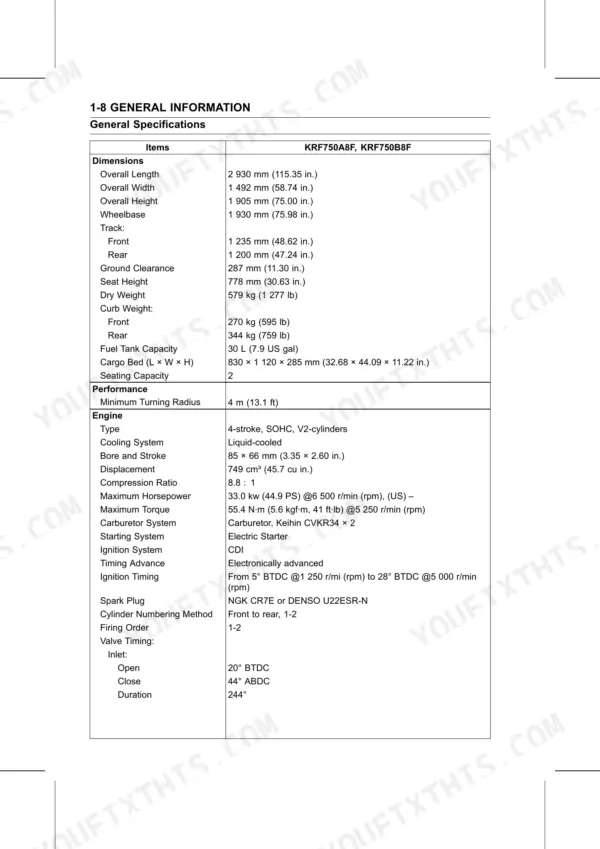
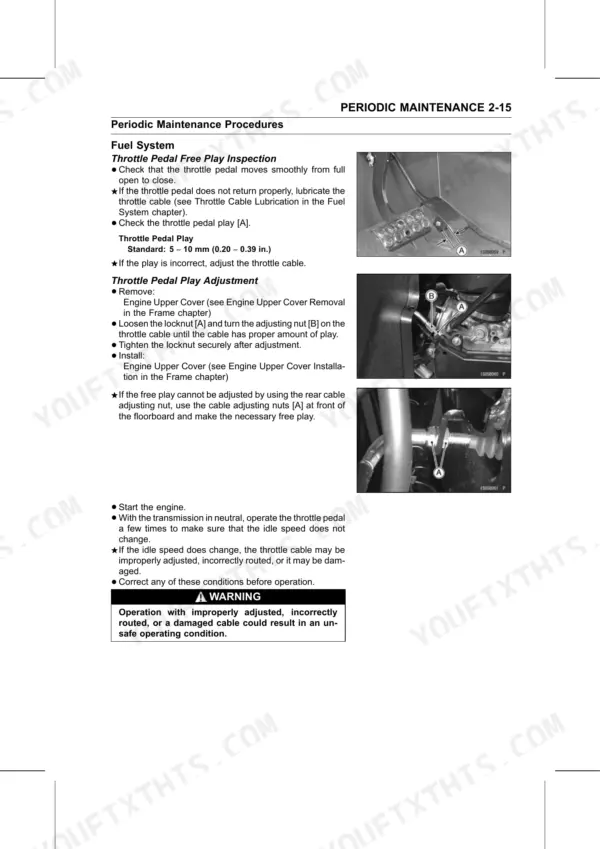
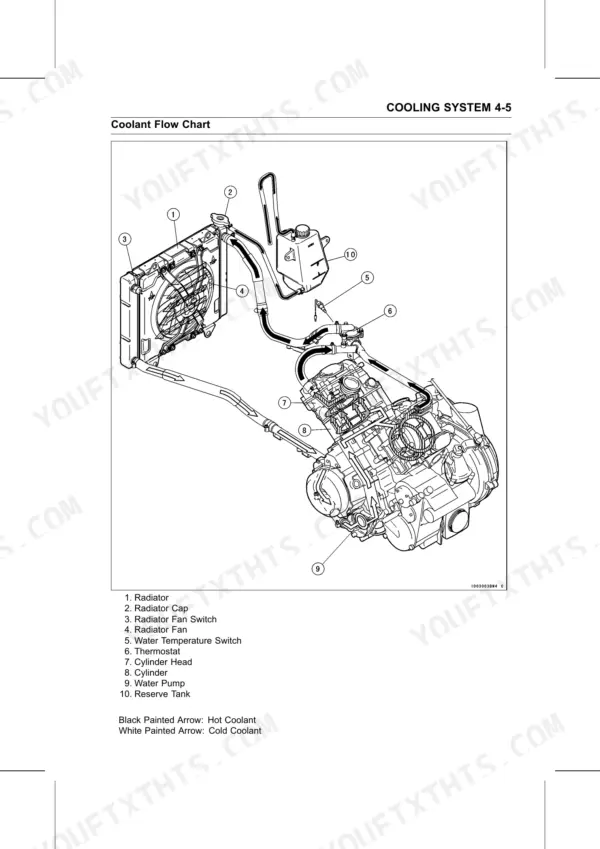
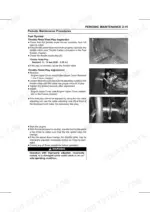
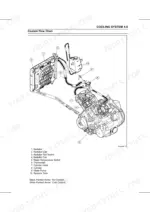
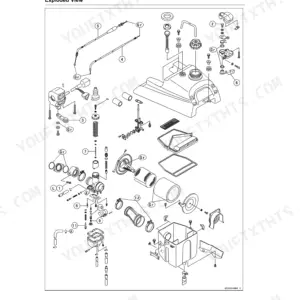
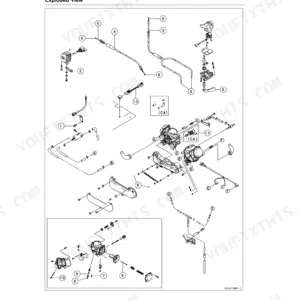
This is the Kawasaki factory service manual for the 2008 Teryx 750 4x4 recreation utility vehicle, publication 99924-1397-01, running to 575 pages. It is written for trained mechanics but carries enough detail for owners who service their own machine.
The manual covers the full vehicle: general information and periodic maintenance, the fuel and cooling systems, engine top end, the CVT converter system, engine lubrication, engine removal, crankshaft and transmission, wheels and tires, final drive, brakes, suspension, steering, frame, the electrical system, and a troubleshooting appendix.
With this PDF you can set spark plug gap and idle speed, measure and replace the CVT drive belt, torque wheel nuts and pulley bolts, bleed the brakes, test the charging system, and work through the appendix to trace hard starting, overheating, or converter faults. Torque values and service limits are listed throughout.
What's Inside This Kawasaki Teryx 750 4x4 Manual
| System | Pages | Key Topics |
|---|---|---|
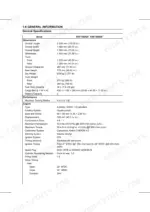
| General Information | 7-17 | Before Starting to Perform an Inspection Service or Carry Out a (Battery Ground, Edges of Parts, Solvent, Cleaning Vehicle Before Disassembly, Arrangement and Cleaning of Removed Parts, Storage of Removed Parts, Replacement Parts, Assembly Order, Tightening Sequence, Tightening Torque, Force, Gasket, O-Ring, Liquid Gasket, Locking Agent, Press, Ball Bearing and Needle Bearing, Oil Seal, Grease Seal, Circlips, Cotter Pins, Lubrication, Direction of Engine Rotation, Electrical Wires, Instrument) |
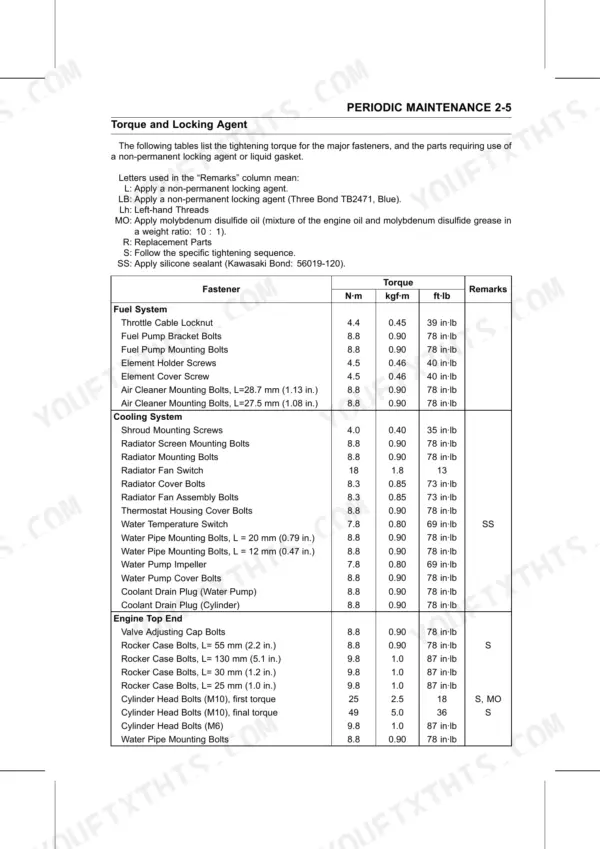
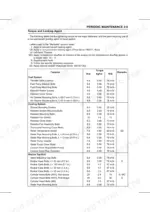
| Periodic Maintenance | 18-69 | Scheduled Maintenance Must Be Done in Accordance with This C, Following Tables List the Tightening Torque for the Major Fa, Inside Circlip Pliers: |
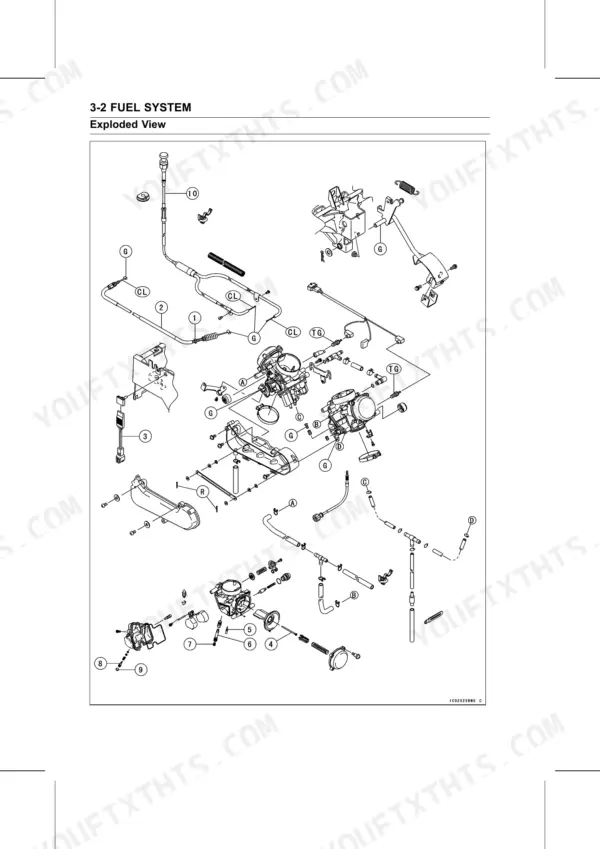
| Fuel System | 70-103 | Fuel Level Gauge: |
| Cooling System | 104-122 | Permanent Type Antifreeze Is Used As a Coolant to Protect the Co, Bearing Driver Set: |
| Engine Top End | 123-169 | Inside Circlip Pliers:, Camshaft Chain Tensioner Removal (Camshaft Chain Tensioner Installation) |
| Converter System | 170-196 | Outside Circlip Pliers: |
| Engine Lubrication System | 197-210 | Oil Pressure Gauge, 10 kgf/cm :, Warning (Oil Level Inspection, Engine Oil Change, Oil Filter Change, Oil Screen Removal, Oil Screen Cleaning, Oil Pressure Measurement) |
| Engine Removal/Installation | 211-216 | Engine Removal (Engine Installation) |
| Crankshaft/Transmission | 217-245 | Outside Circlip Pliers:, Crankcase Disassembly (Crankcase Assembly) |
| Wheels/Tires | 246-260 | Rotor Puller, M16/M18/M20/M22 × 1.5:, Toe-In Is the Amount That the Front Wheels Are Closer Together I (Toe-In Adjustment) |
| Final Drive | 261-353 | Dummy Page, Bearing Puller: |
| Brakes | 354-374 | Warning (Front Brake Fluid Recommendation, Front Brake Fluid Level Inspection, Front Brake Fluid Change, Brake Line Air Bleeding) |
| Suspension | 375-395 | Inside Circlip Pliers: |
| Steering | 396-408 | Outside Circlip Pliers: |
| Frame | 409-459 | Seat Removal (Installation, Disassembly, Assembly, Belt Removal, Belt Installation) |
| Electrical System | 460-532 | Ignition Switch [a], Bearing Driver Set:, There Are a Number of Important Precautions That Should Be Taken |
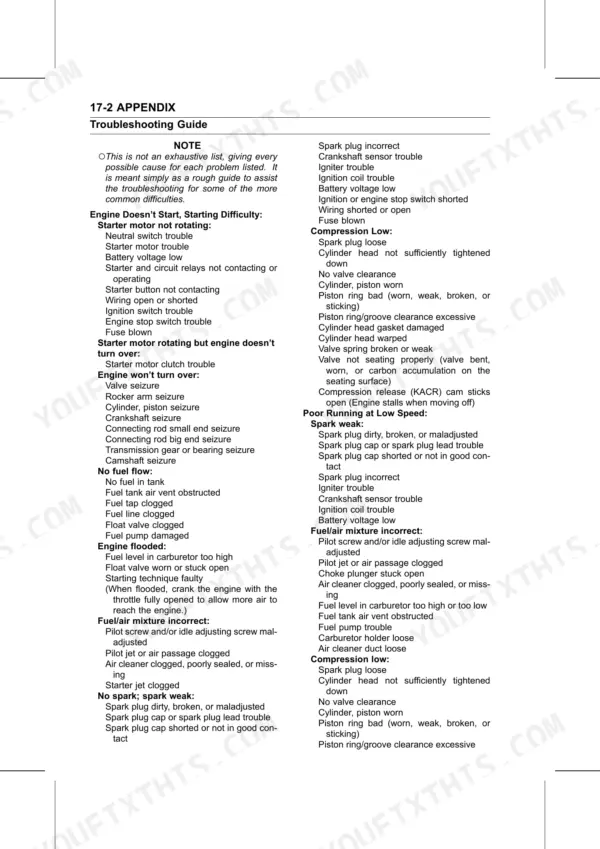
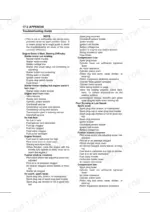
| Appendix | 533-575 | Note (Engine Doesn't Start, Starting Difficulty:, Poor Running at Low Speed:, Poor Running or No Power at High Speed:, Overheating:, Over Cooling:, Converter Operation Faulty:, Gear Shifting Faulty:, Abnormal Engine Noise:, Abnormal Drive Train Noise:, Abnormal Frame Noise:, Exhaust Smokes Excessively:, Handling and/or Stability Unsatisfactory, Brake Doesn't Hold, Kawasaki Engine Brake Control System Malfunction:, Battery Discharged:, Battery Overcharged:) |
Quick Reference Specifications
| Specification | Value | Page |
|---|---|---|
| Wheel Nuts Torque | 137.3 N·m (14 kgf·m, 101 ft·lb) | p. 50 |
| Converter Cover Bolts Torque | 8.8 N·m (0.90 kgf·m, 78 in·lb) | p. 23 |
| Drive Belt Width Standard | 30.0 ∼ 30.6 mm (1.181 ∼ 1.205 in.) | p. 29 |
| Drive Belt Width Service Limit | 28.3 mm (1.114 in.) | p. 29 |
| Battery Type | Sealed Battery | p. 471 |
| Battery Capacity (CA Model) | 12 V 12 Ah | p. 471 |
| Spark Plug Gap Standard | 0.7 ∼ 0.8 mm (0.028 ∼ 0.031 in.) | p. 29 |
| Spark Plugs Torque | 13 N·m (1.3 kgf·m, 113 in·lb) | p. 468 |
| Air Cleaner Element Oil | High-quality foam air filter oil | p. 29 |
| Air Cleaner Mounting Bolts Torque | 8.8 N·m (0.90 kgf·m, 78 in·lb) | p. 22 |
| Pad Lining Thickness Standard | 3.9 mm (0.15 in.) | p. 30 |
| Pad Lining Thickness Service Limit | 1 mm (0.04 in.) | p. 30 |
Kawasaki Teryx 750 4x4 Common Problems This Manual Covers
Hard starting or stalling
An engine that cranks but will not fire, or dies right after starting, usually points to fuel delivery or ignition. The fuel system section covers throttle and idle setup, the fuel level gauge, and fuel hose inspection.
Manual Section: Fuel System p. 70Engine noise or knocking
Knocking or unusual noise can mean valve train wear or low oil supply. The engine top end section covers the camshaft chain tensioner, cylinder head, and valve service.
Manual Section: Engine Top End p. 123Overheating under load
Loss of power and high temperature in mud or towing use points to the cooling system. This section covers the coolant, radiator cap relief pressure, and cooling checks.
Manual Section: Cooling System p. 104CVT belt slipping or hesitation
Hesitation, slipping, or rough launch usually traces to a worn drive belt or clutch contamination. The converter system section covers belt measurement and the drive and driven pulleys.
Manual Section: Converter System p. 170Electrical faults and blown fuses
Intermittent accessories, dead circuits, or blown fuses come back to grounds and connectors. The electrical system section covers the ignition switch, charging, and wiring checks.
Manual Section: Electrical System p. 460Weak braking or worn pads
Longer stops mean the pads are near the limit. The brakes section covers pad inspection, the fluid change, and bleeding the brake lines.
Manual Section: Brakes p. 354Frequently Asked Questions
Which vehicle does this manual cover?
It is the Kawasaki service manual for the 2008 Teryx 750 4x4 recreation utility vehicle, publication 99924-1397-01. It applies to the US and Canada models noted in the manual.
Where do I find torque specifications?
The periodic maintenance section lists the tightening torque tables for the major fasteners, including wheel nuts and CVT pulley hardware, so you can torque parts to the factory figures. p. 18
Does it cover the CVT drive belt?
Yes. The converter system section covers the drive belt, including the standard and service limit widths and the drive and driven pulley service. p. 170
What about engine oil service?
The engine lubrication system section covers the oil and filter change, oil screen cleaning, and oil pressure measurement for the 2.3 L (2.4 US qt) dry capacity engine. p. 197
How quickly can I access this manual after buying?
Checkout triggers an instant download of the searchable 575-page PDF. Open it on a laptop, tablet, or phone and take it straight to the shop floor.
Can I print pages of this manual for my own shop?
Yes. Print a single page or a chapter for your own shop use, on letter or A4.
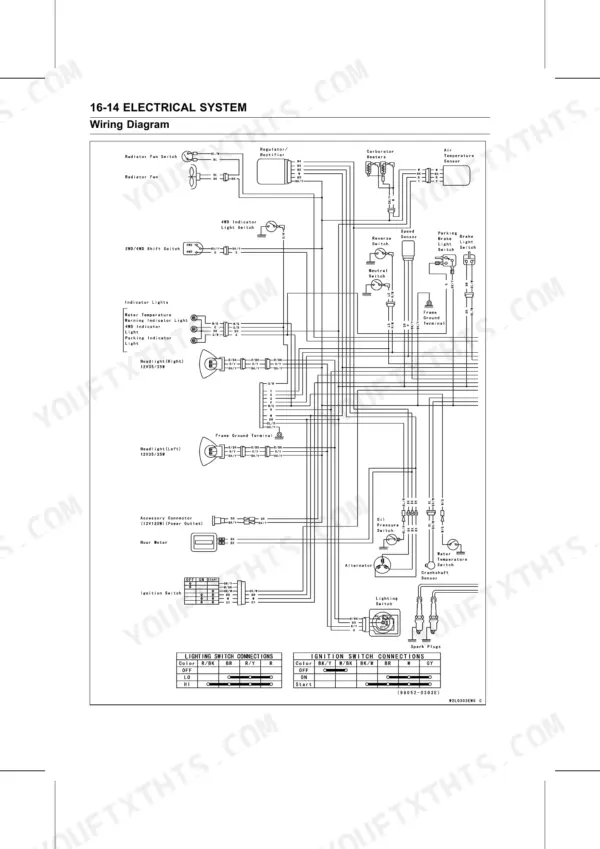
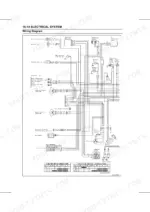
Can I find wiring schematics in this Kawasaki Teryx 750 4x4 manual?
Complete wiring diagrams are included, covering all electrical circuits, harness routing, and connector pinouts for the Kawasaki Teryx 750 4x4.

Reviews
There are no reviews yet.