


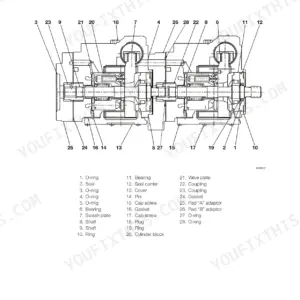
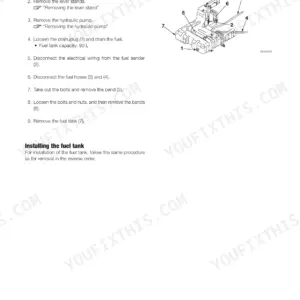
This is the factory service manual for the Mustang 332, 342, 442, and 552 skid steer loaders, published under part number 087-00184. Across 130 pages it documents the whole machine: the hydraulic and hydrostatic systems, the wheel drive and chain case, the engine and fuel system, and the electrical system, with separate model specifications for all four loaders.
Owners and independent mechanics can use it to diagnose a loader that will not move, trace weak lift or tilt hydraulics, rebuild a hydrostat, adjust drive chains and brakes, and work through electrical faults. It includes maintenance intervals, standard torque values, pressure checks, and step-by-step troubleshooting charts.
You receive it as a downloadable PDF that opens on a phone, tablet, or computer, and you can print the pages you need for the shop.
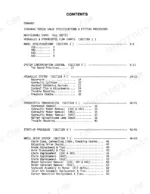
What's Inside This Mustang 332, 342, 442, 552 Manual
| System | Pages | Key Topics |
|---|---|---|
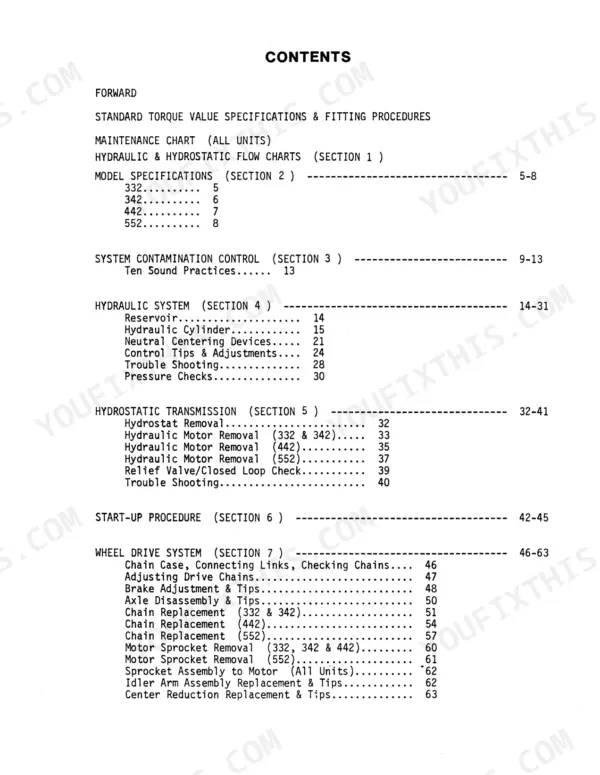
| Forward | 3-6 | Manual Purpose and Scope, Reference to Operator's Manual, Directional References |
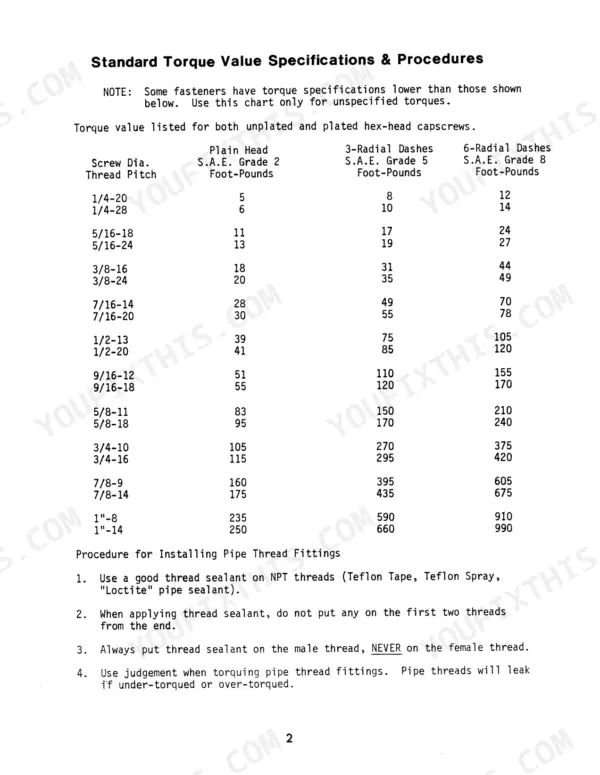
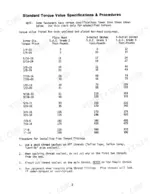
| Standard Torque Value Specifications & Fitting Procedures | 7-8 | Hex-Head Capscrew Torque Values |
| Maintenance Chart | 9-10 | Maximum Hourly Interval Components Service Required Capacity or Measurement (Air Cleaner, Cooling System, Engine Crankcase, Loader Pivot Pins, Fuel Filter Bowl, Radiator, Belt, Drive Shaft Splines, Tires, Brakes, Spark Arrestor Muffler, Engine Oil and Filter, Engine Cooling Fins, Battery, Engine Breaker, Points & Plug, Hydraulic Filter, Drive Chains, Universal Joints, Engine, Liquid Cooled Engine, Fuel Filter, Hydraulic Reservoir, Mesh Screen, Chain Case) |
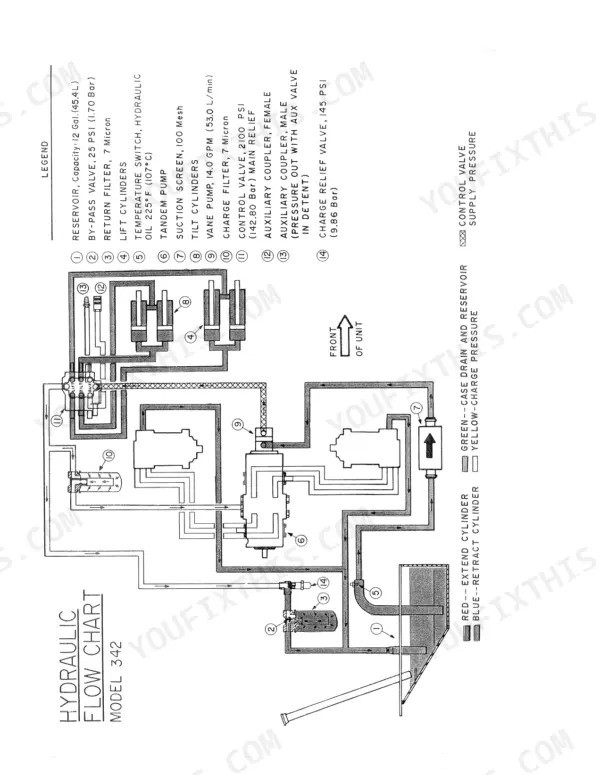
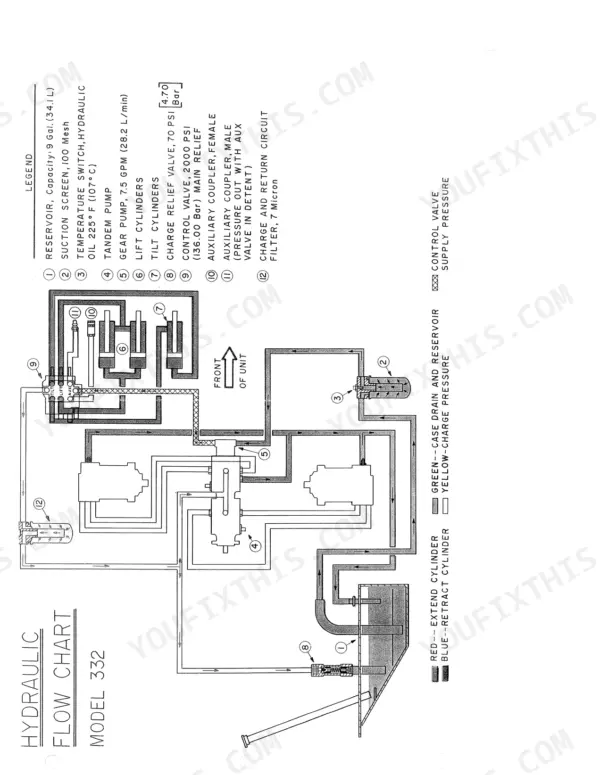
| Hydraulic & Hydrostatic Flow Charts | 11-26 | Hydraulic Flow Chart Model 332 (Reservoir, Capacity: 9 Gal., Suction Screen, 100 Mesh, Temperature Switch, Hydraulic Oil 225°F, Tandem Pump, Gear Pump, 7.5 GPM, Lift Cylinders, Tilt Cylinders, Charge Relief Valve, 70 PSI, Control Valve, 2000 PSI Main Relief, Auxiliary Coupler, Female, Male, Charge and Return Circuit Filter, 7 Micron) |
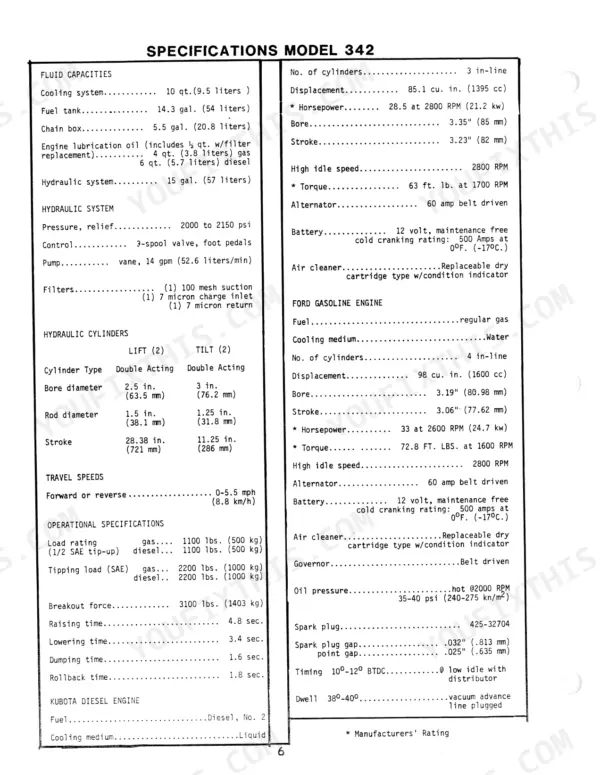
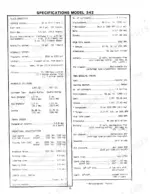
| Model Specifications | 27-38 | 332, 342, 442, 552 |
| System Contamination Control | 39-44 | Contamination Is the Most Frequent Cause of Hydrostat Failure, Before a Hydrostat CAN Be Considered to Have Failed |
| Hydraulic System | 45-58 | Reservoir, Hydraulic Cylinder, Neutral Centering Devices, Control Tips & Adjustments, Trouble Shooting, Pressure Checks |
| Hydrostatic Transmission | 59-70 | Hydrostat Removal, Hydraulic Motor Removal, Relief Valve/Closed Loop Check, Trouble Shooting |
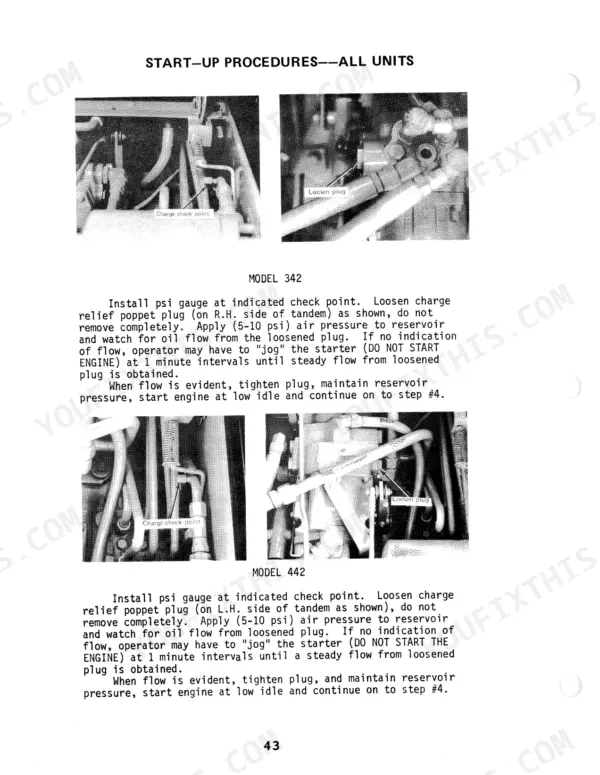
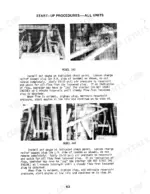
| Start-Up Procedure | 71-73 | When Initially Starting a New or a Rebuilt Hydrostat System, It Is Extremely Important That the Following Procedure Be Followed |
| Wheel Drive System | 74-91 | Chain Case, Connecting Links, Checking Chains, Drive Chains, Brake Adjustment & Tips, Axle Disassembly & Tips, Chain Replacement, Motor Sprocket Removal |
| Engine | 92-98 | Alternator, Air Cleaner, Cooling System, Engine Removal & Installation |
| Engine Fuel System | 99-103 | Filter, Priming Fuel System, Fuel Tank, Sender, Governor & Carburetor Adjustments |
| Electrical System | 104-118 | Functional Description, Trouble Shooting, Testing & Adjustment, Alternator |
| Tooling & Fixtures | 119-130 | Upright, Plate Position to Be Centered on Upright, Motor Sprocket Removal Tool |
Quick Reference Specifications
| Specification | Value | Page |
|---|---|---|
| Model 332 | ||
| Hydraulic system capacity | 11.5 gal. (43.5 liters) | p. 27 |
| Hydraulic pump flow rate, Model 332 | 7.5 gpm (28.2 liters/min) | p. 27 |
| Lift cylinder gland locking nut torque | 180-230 FT. LBS. | p. 17 |
| Tilt cylinder gland locking nut torque | 450-500 FT. LBS. | p. 17 |
| All Models | ||
| Standard Torque Value (1/4-20, Plain Head S.A.E. Grade 2) | 5 Foot-Pounds | p. 7 |
| Hydraulic filter replacement interval | 500 hr/year | p. 9 |
| 100 mesh screen cleaning interval | 10 hr | p. 9 |
| Hydraulic hose fitting torque (1/4" diameter) | 8-12 Foot-Pounds | p. 8 |
| Fuel filter replacement interval | 500 hr/year | p. 9 |
| Fuel filter bowl check for water interval | 10 hr | p. 9 |
| Battery check interval | 10 hr | p. 9 |
| Model 342 | ||
| Hydraulic pump flow rate, Model 342 | 14 gpm (52.6 liters/min) | p. 28 |
Mustang 332, 342, 442, 552 Common Problems This Manual Covers
Loader will not move or only creeps
A skid steer that loses drive power or barely creeps under load usually points to a hydrostatic drive fault, worn pump or motor, or internal leakage in the drive circuit. This section walks through hydrostat and motor removal, closed-loop checks, and troubleshooting.
Manual Section: Hydrostatic Transmission p. 59Weak or slow lift and tilt
Slow, weak, or unresponsive lift and tilt hydraulics often trace to a failing pump, leaking cylinder seals, or a stuck valve spool. The manual covers cylinder service, neutral centering, control adjustments, and pressure checks to isolate the cause.
Manual Section: Hydraulic System p. 45Repeated hydrostat failures
Contamination is the most frequent cause of hydrostat failure on these loaders. Before condemning a hydrostat, this section shows how to confirm the fault and control system cleanliness so a rebuilt unit does not fail again.
Manual Section: System Contamination Control p. 39Engine starts hard or runs rough
Hard starting, rough running, or stalling commonly comes from fuel delivery problems or governor and carburetor settings. This section covers the fuel filter, priming, the tank and sender, and governor and carburetor adjustments.
Manual Section: Engine Fuel System p. 99No-start or dead controls
An electrical no-start, intermittent operation, or dead controls can come from the battery, starter, relays, wiring, or a switch. This section provides functional descriptions, testing and adjustment procedures, and troubleshooting for the electrical system.
Manual Section: Electrical System p. 104Drive chain slack or brake drag
Loose drive chains, worn connecting links, or a dragging brake show up as lost drive or uneven tracking. This section covers checking and replacing chains, brake adjustment, axle service, and motor sprocket removal.
Manual Section: Wheel Drive System p. 74Frequently Asked Questions
Which machines does this manual cover?
It is the service manual for the Mustang 332, 342, 442, and 552 skid steer loaders, published under part number 087-00184, with model specifications for all four units.
Does it include torque specifications?
Yes. The Standard Torque Value Specifications and Fitting Procedures section lists hex-head capscrew torque values and covers pipe thread, JIC flare, and O-ring fitting procedures. p. 7
Where do I find the hydraulic pressure settings?
The Model Specifications section gives per-model hydraulic figures, including lift and tilt relief pressure and charge pressure, so you can compare your pressure checks against the correct target for your loader. p. 27
Can I use it to figure out why the loader will not drive?
Yes. The Hydrostatic Transmission section covers hydrostat and hydraulic motor removal, relief valve and closed-loop checks, and troubleshooting for a machine that will not move or loses drive power. p. 59
What format is this Mustang 332 manual in?
Instant PDF download. The full 130-page searchable Service Manual lands in your hands right after payment, ready to open on a laptop, tablet, or phone out in the shop.
Can I print a copy of this Mustang 332 Service Manual for the shop?
Yes. Print as many copies as you want; there are no restrictions. Plenty of mechanics print just the section they need and carry it out to the shop floor.
Does this Mustang 332 manual show the hydraulic circuits?
Full hydraulic system diagrams are included, covering circuits, valve locations, and hydraulic component specs for the Mustang 332, 342, 442, 552.



Reviews
There are no reviews yet.