
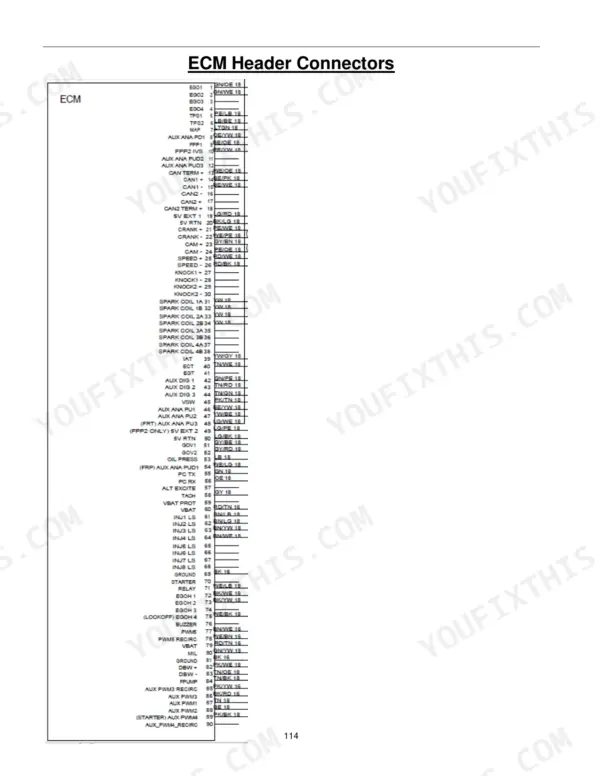
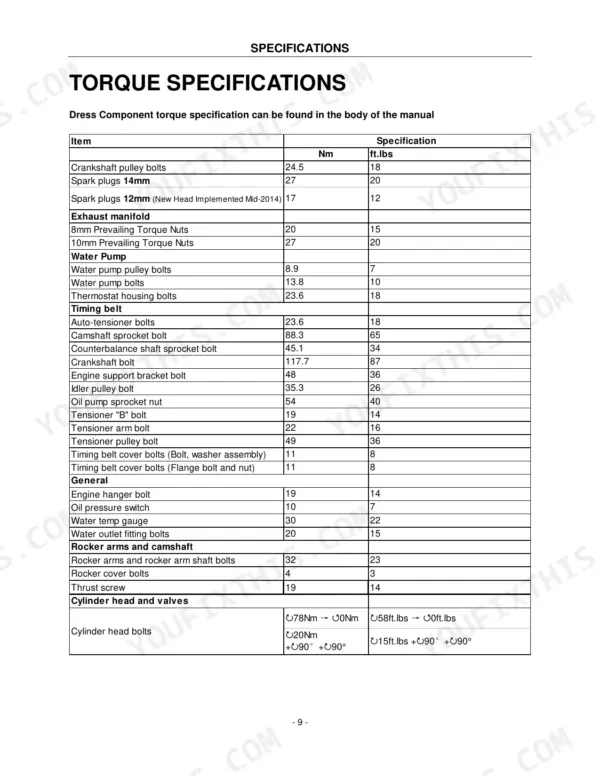
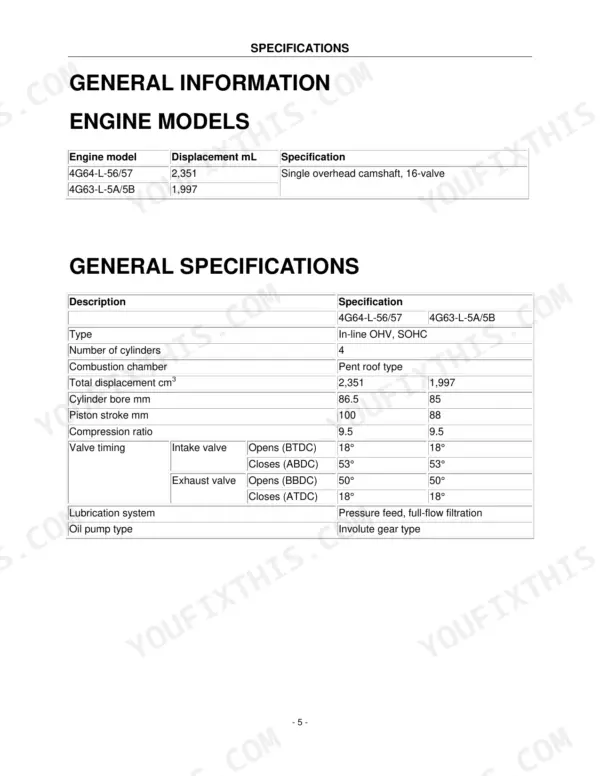
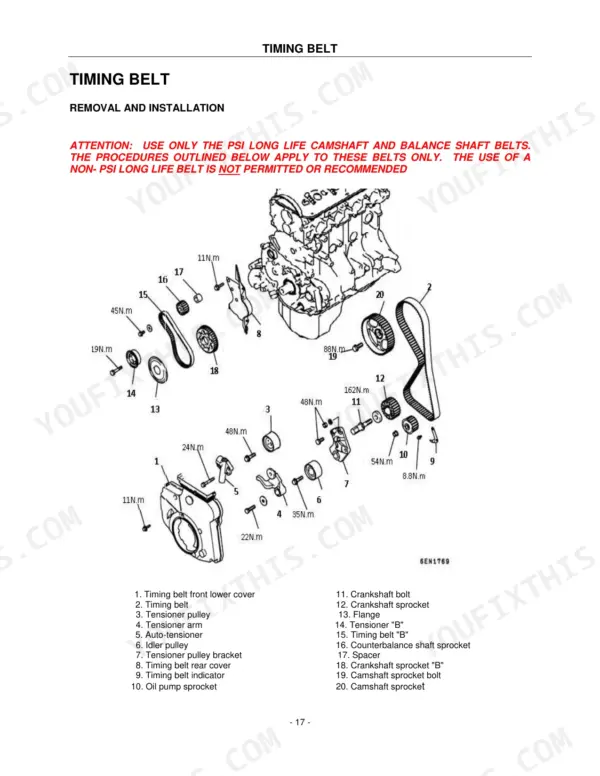
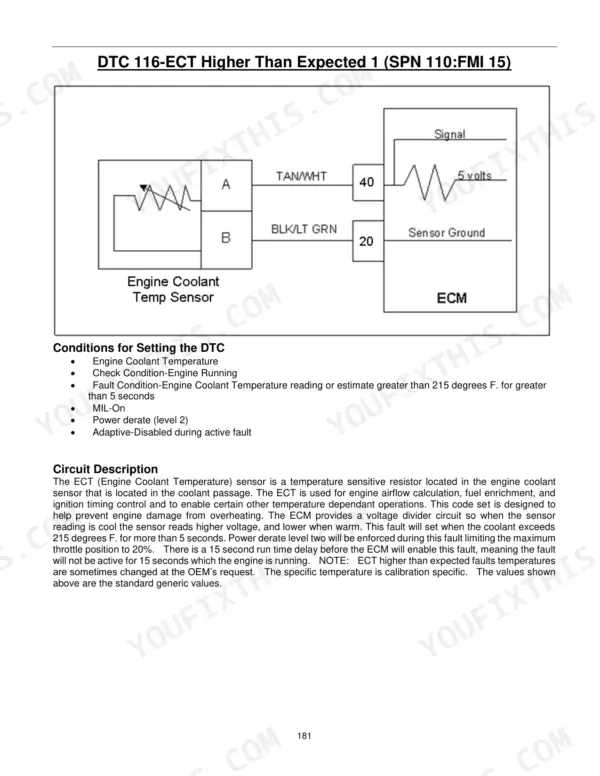
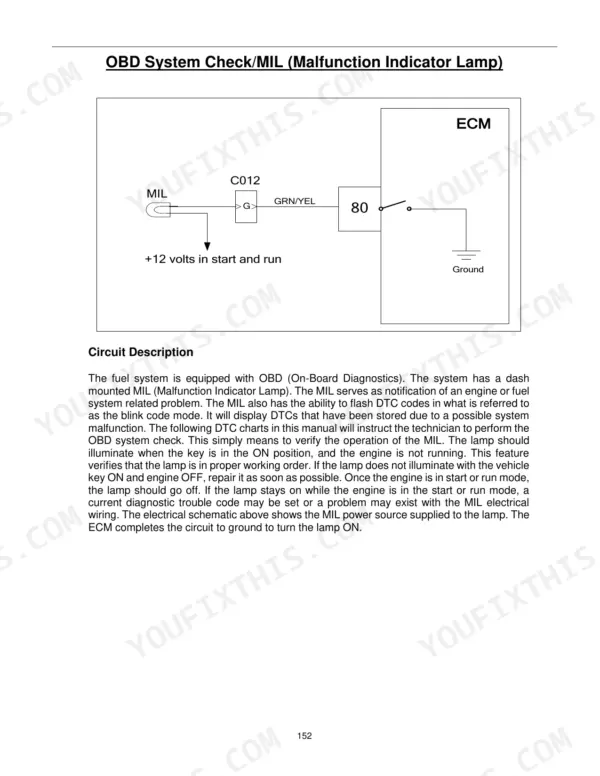
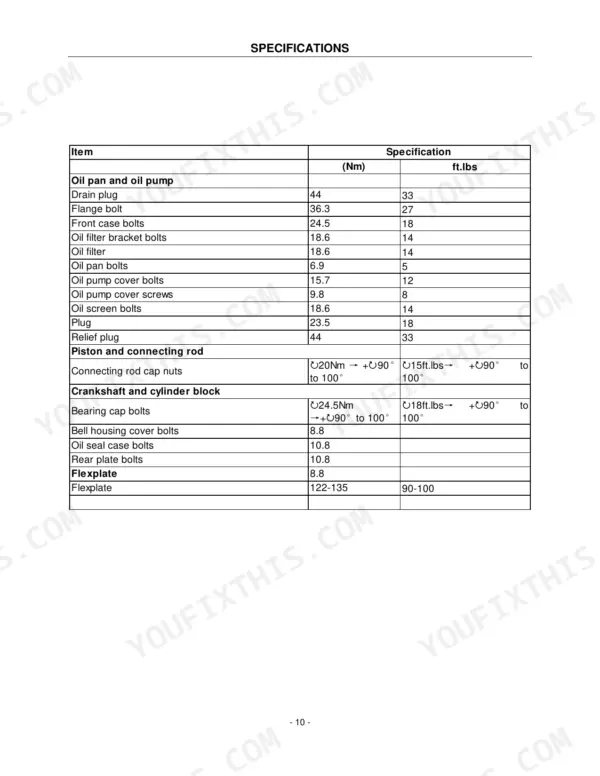
A timing belt that jumped a tooth or a MIL flashing codes nobody can read is the trouble this 409-page Power Solutions International PSI 2.0L, PSI 2.4L service manual PDF (OEM ID 76502675) was written to fix, covering four 4G63 and 4G64 engine variants. Wiring diagrams trace your engine harness and ECM header connectors, while DTC charts run from code 11 through 2229 with SPN/FMI references and blink code function. Timing belt, cylinder head, silent shaft, piston, rod and crankshaft sections each close with installation service points, and LPG and gasoline fuel theory explains the lock-off valve and vaporizer. Set auto-tensioner rod projection at 12 mm, then take the head bolts to 78 Nm, back them off to zero and finish at 20 Nm plus 90° plus 90°. Silent shaft timing by memory rarely ends well. Bookmarked and text-searchable, the file is yours to keep once bought, with every torque sequence there before your block goes back together.
What's Inside This Power Solutions International PSI 2.0L, PSI 2.4L Manual
| System | Pages | Key Topics |
|---|---|---|
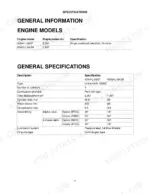
| General Information | 5-11 | Engine Models, Service Specifications, Torque Specifications, Maintenance Schedule |
| Form in Place Gasket | 12-16 | Removal of FIPG Sealed Parts, Cleaning FIPG Application Surface, Application of FIPG |
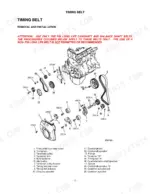
| Timing Belt | 17-28 | Removal and Installation, Inspection, Installation Service Points |
| Water Pump | 29-30 | Water Inlet Fitting, Thermostat, Water Outlet Fitting, Water Inlet Pipe, O-Ring |
| Rocker Arms and Camshaft | 31-35 | Rocker Arms, Rocker Arm Shaft, Lash Adjuster, Camshaft, Oil Seal, Rocker Shaft Spring |
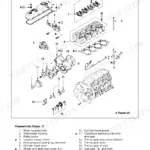
| Cylinder Head and Valves | 36-42 | Removal and Installation, Inspection, Valve Seat Replacement Procedure |
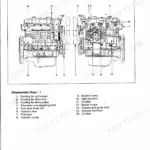
| Front Case, Silent Shaft and Oil Pan | 43-53 | Oil Pump Gears, Counterbalance Shafts and Bearings, Oil Pressure Switch, Oil Pan, Installation Service Points |
| Piston and Connecting Rod | 54-62 | Connecting Rod Cap and Bearings, Piston Rings, Piston Pin, Installation Service Points, Inspection |
| Crankshaft | 63-75 | Oil Seal Case, Oil Seal, Bearing Cap, Crankshaft Bearing, Crankshaft Thrust Bearing |
| Engine Compression Test | 76-79 | Engine Warm Up, Spark Plug Removal, Compression Gauge Connection, Pressure Reading, Cylinder Compression |
| Maintenance Information | 80-85 | Cooling System, Serpentine Belt System, Engine Electrical System, Engine Crankcase Oil, Fuel System Inspection, Exhaust System Inspection |
| Lpg Fuel System Theory and Operation | 86-92 | Electric Fuel Lock-Off Valve, Direct Electronic Pressure Regulator, Air Fuel Mixer, Light Duty 2-Stage Vaporizer, Electronic Throttle Control Device, Three-Way Catalytic Converter |
| Gasoline Fuel System Theory and Operation | 93-96 | Gasoline Fuel Storage Tank, Gasoline Fuel Pump, Gasoline Pressure and Temperature Sensor Manifold, Fuel Filter, Fuel Injector Rail, Fuel Injector |
| Emissions Control System Theory and Operation | 97-112 | Fuel System, Diagnostic Scan Tool, Fuel Pressure, Fuel Injectors, Throttle Position Sensor, Oxygen Sensors |
| Electrical Section | 113-114 | ECM Header Connectors, Diagnostic Scan Tool, Engine Wire Harness, Malfunction Indicator Lamp, Diagnostic Trouble Codes, Blink Code Function |
| Diagnostic Service Tool (Dst) | 115-137 | Dst Installation Instructions, Password Login, Dst Service Pages |
| Engine Wire Harness Repair | 138-141 | Connectors and Terminals |
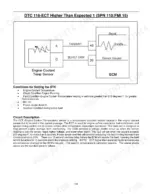
| Diagnostic Trouble Codes (DTC) Overview and Charts | 142-151 | MIL Operation, DTC Charts, SPN/FMI Codes, Blink Code Function |
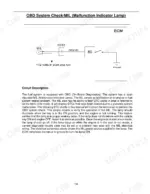
| OBD System Check and Starter Circuit Diagnostics | 152-155 | OBD System Check, MIL Operation, Starter Circuit Diagnostics |
| Engine Sensor and System Diagnostics (DTC 11-129) | 156-203 | Intake Cam Position, Crank Sync, Fuel Pressure, IAT Sensor, MAP Sensor, Barometric Pressure |
| Exhaust and Fuel System Diagnostics (DTC 134-1152) | 204-315 | EGO Sensor, Adaptive Learn, Catalyst Monitor, Fuel Injector Driver, Fuel Run-Out |
| Advanced System and Communication Diagnostics (DTC 1155-2229) | 316-403 | Closed Loop Multiplier, EPR Communication, Internal Actuator Fault, FPP Redundancy, TPS Voltage |
| Definitions | 404-409 | Air Valve Vacuum, Air/Fuel Ratio, Closed Loop Operation, Fuel Injector, Manifold Absolute Pressure, Throttle Position Sensor |
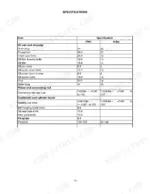
Quick Reference Specifications
| Specification | Value | Page |
|---|---|---|
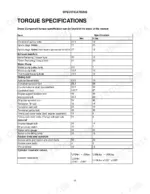
| Cylinder head bolts torque | 78Nm → 0Nm, 20Nm + 90° + 90° | p. 9 |
| Water pump pulley bolts torque | 8.9 Nm (7 ft.lbs) | p. 9 |
| Water pump bolts torque | 13.8 Nm (10 ft.lbs) | p. 9 |
| Auto-tensioner rod projection length | 12 mm | p. 6 |
| Auto-tensioner bolts torque | 23.6 Nm (18 ft.lbs) | p. 9 |
| Spark plugs 14mm torque | 27 Nm (20 ft.lbs) | p. 9 |
| Spark plugs 12mm torque | 17 Nm (12 ft.lbs) | p. 9 |
| Cylinder head bolt tightening torque | First 20 ± 2 N·m, then 90 degrees, then another 90 degrees | p. 39 |
| Allowable resistance on the injectors | 12.0 ± 0.6 ohms | p. 96 |
| CKP sensor voltage | 5.0 volts | p. 239 |
| Crankshaft pulley bolts torque | 24.5 Nm | p. 9 |
Power Solutions International PSI 2.0L, PSI 2.4L Common Problems This Manual Covers
PSI 2.0L 2.4L engine cuts out and misses, surging below 1500 RPM as load increases
Check ignition output voltage with spark tester J 26792, then pull the plugs and inspect for insulation cracks, wear, improper gap, burned electrodes and heavy deposits, following page 107. Inspect coils for cracks or carbon tracking and wires for arcing or cross firing. Run a cylinder compression check next. Reinstall plugs at 27 Nm (14mm) or 17 Nm (12mm) per page 9.
Manual Section: Fuel System Symptom Diagnostics p. 107LPG engine cranks a long time before starting, or starts then immediately stalls
Check Engine Coolant Temperature on the DST against ambient air temperature on a cold engine; if it reads more than 10 degrees off, check the coolant sensor circuit for high resistance. If it starts then stalls, inspect the cam angle sensor for improper gap, debris or faulty connections per page 105. Verify the excess flow valve is not tripped and the manual shut-off valve is open, with no flame or lighted tobacco near fuel components (page 77).
Manual Section: Fuel System Symptom Diagnostics p. 105LPG engine backfires with a loud popping noise from the intake manifold or exhaust
Test each spark plug wire end to end with an ohmmeter and replace any wire reading over 30,000 ohms, following page 109. Check ignition coil output with spark tester J26792 and the connection at the coil. Then inspect intake manifold gaskets, valve timing, compression and sticking or leaking valves; LPG is more sensitive to intake manifold leakage than gasoline.
Manual Section: Fuel System Symptom Diagnostics p. 109Engine compression test shows low cylinder compression with hard starting or misfire
Perform the compression test following page 76, then check for improper valve timing, improper valve clearance, worn rocker arms, broken or weak valve springs and worn camshaft lobes. If the head comes off, fit new valve stem seals (page 37 forbids reuse) and do not disassemble lash adjusters (page 33). Torque head bolts to 20 ± 2 N·m, then 90 degrees, then another 90 degrees per page 39.
Manual Section: Engine Compression Test p. 76Improper valve timing suspected and timing belt auto-tensioner rod protrusion out of standard
Measure auto-tensioner rod protrusion against the 3.8 to 4.5 mm standard value on page 28 before the belt goes back on. Torque the tensioner pulley center bolt to 48 ± 5 N·m following page 27. Set auto-tensioner bolts to 23.6 Nm, idler pulley bolt to 35.3 Nm and camshaft sprocket bolt to 88.3 Nm per page 9.
Manual Section: Timing Belt p. 28After reassembly, water outlet fitting or water pump sealing surface seeps coolant
Verify the engine is cool before removing the radiator cap, and turn ignition OFF with the battery negative disconnected (page 80). Remove all old FIPG, including from bolt holes (page 12). Apply a 3 mm bead to the water outlet fitting, install within 15 minutes and allow 1 hour to cure per page 30. Torque water pump bolts to 13.8 Nm (page 9). Fill with GM6277M coolant, never plain water or stop leak.
Manual Section: Water Pump p. 30Frequently Asked Questions
How do I clear PSI engine diagnostic trouble codes?
Diagnostic trouble codes can be cleared from memory using a laptop computer with the Diagnostic Service Tool (DST) or by turning the ignition key to the OFF position and removing the ECM power fuse or battery cable for at least 15 seconds. p. 133
What does PSI 2.0L DTC 521 mean?
DTC 521 indicates an 'Oil Pressure High' condition. The fault sets if the oil pressure is greater than 95 psi for 5 or more seconds while the engine is running. p. 258
What causes low or high oil-pressure fault codes on a PSI 2.0L/2.4L?
Low oil pressure faults (DTC 520, 524) can be caused by low oil pressure, while high oil pressure faults (DTC 521) are caused by oil pressure exceeding 95 psi for 5 or more seconds. Always verify actual oil pressure using a mechanical gauge before proceeding with diagnostic charts. p. 255
How do I troubleshoot PSI 2.0L/2.4L no-start, misfire, or crank-no-start conditions?
For no-start conditions, use the DST to check for ECM communication, system fuses, and sensor outputs like TMAP and cam angle. For misfires, check ignition voltage output using spark tester J 26792 and inspect spark plugs for wear, improper gap, or heavy deposits. p. 103
What are the water pump and water pump gasket replacement specs for the Power Solutions International PSI 2.0L, 2.4L?
The water pump bolts should be tightened to 13.8 Nm (10 ft.lbs) and the thermostat housing bolts to 23.6 Nm (18 ft.lbs). p. 9
How will I receive this Power Solutions International PSI 2.0L Service Manual?
One searchable PDF covering 409 pages, delivered instantly. No disc, no shipping, no waiting on the post.
Is this Power Solutions International PSI 2.0L Service Manual printable?
Yes. Many mechanics print the section they need for their own shop and bring it to the bench.

Reviews
There are no reviews yet.