
Part of the Yanmar Operator Manuals.
Looking for the Yanmar ViO75 Operator Manual PDF? This 222-page factory document is the complete operating and maintenance reference for the ViO75 compact excavator. Open it to a thorough controls section that maps every monitor, switch, lever, and pedal in the cab, plus step-by-step operating instructions covering traveling, steering, slope work, mud recovery, and bucket replacement. You also get a full troubleshooting guide, cold-weather prep procedures, and a structured maintenance table showing exactly when every service task is due. Change engine oil and filter every 250 service hours or 6 months, replace air cleaner and fuel filter elements at the 500-hour mark, and pull the main pump outlet hose before it hits 2 years or 4,000 hours. Your machine doesn't get a day off. Download this PDF, use bookmarks to jump straight to the section you need, and start wrenching.
Complete the set for your ViO75
- Parts Catalog: Yanmar ViO75, 4TNE98-EBVA Parts Catalog
- Parts Catalog: Yanmar ViO75 Parts Catalog (Excavator)
- Repair Manual: Yanmar ViO75, ViG3 Excavator Service Manual (incl. Wiring)
What's Inside This Yanmar ViO75 Operator Manual
| System | Pages | Key Topics |
|---|---|---|
| Introduction & Safety Information | 3-4 | Intended Uses, Break-In Period, Signal Words, Product Warnings, User Directions, Unauthorized Modifications, Safety Guards, Unauthorized Attachments |
| Machine Identification & Ordering Parts | 5-7 | Product Overview, Location of Machine Serial Number Plate, Location of Engine Serial Number Plate, Ordering Replacement Parts and Service Calls |
| Safety Precautions | 13-37 | Warning Labels, Safety Devices, Flammable Materials, High Temperature Fluids, Asbestos Dust, Emergency Escape, Precautions for Starting the Engine, Working and Parking, Precautions for Transportation, Precautions for the Battery, Precautions Before/During Servicing |
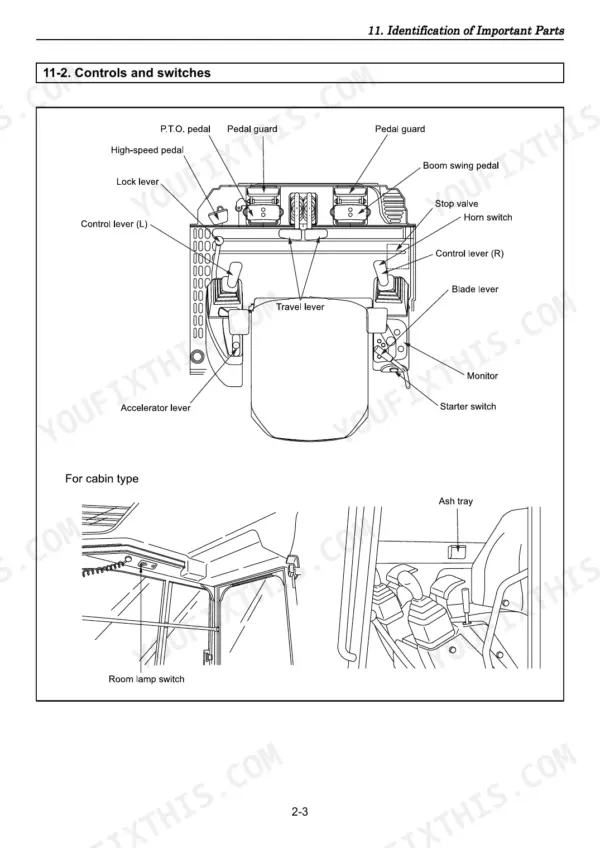
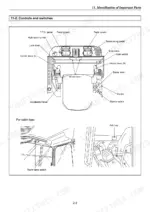
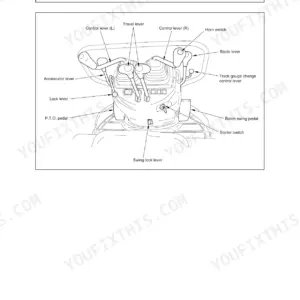
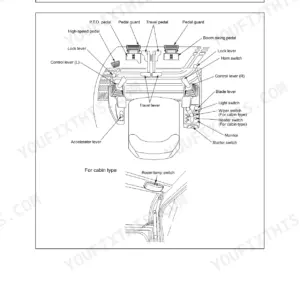
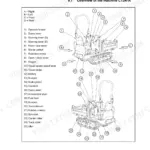
| Controls & Instruments | 39-60 | Overview of the Machine, Monitors, Switches, Control Levers and Pedals, Engine Hood, Storage Compartment for the Operation & Maintenance Manual, Bonnet, Windshield |
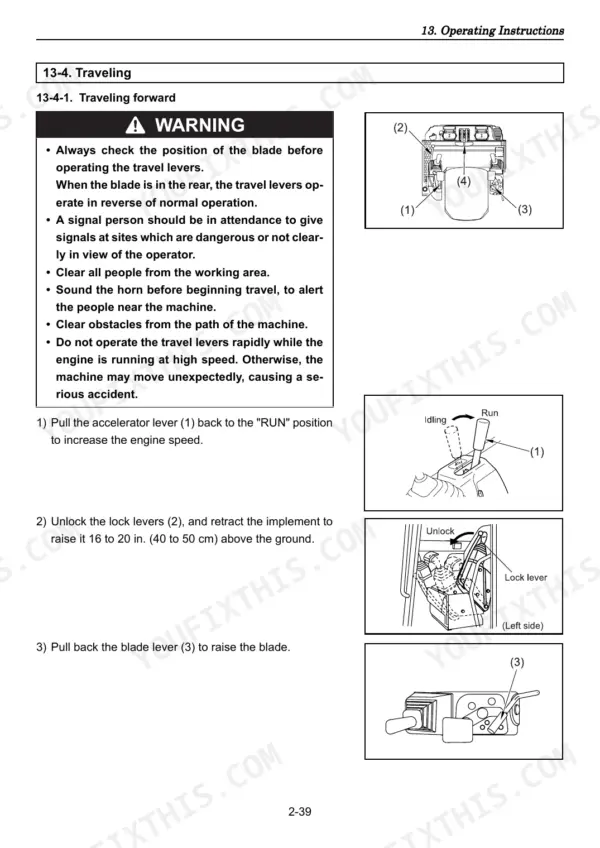
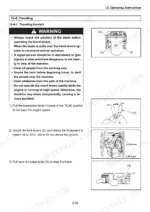
| Operating Instructions | 61-109 | Checking Before Starting the Engine, Starting Up the Engine, Operating and Checking Instructions After Starting the Engine, Traveling, Steering, Stopping the Machine |
| Transportation, Cold Weather & Storage | 110-120 | Loading and Unloading the Machine, Precautions for Transporting the Machine, Suspending the Machine, Preparing for Cold Weather, Precautions After a Day's Work, Before Storing, Storing, Using the Machine Again |
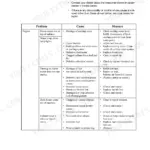
| Troubleshooting | 121-129 | Phenomena That Do Not Constitute Faults, Towing, If the Battery Is Overdischarged |
| Maintenance & Servicing Basics | 131-140 | Hourmeter, Genuine Parts, Warning Tag, Welding Precautions, Cleaning Procedures, Oils/Fuel/Cooling Water, Electrical Equipment, Hydraulic System, Filter Elements, Bucket Teeth, Bucket Pins, Side Cutters |
| Lubricants, Torque & Parts Replacement | 141-145 | Fuel and Oil, Cooling Water, Torque Table, Hose Clamp, Hydraulic Hoses, O-Rings, Fuel System Components, Main Pump Outlet Hose |
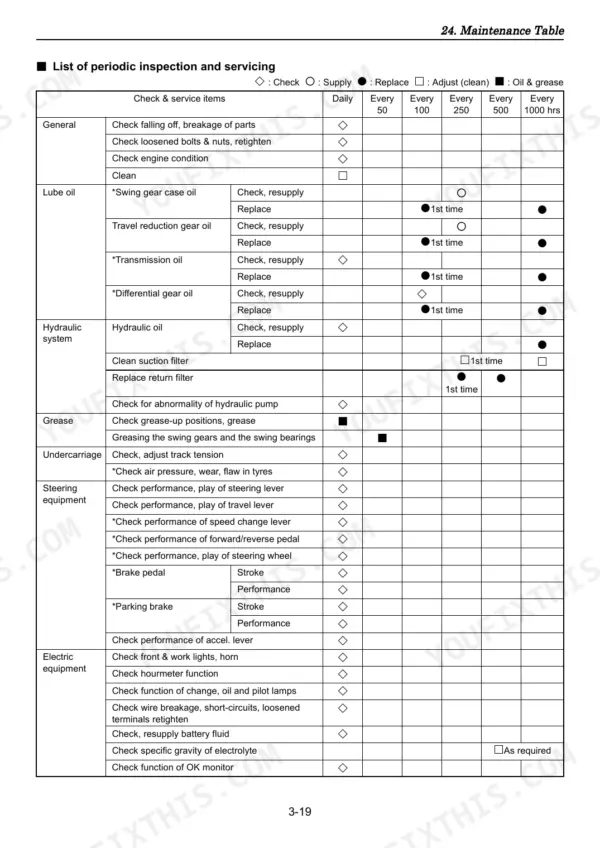
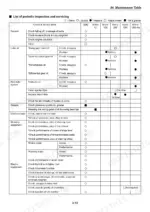
| Maintenance Schedule | 146-195 | Table of Service Time Intervals, Service Intervals When Using the Hydraulic Breaker, First Services, Nonperiodic Services, Maintenance Every 50 Service Hours, Maintenance Every 100 Service Hours, Maintenance Every 250 Service Hours |
| Specifications & Dimensions | 196-199 | Machine Specifications, Engine Specifications, Hydraulic System Specifications, Working Range, Dimensional Diagrams, Battery Specifications, Machine Mass, Bucket Capacity, System Relief Set Pressure |
| Attachments & Optional Parts | 201-205 | Precautions for Mounting an Attachment, Checking the Hooked Bucket for Damage, Optional Parts and Attachments |
| Appendix | 206-222 | Maintenance Log |
Quick Reference Specifications
| Specification | Value | Page |
|---|---|---|
| Main pump outlet hose replacement interval | Earlier of either every 2 years or every 4000 service hours | p. 145 |
| Cooling water pipe replacement interval | within one year | p. 149 |
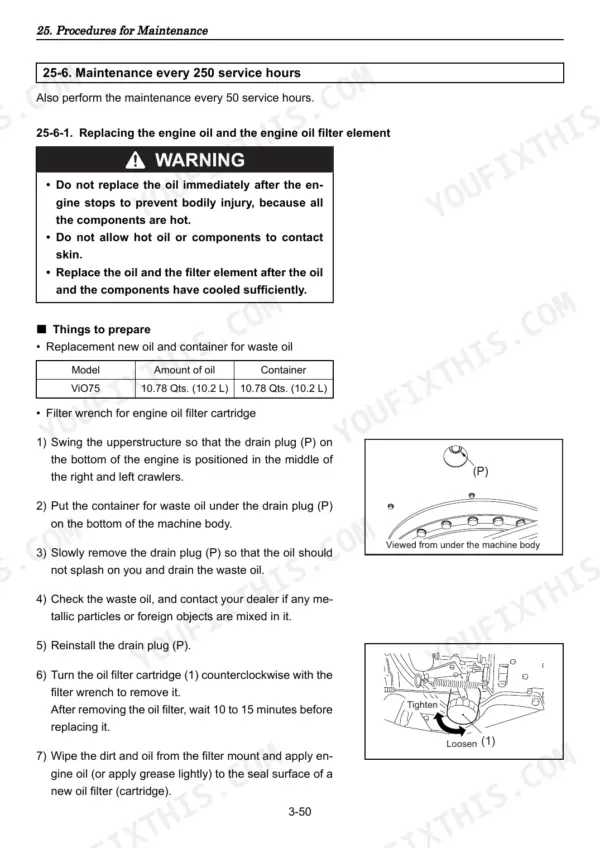
| Engine oil and filter replacement interval | Every 250 service hours or 6 months | p. 179 |
| Air cleaner element replacement interval | Every 500 service hours | p. 140 |
| Fuel filter replacement interval | Every 500 service hours | p. 140 |
| Rubber crawler tension clearance (H) | 0.8 to 1.0 in. (20 to 25 mm) | p. 154 |
| Steel crawler tension clearance | 5.91 to 6.30 in. (150 to 160 mm) | p. 160 |
| Hydraulic oil level during normal operation | Near the upper limit of the oil level gauge [oil temperature 122 to 176F (50 to 80C)] | p. 172 |
| Battery Capacity | 12V, 92Ah | p. 197 |
| Standard Bucket Capacity | 9.89 cu.ft (0.28 cu.m) | p. 197 |
| Standard Bucket Width | 29.53 in. (750 mm) | p. 197 |
| Engine Rated Output | 55.2 HP (41.2 kW) / 1900 rpm | p. 197 |
Yanmar ViO75 Common Problems This Manual Covers
Engine fails to start or turns over slowly, no response from ignition
Check battery terminals for corrosion and confirm the 12V, 92Ah battery (page 197) holds charge. If discharged, connect booster cables positive to positive first, then negative to an unpainted engine block point on the dead machine last. Start the donor engine before cranking the machine. The Troubleshooting section covers the full overdischarge procedure and cable sequence.
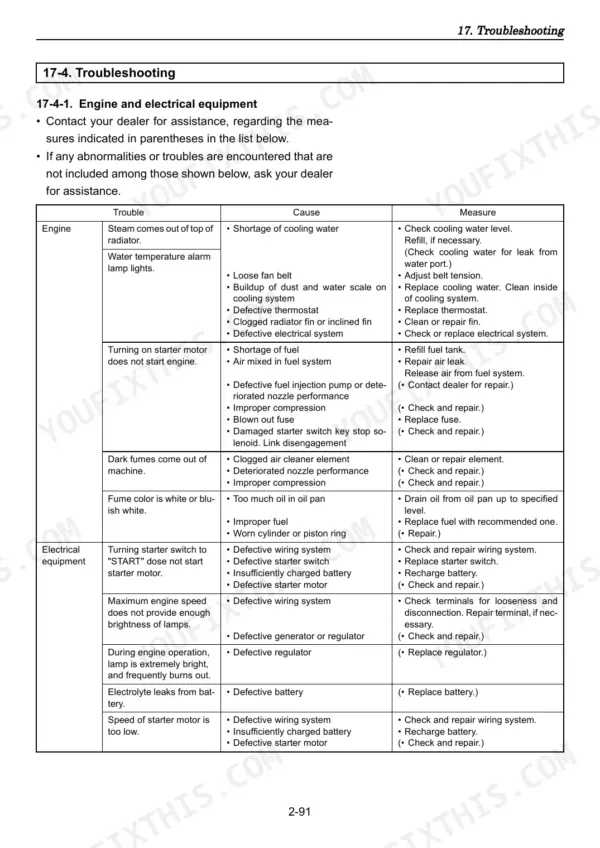
Manual Section: Troubleshooting p. 128Water temperature warning light activates, steam visible from engine compartment during operation
Stop work immediately and idle the engine for several minutes before shutdown. Never open the radiator cap while the engine is hot. Check the overflow reservoir level and inspect hose connections for drips; cooling water pipes require replacement within one year per page 149. Engine troubleshooting procedures on page 128 cover steam and water temperature alarm diagnosis.
Manual Section: Troubleshooting p. 128Coolant hoses feel soft or show surface cracking near clamp attachment points
Squeeze each hose with the engine cold. Any hose that feels spongy, sticky, or shows surface cracking near clamps needs immediate replacement. The maintenance schedule on page 149 requires cooling water pipe replacement within one year regardless of visible condition. Order replacements through your dealer using the machine serial number information on page 7.
Manual Section: Maintenance Table p. 149Rubber crawlers visibly sagging or making a slapping noise during travel on flat ground
Park on flat ground and check the sag at the crawler's center span. Correct clearance between the lower run and the carrier roller should be 0.8 to 1.0 in. (20 to 25 mm) per page 154. If too loose, add grease through the tension nipple to increase tension, then retighten the nipple valve when done.
Manual Section: Procedures for Maintenance p. 154Hydraulic oil temperature warning illuminates, arm and bucket response becomes sluggish mid-shift
Stop digging and idle the engine 5 to 10 minutes to let oil temperature drop. Confirm oil level sits near the upper gauge limit at 122 to 176°F (50 to 80°C) per page 172. Clear debris from the hydraulic cooler intake. Check the troubleshooting procedures starting on page 128 for high hydraulic oil temperature diagnostics.
Manual Section: Troubleshooting p. 128Frequently Asked Questions
Torque specs for Yanmar VIO75 engine mounting bolts
The manual provides a general torque table for hexagon bolts. For example, an M10x1.5 coarse thread bolt should be tightened to 32.5 to 43.4 ft-lbf (44.1 to 58.8 N·m), and an M14x1.5 fine thread bolt to 94 to 108.5 ft-lbf (127.5 to 147.1 N·m). Specific torque values for 'engine mounting bolts' are not explicitly listed, but these general guidelines apply. p. 143
What are the replacement specifications for Hydraulic hoses (due to wear and leaks)?
Hydraulic hoses are not periodic replacement parts, but if any abnormality (such as oil leak, damage, crack, wear, or peeling) is found during start-up, voluntary monthly, or prescribed annual checks, they should be retightened or replaced immediately. When replacing hydraulic hoses, the O-rings and seals must also be replaced at the same time. p. 144
What are the replacement specifications for Coolant hoses and clamps (due to dry rotting)?
The manual specifies that 'cooling water piping' should be checked and replaced every 2000 service hours. For this procedure, it advises to 'Ask your dealer'. While not explicitly mentioning 'clamps' or 'dry rotting', the replacement of piping would include associated components. p. 147
How do you fix yanmar ViO75 hydraulic oil level low, gauge reads below upper mark on sight glass?
Check the hydraulic oil level gauge; at operating temperature of 122 to 176°F (50 to 80°C), the level should sit near the upper limit (page 172). If low, top up toward the 15.04 Gal. (57 L) tank capacity using ISO VG 46 fluid. Inspect visible hoses and fittings for wet spots before resuming work. p. 172
Is this Yanmar ViO75 Operator Manual a digital download?
Instant PDF download. You get the full 222-page searchable Operator Manual immediately after payment. Open it on your laptop, tablet, or phone right in the shop.
Am I able to print pages from this manual?
Yes. Many mechanics print the section they need for their own shop and bring it to the bench.
Reviews
There are no reviews yet.