
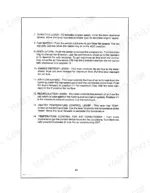
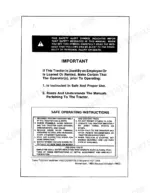
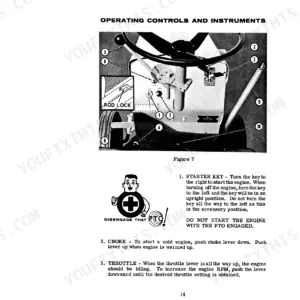
Part of the Case Operator Manuals.
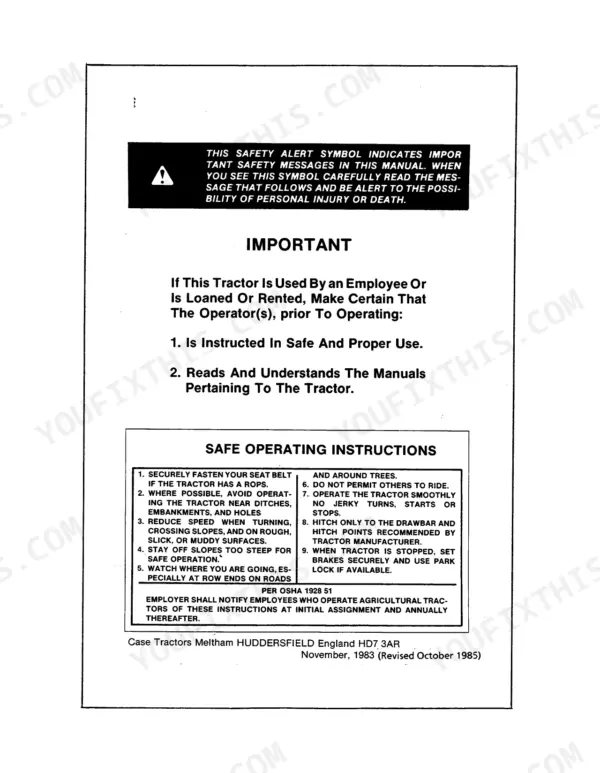
All 196 pages of this Case 1694 operator manual (OEM #9-9922) focus on what you do from the cab: operating the Power Shift transmission, setting up the Three-Point Linkage, running the PTO, and keeping the 1694 Tractor on its maintenance schedule. Inside: a full safety section packed with pre-start checks and operating rules, plus a complete controls walkthrough for every lever, foot pedal, instrument panel indicator, and air conditioning control in the cab. You get full lubrication charts with grease fitting locations, tire and wheel arrangements, and a structured maintenance schedule from the 20-hour first oil change through 800-hour service. Fill the transmission to 42 litres, set engine valve clearance to 0.25 mm cold, and run PTO at 2050 engine RPM for 540 r/min output. No more digging through a paper binder for a fluid spec. Jump to any section by bookmark, pull it up on your tablet, and stay in the seat.
What's Inside This Case 1694 Operator Manual
| System | Pages | Key Topics |
|---|---|---|
| To the Owner | 5 | Using This Manual, Authorized Case Dealer, Repair and Maintenance, Assistance and Information, Contact Information |
| Safety | 6-21 | - |
| Hand Signals | 22-23 | Start the Engine, Stop the Engine, Move Out, Move Toward Me, Raise Equipment, Lower Equipment |
| Decals | 24-28 | Install New Decals, Warning Before Starting Engine, Warning Engine Start Transmission, Warning Battery Explosion, Warning to Help Prevent Injury, Warning Dual Speed PTO |
| Serial Numbers | 29 | Tractor Model Number, Product Identification Number, Engine Serial Number, Transmission Serial Number, Cab Serial Number, MFD Axle Serial Number |
| Diesel Engine Specifications | 30-31 | Type, Turbocharger, Firing Order, Bore, Stroke, Compression Ratio |
| General Specifications | 32-35 | Electrical System, Brakes, Steering, Power Takeoff, Three Point Linkage, Drawbar |
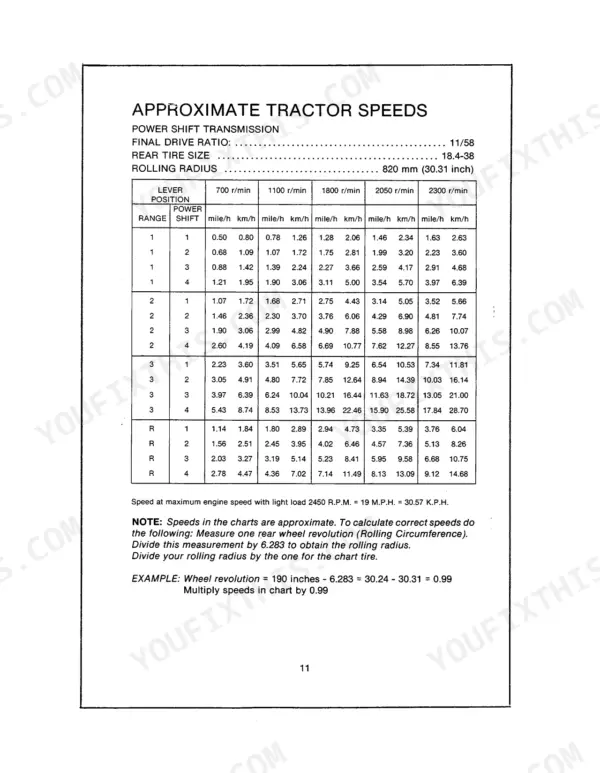
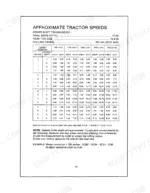
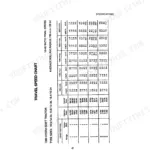
| Approximate Tractor Speeds | 36-39 | Power Shift Transmission, Final Drive Ratio, Rear Tire Size, Rolling Radius, Lever Position, Power Shift |
| Fuel Specifications | 40 | A.P.I. Gravity, Pour Point, Distillation, Flash Point, Kinematic Viscosity, Cetane Number |
| Approximate Measurements | 41 | Front Tire Dimensions, Rear Tire Dimensions, Overall Dimensions, Transport Weight, Operators Cab Specifications |
| Tire and Wheel Equipment | 42-43 | Front Tires (Field Work), Front Tires (Road and Loader Work), Rear Tires (Field Work), Rear Loads and Pressures, Tire Size Arrangements, Tire Mounting |
| Front to Rear Tire Arrangements | 44 | - |
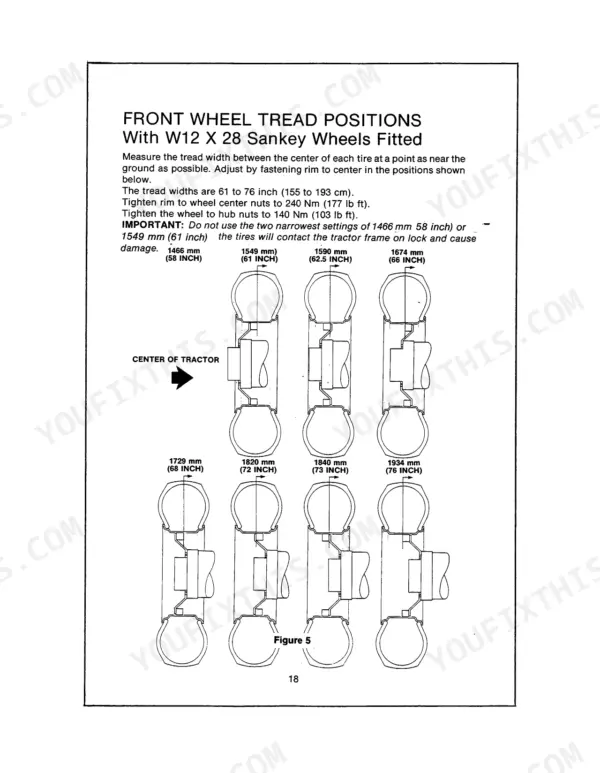
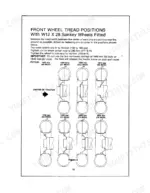
| Front Wheel Tread Positions | 45-47 | W12 X 24 Sankey Wheels, W12 X 28 Sankey Wheels, W12 X 24 Nagbol Wheels, W12 X 28 Nagbol Wheels |
| Rear Wheel Tread Positions | 48 | - |
| Lubrication | 49-66 | Engine Hourmeter, Selection of Engine Oil, Capacities and Approved Lubricants, Lubrication Charts, Grease Fittings, Engine Oil Change, Engine Oil Filter Change |
| Operating Instructions | 67-143 | Run-In Procedure, Before Operating the Tractor, Towing, How to Transport the Tractor, Operating Instruments, Operating Lamps, Instrument Panel Controls, Air Conditioning Operation |
| Maintenance | 144-187 | First Oil Change 20 Hours, Raising Engine Cover, Removing Front Panel, Removing Side Panels, Regular Maintenance Chart, Daily Inspection, 50 Hour Service, 100 Hour Service |
| Optional Equipment | 188 | Hydraulic Trailer Brake |
| Patent Numbers | 189-196 | - |
Quick Reference Specifications
| Specification | Value | Page |
|---|---|---|
| Engine Oil Capacity | 12.5 litres | p. 31 |
| Cooling System Capacity | 15.3 litres | p. 30 |
| Transmission Oil Capacity | 42 Litres | p. 34 |
| Engine Valve Clearance (Cold) | 0.25 mm | p. 30 |
| PTO Speed (540 r/min) | 2050 Engine r/min | p. 32 |
| Maximum Engine Power | 80 kW | p. 30 |
| Battery Voltage | 12 Volt | p. 32 |
| Maximum Drawbar Load | 1 500 kg | p. 33 |
| Front Tire Pressure (Field Work, 13.6-24) | 14 lb/in² | p. 42 |
Case 1694 Common Problems This Manual Covers
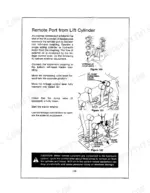
Case 1694 hydraulic lift moving slowly or failing to raise implements at working speed
Check the hydraulic oil level first — the sight glass should show oil between the MIN and MAX marks. If the level is correct, inspect the hydraulic oil filter and sump sieve for blockage; a clogged filter is the most common cause of sluggish lift. Refer to the maintenance schedule for filter service intervals. Change the hydraulic filter if it is overdue, and verify the system has the correct hydraulic fluid grade as listed on page 49.
Manual Section: Hydraulic System MaintenanceTransmission gears feel sluggish, slip under load, or shift poorly during field work
Check the transmission oil level using the dipstick or sight glass; capacity is 42 litres (page 34). If the level is low, top up with the approved lubricant type listed on page 49. Contaminated or degraded fluid causes exactly this symptom — drain and refill if the oil looks dark or milky, and replace the transmission filter per the service chart.
Manual Section: Transmission & PTO Maintenance p. 34Engine temperature gauge rising into the red zone or overheating warning light on
Stop work immediately and let the engine cool before opening the cooling system. Check coolant level — the system holds 15.3 litres (page 30). Inspect the radiator fins for packed crop debris or dust; clean with compressed air blown from the inside out. Verify the fan belt is tight and not cracked. If the level was low, refill with the correct coolant mix and monitor the gauge on the next run.
Manual Section: Cooling System Maintenance p. 30Battery draining overnight or engine cranking slowly and failing to start
Inspect both battery terminals for white or green corrosion; clean with a wire brush and re-tighten the clamps. The system runs on a 12-volt negative-ground battery (page 32). Check that no cab lights or auxiliary circuits are drawing power with the key off. Review the electrical system checks including the alternator charge indicator — if the charge warning light stays on during operation, the alternator belt may be slipping or the alternator itself is failing.
Manual Section: Electrical System MaintenanceFuel control lever stiff or jammed, engine not responding to throttle changes
Do not force a seized throttle lever. Check that nothing in the cab floor area is physically obstructing the lever travel. Lubricate the control linkage pivot points with grease as specified in the lubrication chart on page 49. Refer to the daily inspection checklist in the Maintenance section for control-cable checks. If the lever remains seized after lubrication, have an authorized Case dealer inspect the cable before operating the tractor.
Manual Section: Lubrication p. 49Frequently Asked Questions
Why is the Case 1694 hydraulic lift moving slowly or not raising implements?
Check the hydraulic oil level first; the sight glass should show oil between the MIN and MAX marks. If the level is correct, inspect the hydraulic oil filter and sump sieve for blockage. A clogged filter is the most common cause of sluggish lift. Change the hydraulic filter if overdue and verify the system has the correct hydraulic fluid grade as listed on page 49. p. 49
What causes the Case 1694 transmission gears to slip or shift poorly under load?
Check the transmission oil level using the dipstick or sight glass; the system holds 42 litres (page 34). If the level is low, top up with the approved lubricant grade listed on page 49. Contaminated or degraded fluid causes sluggish shifts and gear slip. Drain and refill if the oil looks dark or milky, and replace the transmission filter per the service chart. p. 34
What should I do if the Case 1694 engine temperature gauge rises into the red?
Stop work immediately and let the engine cool before opening the cooling system. Check coolant level; the system holds 15.3 litres (page 30). Inspect the radiator fins for packed crop debris and clean with compressed air blown from the inside out. Verify the fan belt is tight and not cracked. Refill with the correct coolant mix and monitor the gauge on the next run. p. 30
Why is the Case 1694 battery draining overnight or the engine cranking slowly?
Inspect both battery terminals for corrosion; clean with a wire brush and retighten the clamps. The system runs on a 12-volt negative-ground battery (page 32). Verify no cab lights or auxiliary circuits are drawing power with the key off. If the alternator charge indicator stays on during operation, the alternator belt may be slipping or the alternator is failing. p. 32
Is this Case 1694 Operator Manual a digital download?
A 196-page Operator Manual in searchable PDF format (10 MB), available the moment you complete checkout. View on computer, tablet, or phone, with no shipping wait.
Can I print specific sections of this Case 1694 Operator Manual?
Zero restrictions. The PDF is DRM-free. Print whatever sections you need to take out to the shop. Standard letter or A4 paper works.






Reviews
There are no reviews yet.