
Part of the Case IH Operator Manuals.
Searching for the Case IH 4496 Tractor operator manual PDF? This 189-page factory document (OEM #9-8561) walks you through every operating procedure, maintenance schedule, and safety protocol from the ground up. Inside: a wiring diagram, hydraulic schematics for the remote control system, and a full Fuel, Fluids and Lubricants Chart covering engine oil, transmission fluid, planetary differentials, and brake fluid in one place. You also get cab controls for the Power Shift Transmission, PTO, three-point hitch, remote hydraulic levers, and air conditioning, plus a detailed preventive maintenance section spanning the cooling system, fuel system, air induction, electrical components, and battery care. Set the front power steering relief valve to 2250 PSI and replace engine oil filters every 200 hours. Every hour of downtime costs money. Bookmarked and searchable by keyword; open it on any device and get straight to the spec you need.
What's Inside This Case IH 4496 Operator Manual
| System | Pages | Key Topics |
|---|---|---|
| Introduction | 5 | - |
| To the Owner | 6 | - |
| Safety | 7-19 | - |
| Decals | 20-23 | Rotating Fan and Belts, Hot Coolant, Neutral Safety Switch, Battery Acid, Battery Explosion, Rear Upset |
| Serial Numbers | 24 | Tractor Model Number Plate, Cab Serial Number Plate, Transmission Serial Number Plate, Axle Serial Number Plate, Engine Serial Number Plate |
| Diesel Engine Specifications/ General Specifications | 25-28 | Engine Model, Number of Cylinders, Bore, Stroke, Piston Displacement, Cooling System Type |
| Approximate Tractors Speeds | 29 | Transmission Gear, Power Shift Speeds, Reverse Speeds, Tire Size |
| Approximate Overall Measurements/ Approximate Transport Weight | 30 | Overall Height, Overall Width, Turning Radius, Overall Length, Approximate Tractor Weight, Total Tractor Weight with Ballast |
| Operator's Cab/ Tire and Wheel Equipment | 31 | Air Filter Removal, Air Filter Service, Seat Belt Inspection and Maintenance, Operator's Seat |
| Wheel Tread Positions | 32-36 | Tire Size, Rim Outside Bead, Inside Groove, Raised Face, Recess Face, Dual Wheels |
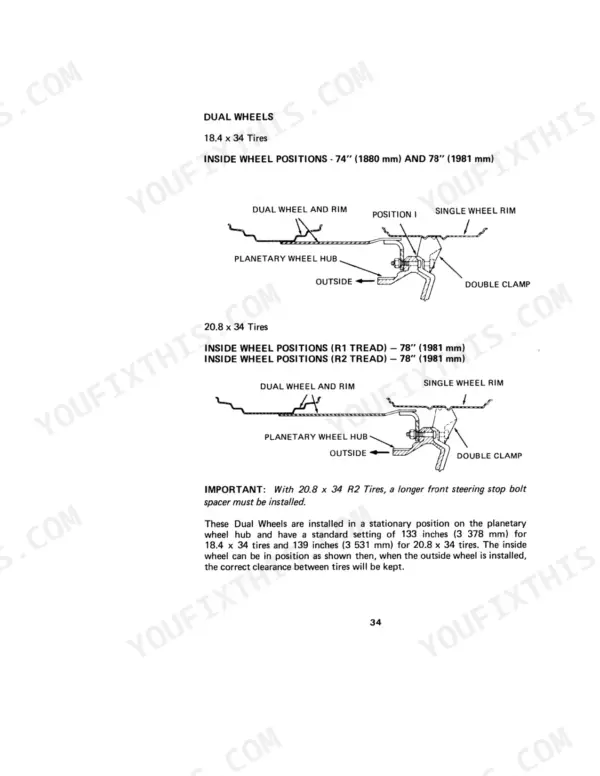
| Dual Wheels | 37-38 | Inside Wheel Positions, Dual Wheel and Rim, Single Wheel Rim, Planetary Wheel Hub, Double Clamp, Front Steering Stop Bolt Spacer |
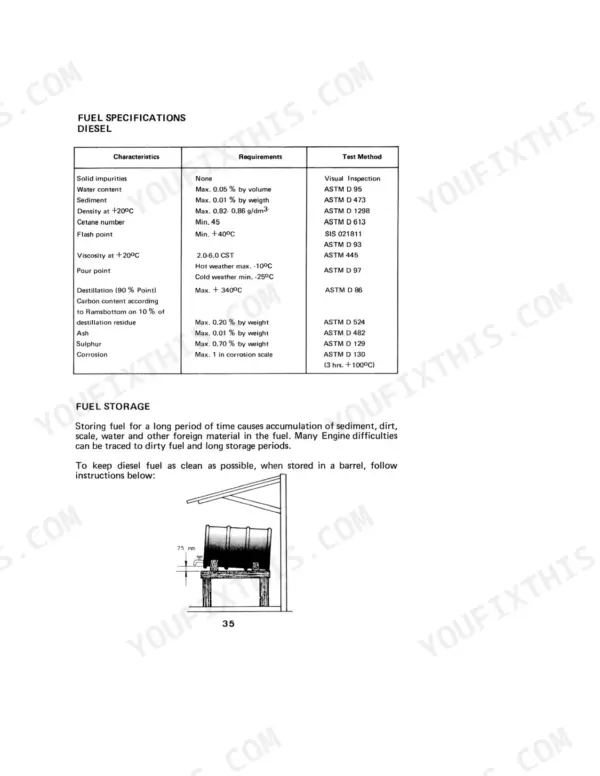
| Fuel Specifications | 39-40 | Solid Impurities, Water Content, Sediment, Density, Cetane Number, Flash Point |
| Lubrication | 41-54 | Engine Hourmeter, Rear Steering Valve Filter, Fuel, Fluids and Lubricants Chart, Lubrication Chart, Engine Oil Change, Engine Oil Filters, Diesel Engine |
| Alternator Charging Systems | 55 | - |
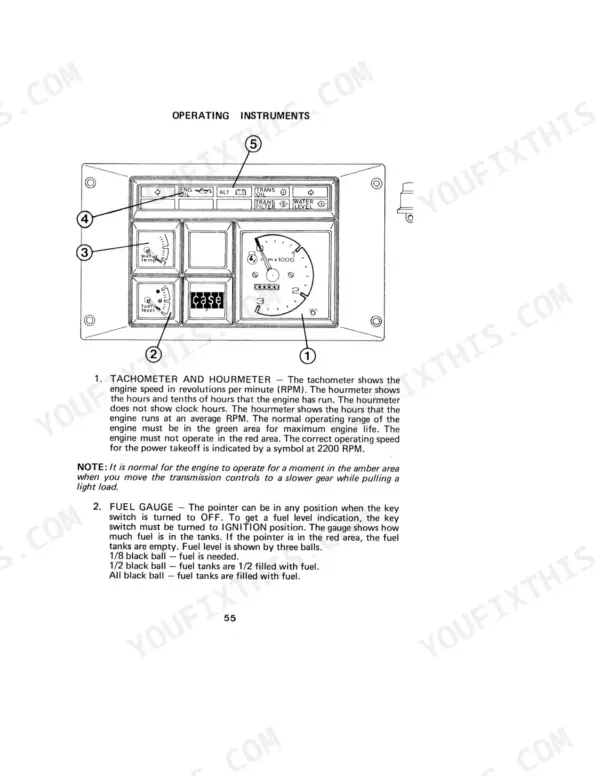
| Operating Instructions | 56-121 | Run-In Procedure, Before Starting the Engine, Towing, Operating Instruments |
| Preventive Maintenance | 122-189 | Cooling System (Pressure Cooling System, Coolant Solutions, Engine Cooling System Treatment, Radiator Cleaning, Service, Thermostat Check, Thermostat Replacement, Fan Belt Adjustment, Fan Belt Replacement) |
Quick Reference Specifications
| Specification | Value | Page |
|---|---|---|
| Hydrostatic Front Power Steering Relief Valve Pressure | 2250 PSI (15 514 kPa) | p. 27 |
| Air Induction System Inner Safety Element Replacement Interval | 1000 hours | p. 142 |
| Engine Oil Filter Replacement Interval | 200 Hours | p. 43 |
| Minimum Single Tire Inflation Pressure | 16 PSI (110 kPa) | p. 31 |
| Wheel Weight Mounting Nut Torque | 160-190 ft. lbs. (220-260 Nm) | p. 119 |
Case IH 4496 Common Problems This Manual Covers
Case IH 4496 won't crank or start after sitting overnight in cold weather
Check battery specific gravity and terminal connections on . Clean any corrosion from posts with a wire brush and verify cables are tight. Cold weather demands a fully charged battery; specific gravity should read 1.265 or higher per cell. Also verify the neutral start switch is properly adjusted so the circuit closes correctly in neutral.
Manual Section: Battery Diagnostics and MaintenanceEngine starts but loses power under load, air filter restriction light comes on
Inspect the air filter restriction indicator on page 142 and service or replace the outer filter element immediately. Do not clean or reuse the inner safety element if it is dirty or damaged; replace it on a 1000-hour interval. Restriction under load accelerates filter loading fast. After replacing, reset the indicator and verify the light clears before returning to field work.
Manual Section: Air Filter Restriction Indicator p. 142Temperature gauge climbing toward red during heavy field work, steam visible from hood
Shut down and let the engine cool before opening anything. Check coolant level, look for leaks at hoses and the radiator, and clean debris from the radiator face. Verify the fan belt tension per pages 122-189. If coolant level is correct and the belt is tight, test the thermostat function as described in the Cooling System Diagnostics section on .
Manual Section: Cooling System DiagnosticsFuel system error E01 displayed, engine cranks but won't fire
Verify fuel level first, then check the fuel specifications on page 39 to confirm you are running the correct cetane rating and that water content and sediment are within spec. Drain water separator bowl if present. Inspect fuel lines for kinks or air leaks from the tank forward. Contaminated or off-spec fuel is the most common cause of low fuel system pressure codes on this machine.
Manual Section: Fuel Specifications p. 39Electrical component stops working, fuse suspected after field repair
Locate the fuse for the affected circuit using the electrical system fuse chart. Pull the suspect fuse and inspect the element visually. Replace only with a fuse of the same amperage rating stamped on the fuse body. Never substitute a higher-amp fuse; it will not protect the circuit and can damage wiring.
Manual Section: Electrical System - FusesSteering feels heavy or sluggish, harder to turn at low speed than at field speed
Check hydraulic fluid level at the sight glass and verify it sits between MIN and MAX marks. Inspect the rear steering valve filter (page 41) and replace if it has not been serviced within the lubrication interval shown in the Lubrication Chart. The hydrostatic front power steering relief valve is set at 2250 PSI (14 414 kPa) per page 27; if fluid level and filter are good but steering stays heavy, have the relief pressure verified before the next operation.
Manual Section: Lubrication p. 41Frequently Asked Questions
What does the TRANS FILTER warning lamp mean on the Case IH 4496, and what should I do when it lights up?
The TRANS FILTER lamp indicates elevated transmission filter pressure. It normally illuminates briefly during cold-weather starts and should go out once the engine warms up. If the lamp stays on during field operation or comes back on after the engine has warmed up, the hydraulic transmission filters are dirty and must be changed immediately. After a filter change, if the lamp still illuminates, stop the engine and check for the cause. p. 57
Why will the Case IH 4496 not start when I turn the key to the START position?
The Case IH 4496 has neutral start switches that prevent the starter motor from engaging unless the range shift control lever is fully in the Neutral (N) position. Make sure the range shift lever is seated in the N gate and the engine stop control is pushed fully down before cranking. If the engine still will not start with the lever in neutral, the neutral start switches may be out of adjustment and need resetting per the procedure on pages 147 and 148. p. 62
How often should I change the engine oil and filters on the Case IH 4496, and when is the first service due?
Drain and refill the engine oil after the first 20 hours of operation while the engine is still hot, using the correct viscosity oil. After that, change the engine oil every 100 hours of operation. Clean or replace the engine oil filters with the first oil change and every 200 hours thereafter. The hydraulic and transmission filters also require a first change at 20 hours and then any time the TRANS FILTER warning lamp illuminates during operation. p. 52
What is the correct cold-weather warm-up and break-in procedure for the Case IH 4496?
In cold temperatures, start the engine and run it at 600 to 800 RPM to provide better combustion before loading the machine. Normal operating temperature is 176 to 194 degrees F (80 to 90 degrees C), shown by the water temperature gauge reaching the green area. During the first 8 hours of field operation, use one gear range lower than normal and avoid lugging the engine below rated RPM. A light load warms the engine faster than running at low idle. p. 52
How will I receive this Case IH 4496 Tractor Operator Manual?
A 189-page Operator Manual in searchable PDF format (46 MB), available the moment you complete checkout. View on computer, tablet, or phone, with no shipping wait.
Are there any print restrictions on this Case IH 4496 Tractor manual?
Yes. The PDF has no DRM restrictions, so print any page or section you need for your shop. Works with any standard printer.
Does this Case IH 4496 Tractor manual include wiring diagrams?
A wiring diagram for the Case IH 4496 Tractor electrical system is included.





Reviews
There are no reviews yet.