
The old listing said 247B and 257B, but crack this set open and it is a four-model book. The B2 machines get their own dedicated modules - Specifications KENR8818, Systems Operation KENR8819, and Testing and Adjusting KENR8820 are all titled 247B2 and 257B2 - and the Disassembly and Assembly books cover 247B, 247B2, 257B and 257B2 together. Every hydraulic test procedure appears twice, once for B machines and once for B2. Engine coverage is the Cat 3024C, the same engine Caterpillar later published as the C2.2, with full cylinder head, crankshaft and fuel injection work. Fourteen serial prefixes are printed in the book, from BXM1-Up through SLK1-Up. This is a pressure-test manual: you diagnose with a gauge against printed specs, not a scan tool.
What's Inside This Caterpillar 247B, 247B2, 257B, 257B2 Repair Manual
| System | Pages | Key Topics |
|---|---|---|
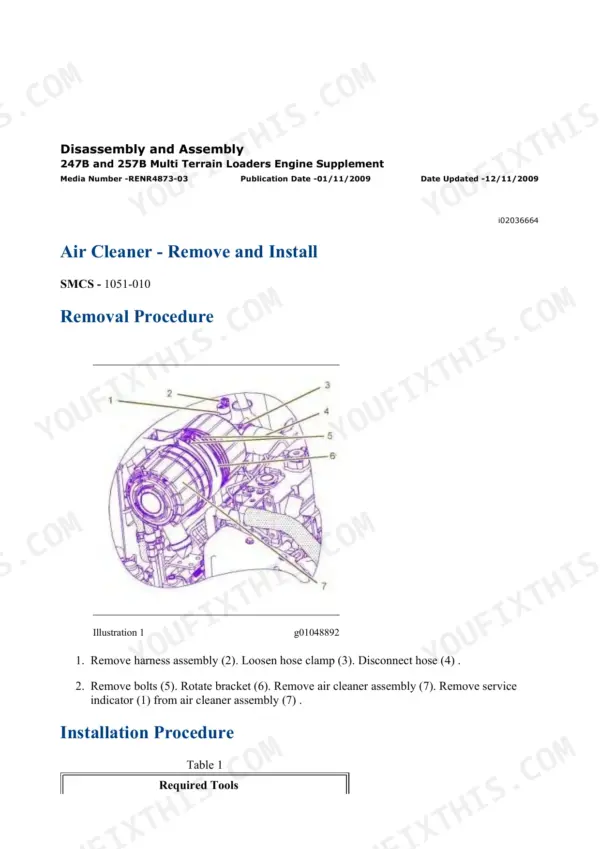
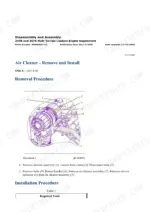
| Air Inlet and Exhaust System | 1-29 | Turbocharger, Inlet and Exhaust Manifolds, Air Cleaner |
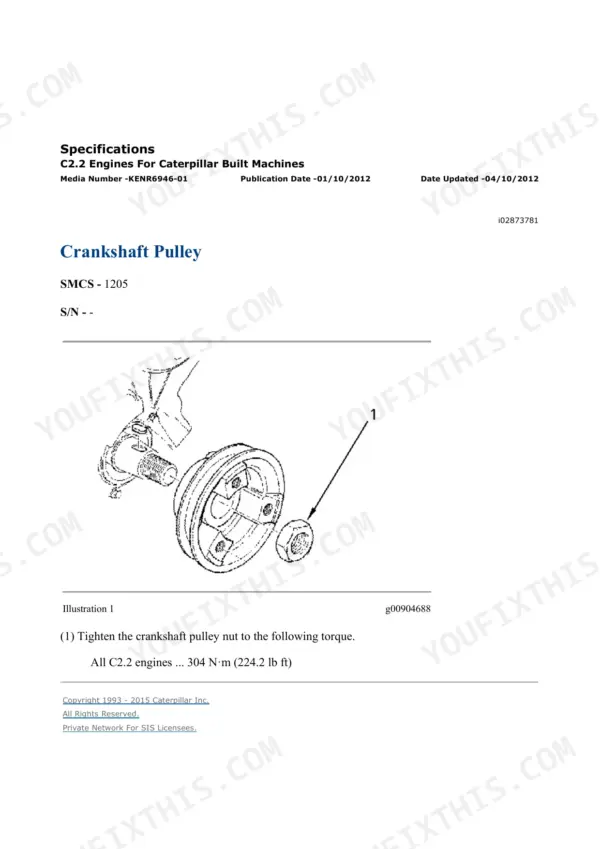
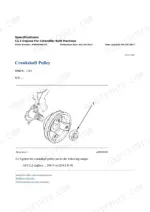
| Basic Engine | 30-544 | Cat 3024C and C2.2 Engines, Cylinder Head, Crankshaft, Pistons, Flywheel |
| Cooling System | 545-701 | Water Pump, Thermostat, Radiator, Hydraulic Fan |
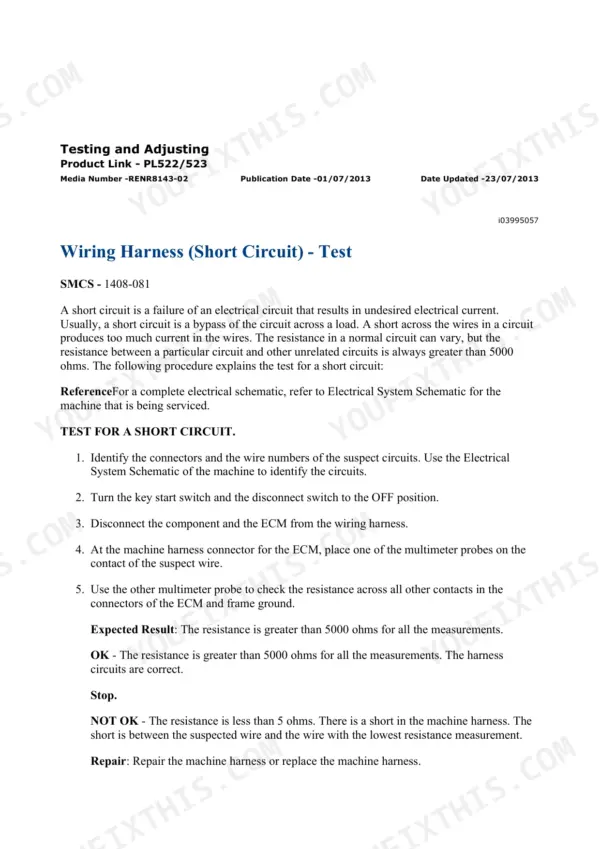
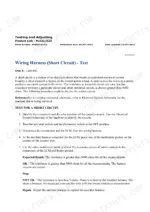
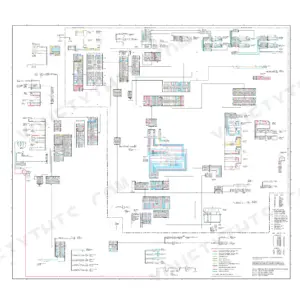
| Electrical and Starting System | 702-1903 | System Schematics, Wiring Harness Open and Short Circuit Tests, Alternator, Starting System, Batteries, Machine Security System, Product Link, EquipmentManager |
| Engine Arrangement | 1904-2014 | Engine Mounting and Arrangement |
| Frame and Body | 2015-2053 | Frame, Body Panels |
| Fuel System | 2054-2241 | Injection Pump, Injectors, Fuel Filter, Priming |
| Hydraulic System | 2242-2916 | Main Relief Valve Test and Adjust, Line Relief Valve Test and Adjust, Pilot System Pressure Test, Pump Flow Test, High Flow Control Manifold, Hydraulic Circuits, Troubleshooting |
| Implements | 2917-2942 | Loader Linkage, Work Tool Mounting |
| Lubrication System | 2943-3050 | Engine Oil Pump, Oil Filter, Oil Relief Valve |
| Machine Arrangement | 3051-3062 | Machine Arrangement and Layout |
| Operator Station | 3063-3743 | Cab, Controls, Air Conditioning and Heating, Seat |
| Power Train | 3744-4131 | Hydrostatic Drive, Drive Motors, Final Drives, Parking Brake |
| Service Equipment and Supplies | 4132-4147 | Service Tooling and Supplies |
| Undercarriage | 4148-4289 | Rubber Track, Idlers, Rollers, Track Tension |
| Work Tools | 4290-4304 | Work Tool Hydraulics and Mounting |
Quick Reference Specifications
| Specification | Value | Page |
|---|---|---|
| All Models | ||
| Main relief valve, work tool | 23000 +/- 700 kPa (3336 +/- 102 psi) | |
| Line relief valve, lift circuit | 27600 +/- 700 kPa (4003 +/- 102 psi) | |
| Line relief valve, tilt circuit | 24500 +/- 700 kPa (3554 psi) and 27600 +/- 700 kPa (4003 psi) by position | |
| Line relief valve, auxiliary circuit | 24500 +/- 700 kPa (3554 +/- 102 psi) | |
| Pilot system pressure at low idle | 3100 +/- 200 kPa (450 +/- 29 psi) | |
| Pilot accumulator charge | 900 +/- 100 kPa (130 +/- 15 psi) | |
| Parking brake line pressure | 3100 +/- 200 kPa (450 +/- 29 psi) | |
| Brake line pressure, initial check | less than 300 kPa (44 psi) | |
| Charge pump test conditions | 18000 +/- 1000 kPa at 2000 +/- 10 rpm, oil 45 +/- 5 C | |
| Engine fitted | Caterpillar 3024C, later published as the C2.2 | |
| Group 1 machines | ||
| Pilot pressure, Group 1 machines | 3260 +/- 200 kPa (473 psi) at 2800 +/- 10 rpm | |
| Group 2 machines | ||
| Pilot pressure, Group 2 machines | 3225 +/- 200 kPa (468 psi) at 2550 +/- 25 rpm | |
Caterpillar 247B, 247B2, 257B, 257B2 Common Problems This Manual Covers
Loader arms are slow or will not lift a full bucket
Start with gauges, not parts. Run the main relief valve test against 23000 kPa, then the line relief tests for lift and tilt, then the pump flow test. The Hydraulic System Testing and Adjusting section gives every spec and tap point, in separate B and B2 procedures.
Manual Section: Hydraulic System - Testing and Adjusting (main relief, line relief and pump flow tests) p. 2446Machine pulls to one side or will not track straight
That is hydrostatic drive wear on one side, pump or drive motor. The Power Train section covers the hydrostatic circuit, drive motors and final drives, with charge pump testing at 18000 +/- 1000 kPa at 2000 rpm with oil at 45 C so you can isolate the weak side before teardown.
Manual Section: Power Train - Hydrostatic Drive, Drive Motors and Final Drives p. 3744Parking brake will not release
Check brake line pressure before condemning anything: the spec is 3100 +/- 200 kPa (450 psi) released, and the initial check should read under 300 kPa (44 psi). The Testing and Adjusting brake procedure separates a pressure supply problem from a solenoid or mechanical brake fault.
Manual Section: Power Train - Testing and Adjusting, Parking Brake Line Pressure p. 3744Rubber track wearing fast or throwing off the undercarriage
Usually track tension, worn idlers or flattened rollers rather than the track itself. The Undercarriage coverage handles rubber track removal and installation, idler and roller replacement, and correct tensioning, so you fix the cause instead of burning through another expensive track.
Manual Section: Undercarriage - Rubber Track, Idlers and Rollers (Disassembly and Assembly) p. 4148Frequently Asked Questions
I have a 247B2 (or 257B2), not the original B. Am I actually covered?
Yes, and not as an afterthought. The B2 machines have their own dedicated Specifications, Systems Operation, and Testing and Adjusting modules (KENR8818, KENR8819, KENR8820), all titled 247B2 and 257B2. The Disassembly and Assembly books name all four models on the cover. Every hydraulic test is printed twice, one procedure for B machines and one for B2, so you follow the version that matches your serial number instead of guessing.
My loader arms feel weak. What should main relief pressure actually be?
The work tool main relief spec is 23000 +/- 700 kPa (3336 +/- 102 psi). The line reliefs are separate: lift circuit 27600 +/- 700 kPa (4003 psi), auxiliary circuit 24500 +/- 700 kPa (3554 psi), and the tilt circuit runs two values by position, 24500 and 27600 kPa. The Testing and Adjusting section walks you through where to tee in the gauge and how to adjust, so you can tell a tired pump from a mis-set relief before buying parts.
The manual mentions Group 1 and Group 2 pilot pressures. Which one is my machine?
The two build groups run different pilot specs: Group 1 machines test at 3260 +/- 200 kPa (473 psi) at 2800 rpm, Group 2 at 3225 +/- 200 kPa (468 psi) at 2550 rpm. Both check 3100 +/- 200 kPa (450 psi) at low idle, and the pilot accumulator charge is 900 +/- 100 kPa (130 psi). The Testing and Adjusting module tells you which group applies by serial number, so you test against the right number instead of chasing a fault that is not there.
The old title had 'SLK MTL' in it. Is that a model I have never heard of?
No, those are two of the fourteen serial number prefixes printed in the book, not a model code. Coverage includes BXM1-Up, C3A1-Up, C3C1-Up, C3D1-Up, C4F1-Up, C4X1-Up, C5F1-Up, CAB1-Up, DST1-Up, MJH1-Up, MTL1-Up, RLL1-Up, SCH1-Up and SLK1-Up. Check the prefix on your serial plate against that list. If yours is on it, the procedures and specs in this set apply to your machine.
Which engine does this cover - my parts guy says C2.2 but my plate says 3024C?
Same engine. Caterpillar built these loaders with the 3024C and later published the same engine as the C2.2, which is why parts listings mix the two names. The engine sections cover cylinder head, crankshaft, pistons, the injection pump and injectors, plus the turbocharger, manifolds and air cleaner on the inlet side. Whether your paperwork says 3024C or C2.2, you are reading the right book.
Reviews
There are no reviews yet.