
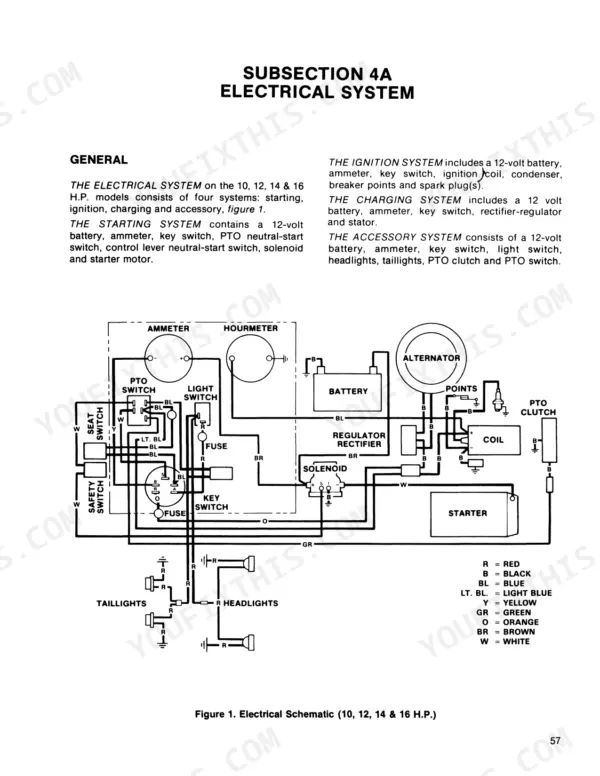
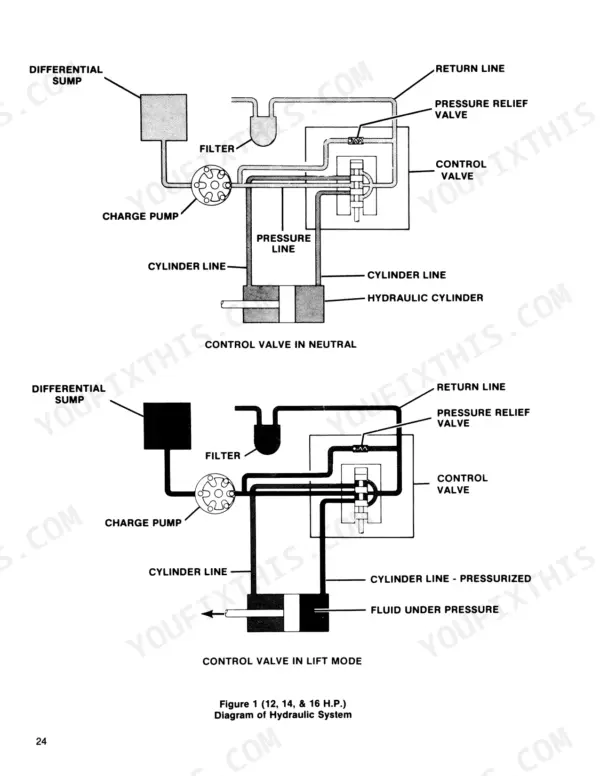
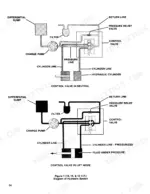
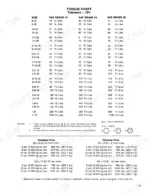
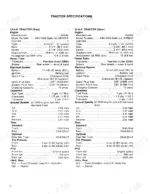
Rebuilding the starter motor on a Ford garden tractor is one of the jobs this 242-page Ford 100 service manual PDF (OEM ID 40010060) works through in full. Coverage spans the 100 to 195 lawn and garden tractor series, six models sold under both plain and LGT designations. Wiring diagrams trace the starting, ignition and charging circuits, while hydraulic schematics lay out the system along with its control valves and cylinders. The engine chapters split single and two cylinder units, each with governor and carburetor coverage, before moving on to the gear transmission, hydrostatic transaxle and hydrostatic transmission. Gap a new gasoline plug to .025 in. (.635 mm). Starter locknuts take 20-25 ft. lbs. (27-34 N.m). With your starter apart, you check the armature against a 0.005 inch (0.127 mm) out of round limit. Bookmarks mirror the chapter layout, so Starting System or Hydrostatic Transaxle is one click away, and the text layer finds any part name you type.
What's Inside This Ford LGT 100–195 Manual
| System | Pages | Key Topics |
|---|---|---|
| Introduction | 1-16 | Safety, Tractor Identification, Tractor Specifications |
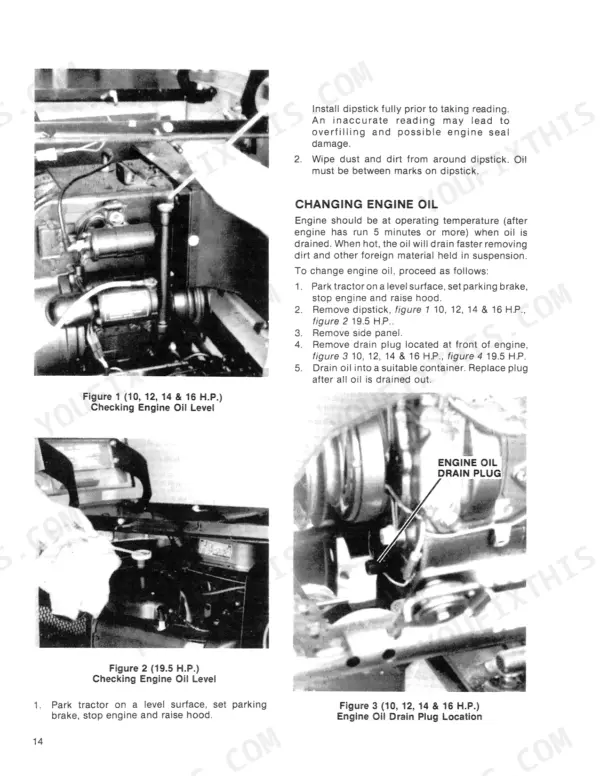
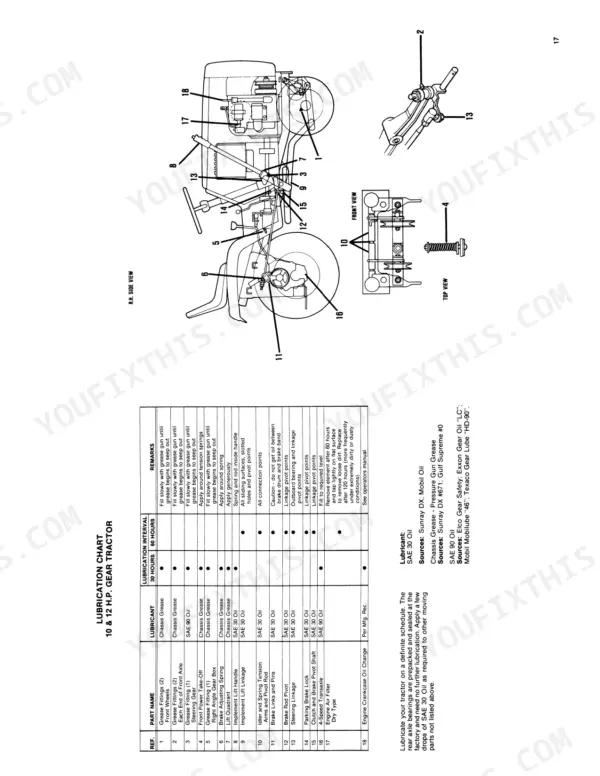
| Lubrication and Maintenance | 17-26 | Fuel and Lubricant, Changing Engine Oil |
| Hydraulic System and Components | 27-60 | Hydraulic System, Hydraulic Control Valves, Hydraulic Cylinders |
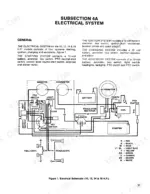
| Electrical System and Components | 61-110 | Electrical System, Starting System, Ignition System, Charging System |
| Engine | 111-162 | Single Cylinder Engine, Two Cylinder Engine, Governor - One Cylinder Engine, Governor - Two Cylinder Engine |
| Drive Train | 163-206 | Gear Transmission, Hydrostatic Transaxle, Hydrostatic Transmission |
| Fuel | 207-214 | Carburetor One Cylinder Engine, Carburetor Two Cylinder Engine, Fuel Pump |
| Chassis | 215-238 | Brakes - 10, 12, 14 & 16 H.P. Tractor, Brakes - 19.5 H.P. Tractor, Front Axle - 10, Front Axle - 19.5 H.P. Tractor |
| Accessories | 239-242 |
Quick Reference Specifications
| Specification | Value | Page |
|---|---|---|
| All Models | ||
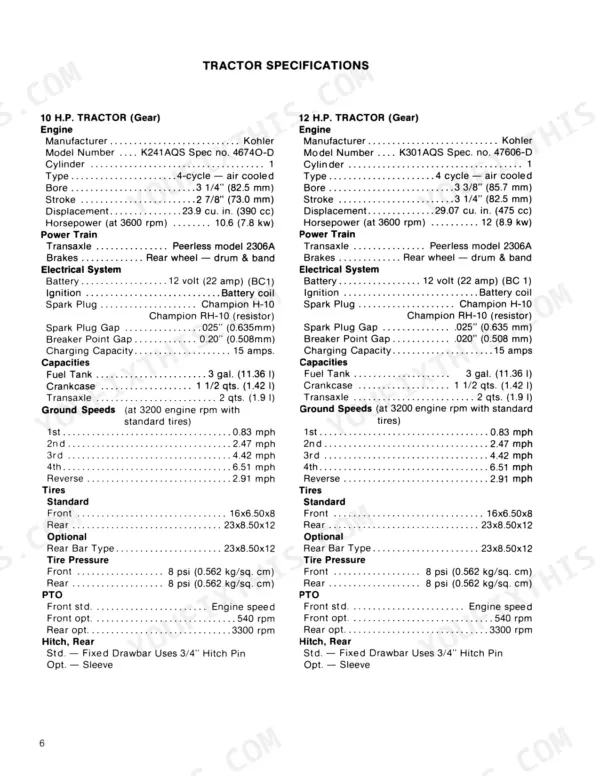
| Spark Plug Gap-Gasoline | .025 (.635 mm) | p. 137 |
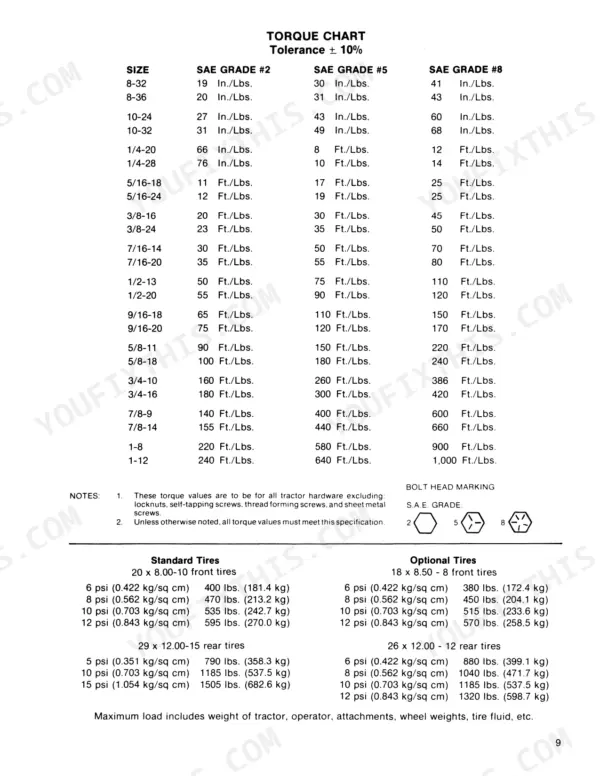
| Starter motor locknut torque | 20-25 ft./lbs. (27-34 N.m) | p. 90 |
| Starter motor thru bolt torque | 95-100 in./lbs. (11-12 N.m) | p. 85 |
| Spark Plug Torque | 18-22 ft. lbs (2.48-3.03 kg/m) | p. 137 |
| Piston Nut Torque (Lift Cylinder) | 125-135 ft./lbs. | p. 55 |
| K532 | ||
| Flywheel Retaining Nut | 115 ft. lbs. (15.862 kg/m) | p. 158 |
| Camshaft Retaining Nut | 40 ft. lbs. (5.517 kg/m) | p. 158 |
| LGT 100 | ||
| Fuel Tank Capacity (10 H.P. Gear) | 3 gal. (11.36 L) | p. 12 |
| LGT 165 | ||
| Fuel Tank Capacity (16 H.P. Hydro) | 5 gal. (18.9 L) | p. 14 |
| LGT 195 | ||
| Fuel Tank Capacity (19.5 H.P. Hydro) | 7 gal. (26.5 L) | p. 14 |
| Crankcase Oil Capacity (19.5 H.P.) | 3 qts. (2.8 L) | p. 14 |
| LGT 100, LGT 120, LGT 125, LGT 145, LGT 165 | ||
| Crankcase Oil Capacity (10, 12, 14, 16 H.P.) | 1 1/2 qts. (1.42 L) | p. 14 |
Ford LGT 100–195 Common Problems This Manual Covers
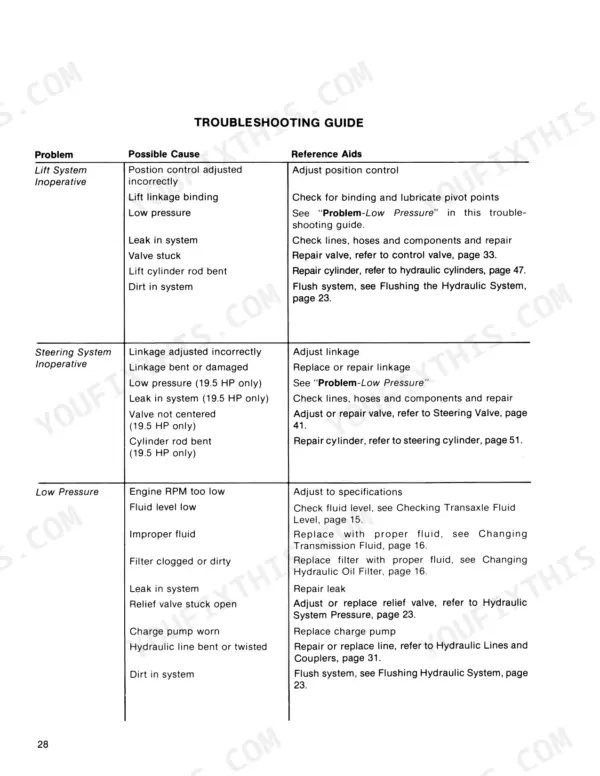
Hydraulic system fluid foaming with a noisy pump and low lift pressure
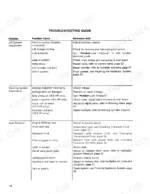
Check the transaxle fluid level first and top up. Inspect the suction line for leaks and repair them, as page 36 lists. If foam persists, drain and refill the contaminated fluid. For low pressure, verify engine RPM, replace a clogged filter, and check the relief valve and charge pump per page 34. Use only the proper fluid: do not mix fluids and do not use Type A automatic transmission fluid (page 19).
Manual Section: Hydraulic System Troubleshooting p. 36Hydraulic lift cylinder and control valve, raised implement slowly drops on its own
Inspect the lift cylinder for leaks, then check the hydraulic control valve for sticking or leaking, per page 36. Properly support any part being removed and do not rely only on a jack (page 10). On a cylinder rebuild, never clamp the rod or piston in a vise, do not over stretch o-rings, and torque the piston nut to 125-135 ft./lbs. per page 55.
Manual Section: Hydraulic System Troubleshooting p. 36Electric starter fails to energize when the key switch is turned to start
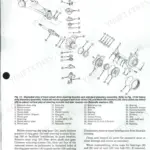
Check wiring and connections, battery, safety switches, the neutral-starter switch, solenoid and starter, following the starting system chart on page 64. A slow-turning starter points to wiring or battery. If the starter comes off for repair, clean the commutator with 400 or finer sandpaper, never emery cloth (page 89), and torque the locknut to 20-25 ft./lbs. (27-34 N.m) per page 90.
Manual Section: Electrical System Troubleshooting p. 64Two cylinder engine low compression with black sooty exhaust smoke and engine sluggish
Clean the air cleaner and confirm the exhaust is not restricted. Test compression with plugs out, throttle and choke wide open, at about 1000 RPM. Readings of 110 to 120 psi are good; below 100 psi on either cylinder calls for reconditioning, per page 141. If compression is good, the mixture is too rich: readjust the main fuel needle. Never force the needles, or the needle valves will be damaged (page 211).
Manual Section: Engine Troubleshooting (Two Cylinder) p. 141Gear transaxle shift lever hard to move or unit cannot be shifted into gear
Check the simple causes first: loose drive belts, a badly worn or misadjusted clutch, loose set screws or sheared keys in the pulleys, and oil saturated belts, as page 165 lists. If those check out, remove the transaxle, supporting it properly and not relying only on a jack (page 10). Inspect for improperly installed gears, forks and rod assembly, a loose axle housing, or a mispositioned shifting lever.
Manual Section: Gear Transmission Troubleshooting p. 165Frequently Asked Questions
How do I troubleshoot a Ford LGT tractor that will not start?
To troubleshoot a no-start condition, first check the battery, wiring, and connections. The manual provides a troubleshooting guide on page 64 that lists potential causes including the starter, neutral-starter safety switches, and the key switch. If the starter fails to energize, check these components for faults. p. 64
How do I adjust the carburetor and governor on a Ford LGT tractor?
For the one-cylinder engine, turn the main fuel screw out 2 full turns and the idle screw 1-1/4 turns for preliminary settings. For the two-cylinder engine, turn the main fuel needle 2 turns out and the idle fuel needle 1-1/4 turns out. Final adjustments should be made with the engine at operating temperature. p. 209
What are the battery replacement specifications for the Ford LGT 100-195?
The batteries used in these tractors are 12-volt, wet cell units. The 10, 12, 14, and 16 H.P. models require a 22 amp battery, while the 19.5 H.P. model requires a 45 amp battery. p. 79
How do you fix ford LGT garden tractor hydraulic lift system operates slowly or stays completely inoperative?
Check the lift linkage for binding and lubricate the pivot points, then adjust the hydraulic control linkage following page 35. If the lift is still slow, work through the low pressure checks on page 34. Inspect lines for bends or twists, and repair the relief valve, control valve or lift cylinder as the chart directs. When replacing lines, never clamp hoses tightly and never substitute copper, brass or inferior steel tubing (page 37). p. 35
Is this Ford 100 manual a download or a disc?
A 242-page Service Manual in searchable PDF format, available the moment you complete checkout. View on computer, tablet, or phone, with no shipping wait.
Can I print pages of this Ford 100 manual for my own shop?
Yes. Printing works from any reader and any printer, for your own shop use.
Are hydraulic system diagrams in this Ford 100 Service Manual?
Yes, hydraulic coverage is complete: system schematics, flow paths, valve configurations, and pressure ratings. Page 30 carries one of them.

Reviews
There are no reviews yet.