
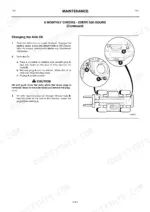
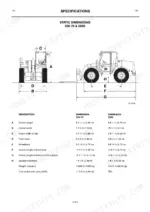
Part of the JCB Operator Manuals.
Before you put your JCB Loadall to work, this 163-page operator manual for the 528-70, 528S, and 530-60 gives you the exact operating limits and routine maintenance schedules to keep it out of the repair bay. Load charts for safe lifting, dashboard indicator guides, and step-by-step daily checks are all laid out in full. Open to the dedicated maintenance section for fluid capacities, lubrication points, and the mandatory service intervals that prevent major breakdowns. Secure the ROPS/FOPS mounting bolts to exactly 244 Nm and verify your front roadwheel tightness hits 680 Nm before heading to the job site. Operating a heavy telehandler on guesswork is a massive liability. Download the bookmarked PDF to your phone, find the right capacity chart, and get to work.
What's Inside This JCB 528-70, 528S, 530-60 Operator Manual
| System | Pages | Key Topics |
|---|---|---|
| Safety & Introduction | 1-16 | Safety Notices, Machine Security, Safety - Yours and Other People's, Machine Model and Serial Number, Machine Description, Safety Check List, Safety Decals, Identifying Your Machine |
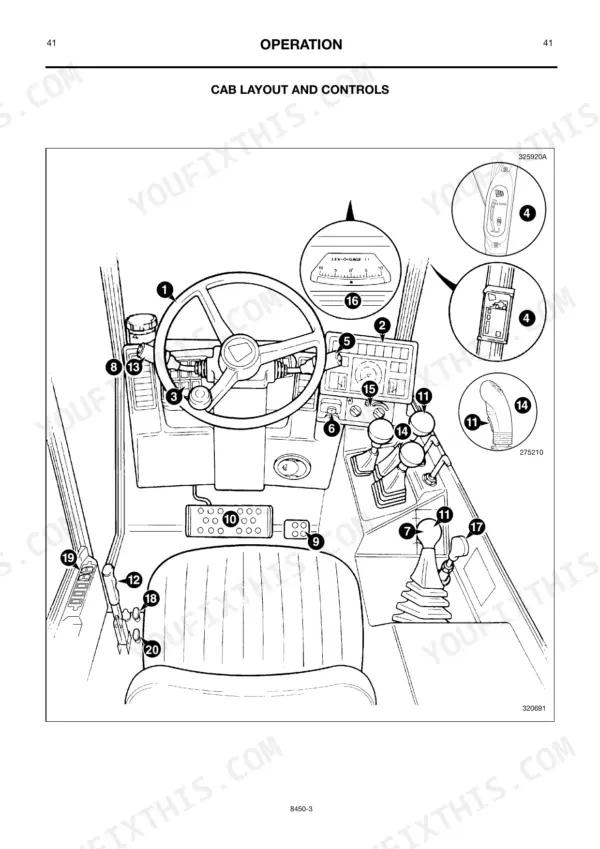
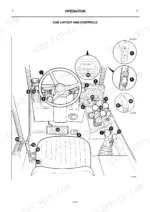
| Cab Entry, Layout & Comfort Controls | 17-36 | Entering & Leaving the Cab, Doors and Windows, Fire Extinguisher, Seat & Seat Belt Adjustment, Steering Wheel & Instrument Panel, Steering Column & Panel Switches, Starter Switch & Parking Brake Lever, Steer Mode Selection (Crab/2WD/4WD), Heater & Air Conditioning |
| Boom, Carriage & Attachment Controls | 37-45 | Dual Lever Control, Raise/Lower Boom, Extend/Retract Boom, Auxiliary Selector Switch, Trailer Circuits, Trailer Brakes, Control Lever Lock (Tilt/All) |
| Starting the Engine & Preparing for Travel | 46-51 | Pre-Start Inspection, Parking Brake Engagement, Battery Isolator Key, Accelerator Pedal Operation, Starter Switch Positions, Engine Warm-Up, Road Wheels Alignment, Steer Mode Selector, Tow Hitch Options |
| Braking & Driving the Machine | 52-55 | Parking Brake Adjustment, Brake Test, Limited Slip Differential (Lsd), Operating Practices, Foot Brake Pedal, Neutral Gear Positioning |
| Load Charts & Boom/Load Indicators | 56-62 | Safe Working Load, Load Moment Indicator, Load Chart, Boom Extension & Angle, Fork Carriage, Safe Load Indicator, Diagnostic Fault Codes, Smooth Ride System (SRS) |
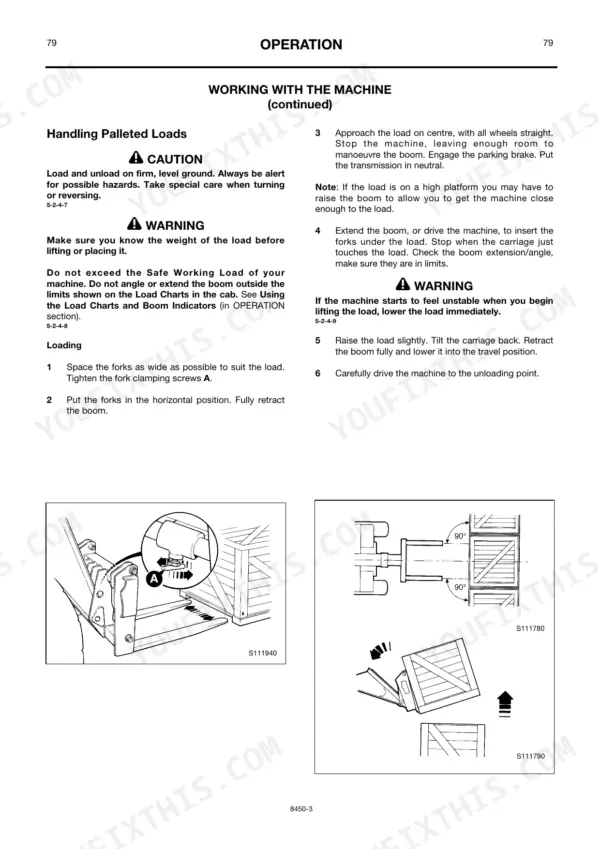
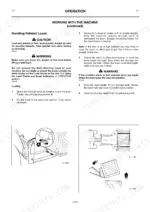
| Working with the Machine | 63-75 | Safety Practices, Risk Assessment, Lifting and Loading Operations |
| Temperature Extremes, Towing & Transport | 76-86 | Cold Weather Starting Aids, Coolant Mixture, Radiator Cleaning, Towing Preparation, Securing the Load, Anchoring with Chains, Trailer Weights & Tyre Pressures, Light Mechanical/Hydraulic/Mechanical Tow Hitch Options, Re-Aligning the Road Wheels, Lifting the Machine |
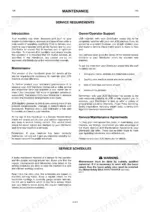
| Maintenance, Prep, Safety & Service Schedule | 87-108 | Lubricants, Health & Safety, Boom Safety Strut, Tools, Engine Cover, Checking for Damage, Seat Belt, Machine Storage, Cleaning the Machine, Service Requirements, Service Schedules, Daily Checks (10 Hours) |
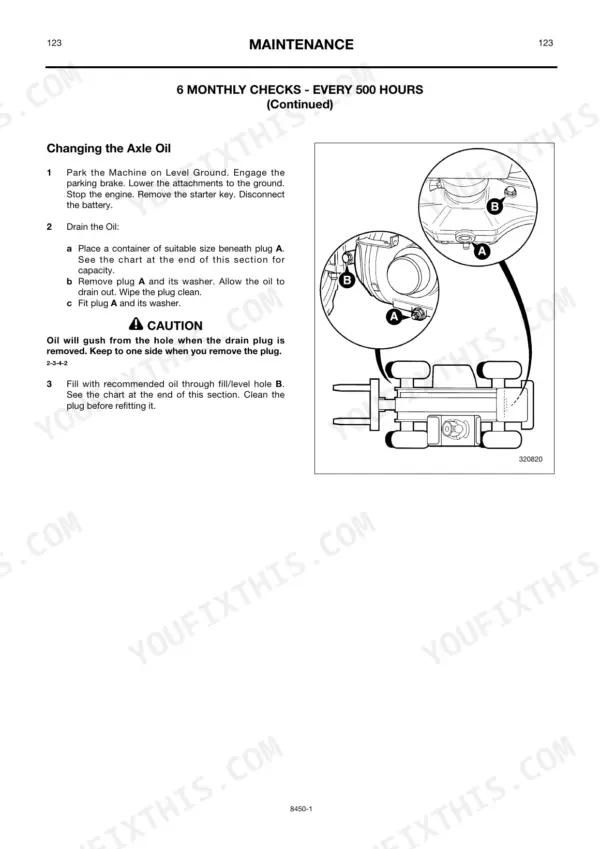
| Maintenance, Periodic Checks & Fluid Changes | 109-146 | Weekly Checks (50 Hours), 6-Monthly Checks (500 Hours), Yearly Checks (1000 Hours), 2-Yearly Checks (2000 Hours), Fuel System, Hose Burst Protection Valves, Battery, Electrical System, Fuse & Relay Identification, Bulbs |
| Maintenance, Fluids, Lubricants & Capacities | 147-154 | Obtaining Replacement Parts, Fluids, Lubricants, Capacities and Specifications (528-70, 528S, 530-60) |
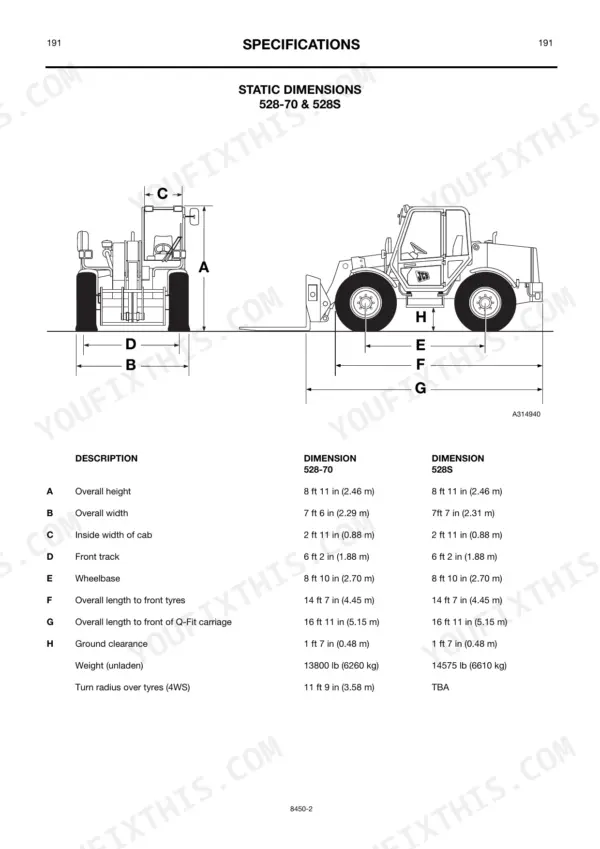
| Specifications | 155-160 | Static Dimensions, Performance Dimensions, Tyres and Pressures, Noise and Vibration Data, Load Charts |
| Service Record & Registration | 161-164 | Service Intervals (100 Hr to 3500 Hr / 42 Month), Registration Information, Dealers Copy |
Quick Reference Specifications
| Specification | Value | Page |
|---|---|---|
| Roadwheel Tightness (Front) | 680 Nm (500 lbf ft) | p. 101 |
| Roadwheel Tightness (Rear) | 680 Nm (500 lbf ft) | p. 101 |
| Air Filter Outer Element replacement condition | renewed immediately if the warning light on the instrument panel illuminates | p. 113 |
| Air Filter Inner Element replacement interval | fitted at least every third time the outer element is changed | p. 113 |
| Fuel filter sediment condition for change | sediment in the bowl | p. 103 |
| Fuel sediment bowl condition for maintenance | sediment in the bowl | p. 103 |
| Hydraulic fluid level | level with the red mark (or above) | p. 107 |
| Brake fluid level | marked on the reservoir | p. 115 |
| Hydraulic hoses inspection criteria | Damaged end fittings, Chafed outer covers, Ballooned outer covers, Kinked or crushed hoses, Embedded armouring in outer covers, Displaced end fittings | p. 10 |
| Coolant level in expansion chamber | 1/3 full | p. 99 |
| Radiator condition | tubes/fins get clogged | p. 92 |
| Wheel Nut Torque | 680 Nm (500 lbf ft) | p. 101 |
JCB 528-70, 528S, 530-60 Common Problems This Manual Covers
JCB 528-70 brake fluid level drops repeatedly or the warning light triggers during operation
Check the fluid level against the mark on the reservoir as shown on page 115. Top up with JCB High Performance Hydraulic Fluid ISO VG15. If frequent topping up is required, stop using the machine immediately and contact a dealer for leak inspection.
Manual Section: Maintenance p. 115Machine responds slowly or boom and carriage hydraulic functions become erratic
Verify the hydraulic fluid is level with the red mark or above, as detailed on page 107. Inspect hoses for damaged end fittings, chafed covers, or embedded armouring per the criteria on page 10. Refill the 110 Litre (24.2 Gal) tank if necessary.
Manual Section: Maintenance p. 107Engine overheats, runs poorly, or loses power after extended operation in dusty conditions
Inspect the pre-cleaner on page 98 and empty it if it is more than a third full of dust. Check the radiator condition on page 92 to ensure tubes and fins are not clogged. Verify the coolant level in the expansion chamber is 1/3 full.
Manual Section: Maintenance p. 98Parking brake fails to hold the machine securely on an incline or engages poorly
Test the parking brake holding performance by following the procedure on page 51. If the machine moves, adjust the lever handle grip mechanism as outlined on page 52. Ensure the road wheels are properly torqued to 680 Nm (500 lbf ft) before operating.
Manual Section: Testing the Parking Brake p. 51Frequently Asked Questions
How do I reset a JCB 528-70 fault code?
If a fault code is displayed on your JCB 528-70, switch the starter key off and then on again. If the fault does not clear, contact your JCB distributor for further assistance. p. 60
What does the JCB 528S error code mean?
For a JCB 528S, error codes indicate specific issues: Error Code 1 means a transducer signal fault (disconnected or damaged wiring); Error Code 2 means calibration is out of range; Error Code 3 indicates calibration is required; Error Code 4 signifies a display unit internal error; and Error Code 5 means low battery voltage (below 9 Volts). p. 60
How do I clear a JCB 530-60 warning light?
To clear a JCB 530-60 warning light, set the starter switch to 'off' to cancel the alarm. If any audible/visual warning operates while the engine is running, stop the engine as soon as it is safe to do so and rectify the underlying fault. p. 47
What is the torque spec for JCB 528-70 wheel nuts?
For a JCB 528-70, the torque specification for wheel nuts is 680 Nm (500 lbf ft) for both front and rear wheels. On new machines, or whenever a wheel has been removed, check the wheel nut torques every two hours until they stay correct. p. 107
How is this JCB 528-70 Operator Manual delivered?
A 163-page Operator Manual in searchable PDF format, available the moment you complete checkout. View on computer, tablet, or phone, with no shipping wait.
Am I free to print this JCB 528-70 Operator Manual?
Yes. Print a chapter or just the pages for the job at hand, for use in your own shop. Any home or office printer works.
Reviews
There are no reviews yet.