
Part of the JCB Operator Manuals.
Need the factory operating procedures and daily maintenance schedules for your utility vehicle? This 226-page JCB Groundhog 6X4 operator manual pdf (OEM #9811/9150) breaks down every pre-start inspection, cab control layout, and fluid service interval. Inside, you get full dashboard indicator explanations, safe slope operating practices, and lifting operations detailing exactly how to safely load the cargo bay. Open to the routine maintenance schedules to find precisely when to grease the front axle steering pivot joints, drain the fuel filter, and change the transaxle oil. Verify your center wheel nuts are tightened to 100 Nm and keep your front wheel torque locked at 74 Nm before hitting the site. Do not risk downtime over skipped daily checks. Grab this bookmarked file on your tablet, walk out to the yard, and keep your machine earning its keep.
What's Inside This JCB GROUNDHOG 6X4 Operator Manual
| System | Pages | Key Topics |
|---|---|---|
| Machine Overview & Safety | 15-51 | JCB Groundhog 6x4, Safety Warnings, general/operating/maintenance Safety, Safety Label Identification, Part Numbers |
| Machine Identification | 52-56 | Machine Identification Plate, Vehicle Identification Number, Product Identification Number Data Plate, Component Identification Plate, ROPS Data Plate |
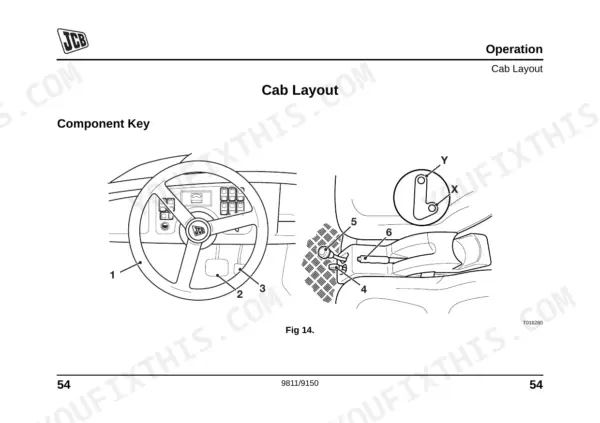
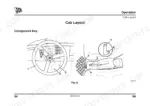
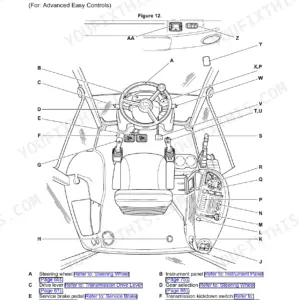
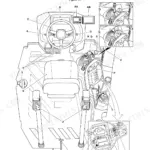
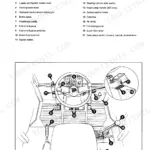
| Cab & Operator Controls | 57-83 | Entering/leaving the Cab, Seat Belts, Mirrors, Cab Component Key, Drive Controls, Switches, Instrument Panel, Digital Display, Hourmeter, Auxiliary Power Supply Socket |
| Pre-Operation Checks & Safety Equipment | 84-87 | Beacon, Park Brake Engagement, Pre-Start Inspection, Lights and Indicators Check, Seat and Seat Belt Check, Load bay/cargo Security |
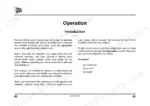
| Operating the Machine | 90-104 | Preparing for Site Travel, Operating Procedure, Park Brake Engagement, Drive Disengagement, Engine Stop, Operating on slopes/rough Terrain, Carrying Loads, raising/lowering Load Bay, Dumping a Load |
| Operating Environment, Towing & Refuelling | 105-113 | High Temperature Operation, connecting/disconnecting a Trailer, Low Fuel Levels |
| Transport & Storage | 114-126 | Towing the Machine, Road Travel Preparation, Loading Onto Transporter, Securing the Machine, Machine Storage |
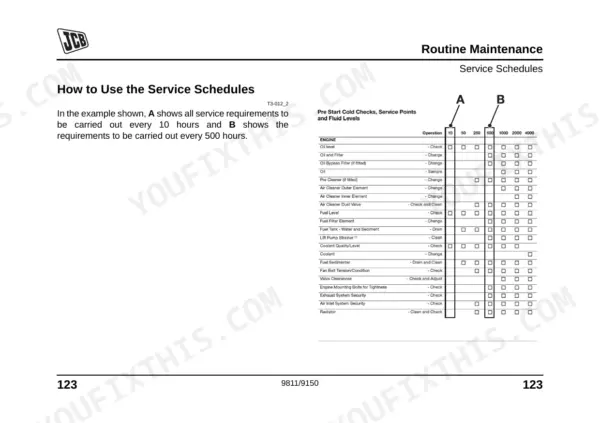
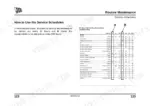
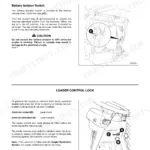
| Routine Maintenance & Service Schedules | 127-151 | Service Requirements, Battery, Using the Service Schedules, Pre-Start Cold Checks, Service Points and Fluid Levels, Coolant Mixtures, Fuel Types |
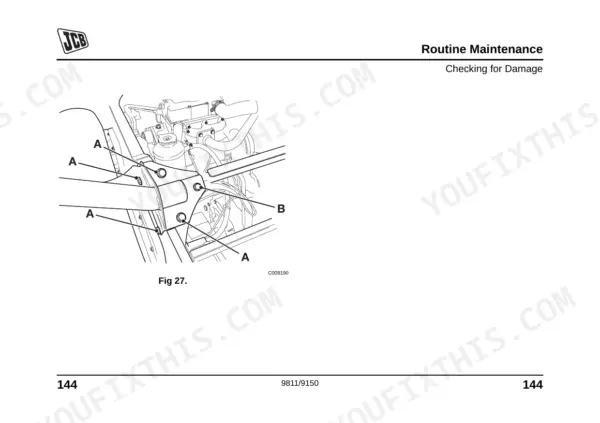
| Maintenance Prep, Cleaning & Greasing | 152-163 | Preparing the Machine for Cleaning, Machine Body and Structure Check, Seat and Seat Belt Check, ROPS Structure Check, Front Axle Steering Pivot Joint Greasing |
| Drivetrain, Brakes & Electrics | 164-175 | Drive Chain Lubrication, Park Brake, Battery Terminals, Electrolyte Level, Jump Starting the Engine, Fuses |
| Engine, Fuel & Transmission Servicing | 176-203 | Air Filter Element, Engine Oil and Filter Change, Coolant Level, Radiator Hoses and Clamps, Fuel Filter draining/changing, Fuel System Bleeding, Transaxle Oil, Drive Chain Tension |
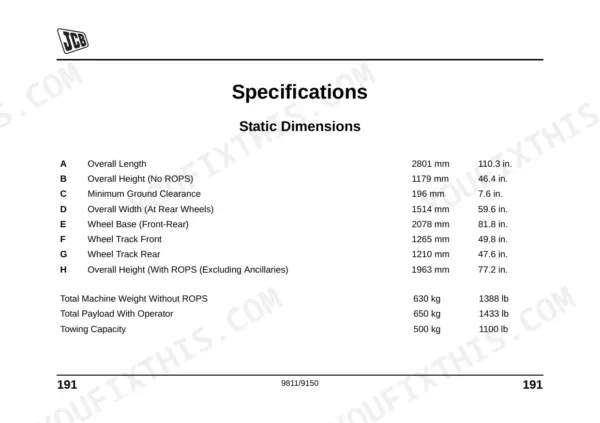
| Tyres & Specifications | 204-214 | Tyre Inflation, Wheel Nut Torques, Static Dimensions, Tyre Sizes and Pressures, Speeds and Loads, Trailer Towing, Vibration Data |
| Warranty & Compliance | 215-226 | Machine Service Record Sheet, Registration Information, Ec Declaration of Conformity |
Quick Reference Specifications
| Specification | Value | Page |
|---|---|---|
| Wheel Nut Torque (Front) | 74 Nm (54 lbf ft) | p. 206 |
| Wheel Nut Torque (Centre) | 100 Nm (74 lbf ft) | p. 206 |
| Battery Electrolyte Level | 0.250 in (6 mm) above the plates | p. 168 |
| Air Cleaner Element Replacement Interval (dusty conditions) | every 100 Hours | p. 144 |
| Engine Oil Drain Plug Torque | 35 Nm (26 lbf ft) | p. 179 |
| Tyre Pressure (Front Turf Trac R/S, 22.5-10-8) | 0.69 bar (10 lbf/in2) | p. 209 |
| Tyre Pressure (Front Dirt Dog, 22-11-8) | 0.34 bar (5 lbf/in2) | p. 209 |
| Seat Belt Replacement Interval | every three years | p. 64 |
| Fuel Tank Capacity | 20 litres | p. 147 |
| Engine Oil Capacity (First 100 hours only) | 3.05 litres | p. 147 |
| Engine Coolant Capacity | 10 litres | p. 147 |
| Transaxle Oil Capacity | 4.5 litres | p. 147 |
JCB GROUNDHOG 6X4 Common Problems This Manual Covers
JCB Groundhog 6x4 vehicle jerks during acceleration or suddenly loses drive power while operating on rough terrain.
Check the drive chain tension on page 201. Verify the drive chain slack measures exactly 20 - 25 mm. If the chain is too loose, adjust the tension and torque the tension fasteners to 74 Nm (55 lbf ft) as shown on page 203.
Manual Section: Transmission p. 201Steering feels heavy or machine pulls to one side while carrying loads in the cargo bay.
Inspect the tyre pressures according to page 209. Set the Front Bear Claw tyres to 0.34 bar (5 lbf/in2). Verify the front wheel nuts are torqued to 74 Nm (54 lbf ft) on page 206 to prevent wheel wobble and steering issues.
Manual Section: Tyres and Wheels p. 209Engine temperature warning light flashes on the digital display and machine loses power during heavy use.
Inspect the coolant level before starting the engine. Drain and flush the system if contaminated, then refill with exactly 10 litres of approved coolant mixture as specified on page 147. Clean debris from the radiator fins to ensure proper airflow.
Manual Section: Fluids, Lubricants and Capacities p. 147Starter clicks repeatedly but engine fails to turn over or starts intermittently in cold weather.
Check the battery terminals for corrosion and verify the electrolyte level is 0.250 in (6 mm) above the plates as shown on page 168. Clean the cable connections thoroughly with a wire brush. Tighten all loose ground wires to restore proper cranking voltage.
Manual Section: Electrics p. 168Engine runs but drive will not engage when the operator is seated and ready to work.
Verify the seat belt is securely fastened to engage the safety interlock switches. Replace the complete seat belt assembly every three years as mandated on page 64. Inspect the wiring harnesses under the seat for loose connections or damaged insulation.
Manual Section: Seat Controls p. 64Frequently Asked Questions
What are the torque specs for JCB Groundhog 6x4 wheel nuts or engine bolts?
The wheel nut torques for the JCB Groundhog 6x4 are 74 Nm (54 lbf ft) for the front wheels and 100 Nm (74 lbf ft) for the centre and rear wheels. For engine maintenance, the oil drain plug should be tightened to 35 Nm (26 lbf ft). Additionally, ROPS mounting bolts require specific torques: M12 bolts to 74 Nm (55 lbf ft) and M10 bolts to 43 Nm (32 lbf ft). p. 206
What do the JCB Groundhog 6x4 error codes mean?
The manual indicates that the flashing of all fuel level bars and the filler pump symbol on the digital display signifies a fault, and advises contacting a JCB distributor. Other visual warnings include lights for battery charging circuit failure, high engine coolant temperature, low engine oil pressure, engaged park brake, engaged differential lock, engine pre-heat, and trailer indicators. The manual does not provide specific alphanumeric error codes or their detailed meanings. p. 79
How do I troubleshoot starting problems on a JCB Groundhog 6x4?
To troubleshoot starting problems, ensure the forward/reverse lever is in Neutral and the park brake is engaged, as the vehicle will not start otherwise. Operate the starter for no longer than 15 seconds at a time, allowing it to cool for 30 seconds if the engine fails to start. For a dead battery, refer to the Jump Starting the Engine procedure on page 170. p. 88
how to check torque specs for JCB Groundhog 6x4
To check torque specifications for the JCB Groundhog 6x4, refer to the "Checking the Wheel Nut Torques" section on page 206, where Table 4 provides values for front (74 Nm / 54 lbf ft), centre (100 Nm / 74 lbf ft), and rear (100 Nm / 74 lbf ft) wheel nuts. For the engine oil drain plug, the torque is 35 Nm (26 lbf ft) as specified on page 179. ROPS mounting bolts are M12 (74 Nm / 55 lbf ft) and M10 (43 Nm / 32 lbf ft), detailed on page 159. p. 206
What format is this manual in?
Immediate download of the complete 226-page searchable Operator Manual. Access it on any device, from a laptop at your desk to a phone in the field.
Am I able to print pages from this manual?
Yes. The PDF has no DRM restrictions, so print any page or section you need for your shop. Works with any standard printer.
Reviews
There are no reviews yet.