
Part of the JCB Operator Manuals.
This is the JCB operator's manual for the TM320, TM320S, and TM320WM articulated wheeled loaders, publication 9821/3100-6, running 220 pages in English. It is the factory guide meant to stay with the machine, written for the owners and operators who run these telescopic wheeled loaders day to day.
Inside you get the operating instructions, cab controls and instrument cluster, load charts, and travel preparation, plus a full Routine Maintenance section covering service schedules, fluids, greasing, and inspection. The Specifications section lists fluid capacities, torque figures such as the 680 Nm wheel nuts, and the maximum travel speeds of 40 kph for the TM320 and TM320S and 20 kph for the TM320WM.
Use it to operate the loader safely, keep to the service and greasing schedule, torque the wheels and ROPS/FOPS mounts correctly, and fit optional attachments. It is delivered as an instant PDF download you can read on any device or print.
What's Inside This JCB TM320, TM320S, TM320WM Operator Manual
| System | Pages | Key Topics |
|---|---|---|
| Safety Notices | 11-12 | Important Information, Operator Manual, Safety Warnings |
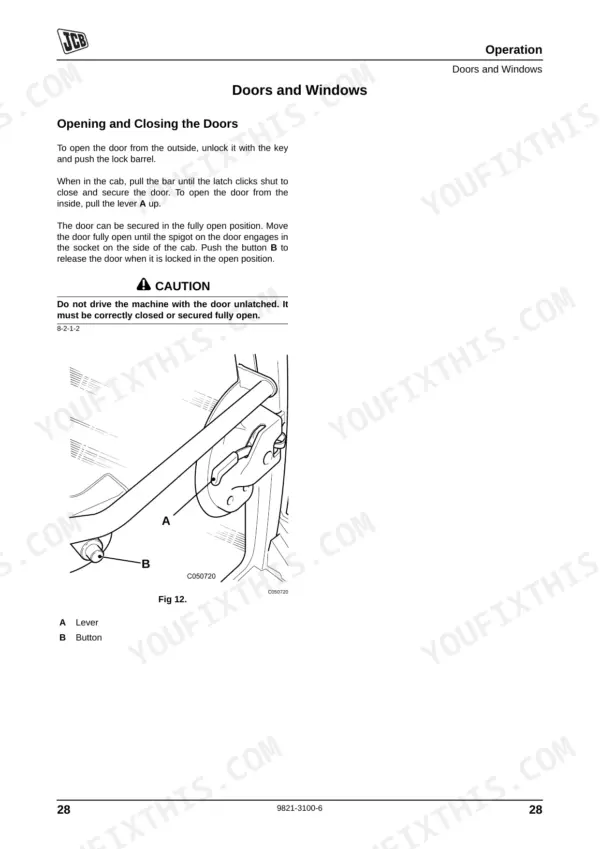
| Mirrors | 35-45 | Doors and Windows, Before Entering the Cab, Introduction, Entering and Leaving the Cab, Opening and Closing the Doors, Suspension Seat (Kab 800 Series - Air), Seat Controls, Inertia Reel Seat Belt |
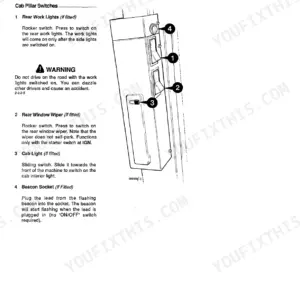
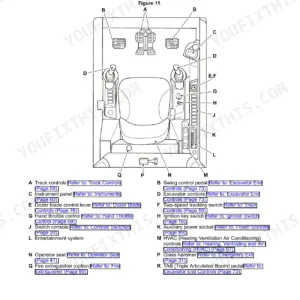
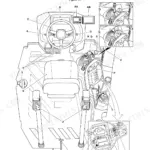
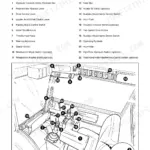
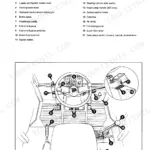
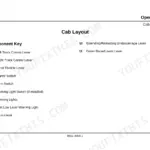
| Switches | 46-59 | Drive Controls, Cab Layout, Component Key, Switches and Instruments |
| Servo-Control Lever | 60-71 | Instrument Cluster, Introduction, Air Conditioning and Heater Controls, Operating Levers |
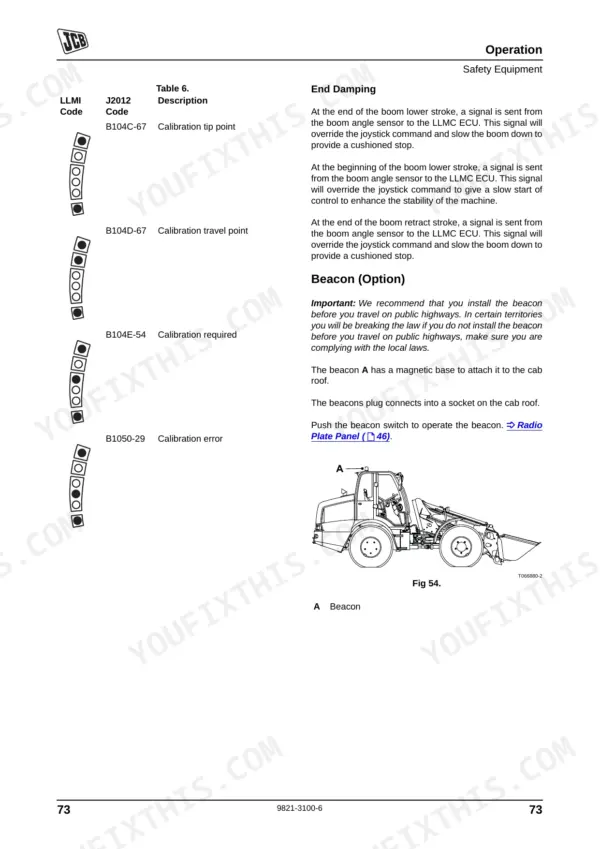
| Fire Extinguisher (If Fitted) | 72-84 | Before Starting the Engine, Load Charts, Safety Equipment, Longitudinal Load Moment, Smooth Ride System, Introduction, Preparing the Machine for Travel, Preparing for Road Travel |
| Working with a Boom | 85-98 | Operating Practices and Site Safety, Stopping and Parking the Machine, Working with the Machine, Safety Practices, Clothing and Safety Equipment, Danger Zone, Log Moving/Handling |
| Hydraulic Tow Hitch | 99-106 | Cab Filters, Use of Machines on Gradients or Slopes, Operating Environment, Operating in Low Temperatures, Operating in High Temperatures, Operating in Dusty or Sandy Areas, Operating in Coastal Regions, Operating on Wet or Soft Ground |
| During Storage | 107-113 | Introduction, Filling the Tank, Refuelling the Machine, Low Fuel Levels, Moving a Disabled Machine, Preparation for Towing, Articulation Locks, Transporting the Machine |
| Take the Machine Out of Storage | 114-124 | |
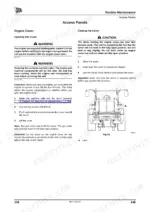
| Routine Maintenance | 125-188 | Service Requirements, Introduction, Owner/Operator Support, Service/Maintenance Agreements, Initial Service and Inspection, Fit for Purpose Tests for Lifting Equipment |
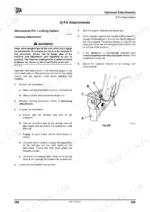
| Optional Attachments | 189-200 | Engage the Attachments, Disengage the Attachments, Work Platforms, Lift Performance, Static Dimensions, Trailer Towing, Towing Limitations, Wheels and Tyres |
| Specifications | 201-212 | Lift Performance, Static Dimensions, Trailer Towing, Wheels and Tyres, Noise Data, Vibration Data |
| Warranty Information | 213-216 | Machine Service Record Sheet (Installation Checklist, 1st 100 Hrs./2 Weeks, 500 Hrs./6 Month, 1000 Hrs./12 Month, 1500 Hrs./18 Month, 2000 Hrs./24 Month, 2500 Hrs./30 Month, 3000 Hrs./36 Month, 3500 Hrs./42 Month, 4000 Hrs./48 Month, 4500 Hrs./54 Month, 5000 Hrs./60 Month, 5500 Hrs./66 Month, 6000 Hrs./72 Month, 6500 Hrs./78 Month, 7000 Hrs./84 Month, 7500 Hrs./90 Month, 8000 Hrs./96 Month, 8500 Hrs./102 Month, 9000 Hrs./108 Month) |
| European Community Standards | 217-220 | Ec Declaration of Conformity, Introduction, Explanation of the Ec Declaration of Conformity |
Quick Reference Specifications
| Specification | Value | Page |
|---|---|---|
| Wheel nut torque (Front) | 680 Nm (500 lbf ft) | p. 186 |
| Wheel nut torque (Rear) | 680 Nm (500 lbf ft) | p. 186 |
| Hydraulic filter element cap torque | 72Nm | p. 169 |
| Transmission oil temperature (high set point) | 105°C | p. 61 |
| Transmission oil temperature (critical fault) | 110°C | p. 61 |
| Engine Oil Capacity (Maximum) | 15 Litres | p. 138 |
| Engine Coolant Capacity | 20.5 Litres | p. 138 |
| Transmission Fluid Capacity (Dry Fill) | 19 Litres | p. 138 |
| Transfer Box Oil Capacity | 1.3 Litres | p. 138 |
| Axle Oil Capacity | 17.7 Litres | p. 138 |
| Wheel Nut Torque | 680 Nm | p. 176 |
JCB TM320, TM320S, TM320WM Common Problems This Manual Covers
Clutch slip or loss of drive
Transmission clutch slip and intermittent loss of drive are common themes on TM320-family loaders, worsened by low or contaminated transmission oil. The Routine Maintenance section covers the transmission fluid checks and service schedule that keep drive healthy.
Manual Section: Routine Maintenance p. 125Overheating with a dirty cooling pack
Cooling and overheating complaints recur when the reversible fan or radiator pack is dirty or restricted. The Routine Maintenance section covers coolant checks and cleaning of the cooling pack, with a 20.5 litre coolant capacity.
Manual Section: Routine Maintenance p. 125Jerky or slow boom action
Boom extension and telescopic movement can turn rough, jerky, or slow with hydraulic wear, low oil, or contamination in the circuit. The Routine Maintenance section covers hydraulic fluid and filter service that restores smooth response.
Manual Section: Routine Maintenance p. 125Brake wear or failed brake check
Poor braking and failed brake inspections trace back to wear, contamination, or skipped scheduled items. The Routine Maintenance service chart lists the brake inspection intervals to follow.
Manual Section: Routine Maintenance p. 125Worn pivot and boom joints
Excessive chassis pivot or boom joint wear usually comes from worn bearings or inadequate greasing intervals. The Routine Maintenance section lists the greasing points and schedule that protect these joints.
Manual Section: Routine Maintenance p. 125Attachment will not engage
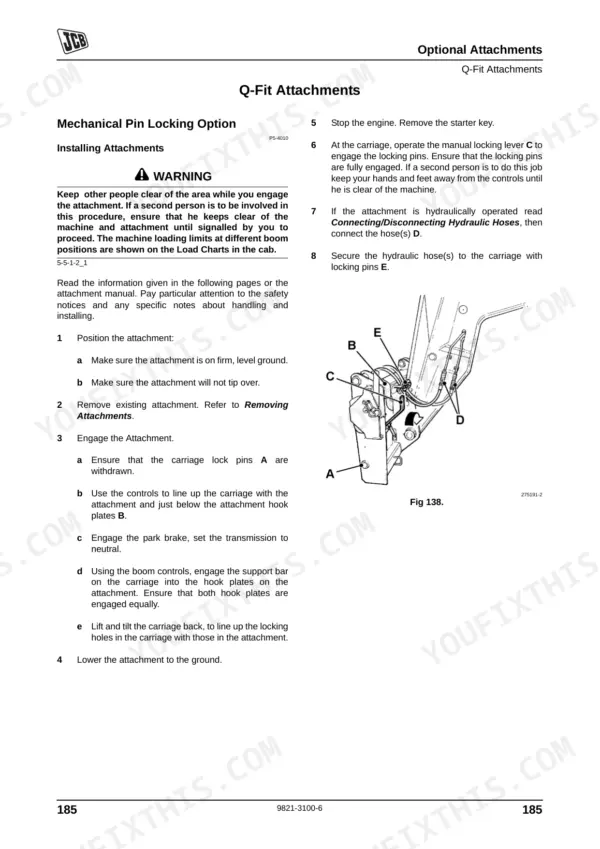
Fitting work platforms or other attachments means following the correct engage and disengage steps and lift performance limits. The Optional Attachments section covers this along with trailer towing and wheel and tyre data.
Manual Section: Optional Attachments p. 189Frequently Asked Questions
Which loaders does this manual cover?
It covers the JCB TM320, TM320S, and TM320WM wheeled loaders, publication number 9821/3100-6, in 220 pages of English text. It is the operator and maintenance manual for these machines.
What is the wheel nut torque?
The Routine Maintenance section gives the front and rear wheel nuts at 680 Nm and the ROPS/FOPS mounting bolts at 200 Nm, with the hydraulic filter cap at 72 Nm. p. 125
What are the fluid capacities?
The Routine Maintenance section lists 15 litres of engine oil, 20.5 litres of coolant, 19 litres of transmission fluid (dry fill), and 17.7 litres of axle oil for these loaders. p. 125
How fast do these loaders travel?
The Specifications section gives a maximum travel speed of 40 kph for the TM320 and TM320S and 20 kph for the TM320WM, along with noise and vibration data. p. 201
What format is this manual in?
A 220-page searchable PDF, downloaded the moment you check out. Open it on a laptop, tablet, or phone and take it straight to the shop floor.
Can I print specific sections of this manual?
Yes. Many mechanics print the section they need for their own shop and bring it to the bench.
Reviews
There are no reviews yet.