
Part of the Kubota Repair Manuals.
This Kubota RK Series Workshop Manual is the factory service reference for the RK diesel engine family, covering the RK50, RK60, RK70, RK80-1, RK95-1, RK105-2, and RK125-2 along with their N and H variants. It is a 125 page PDF you download and keep on any device, with a searchable text layer and bookmarks for fast navigation.
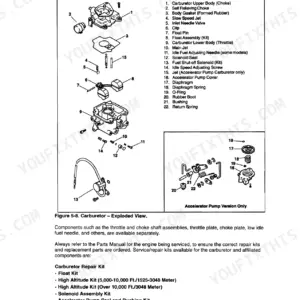
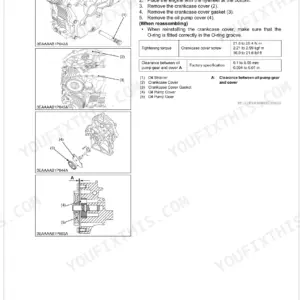
Inside you get full specifications, performance curves, appearance and dimension drawings, optional PTO equipment details, and a mechanism section explaining how each system works. The largest part of the book is the disassembling and servicing chapter, which walks through teardown, inspection, and reassembly with the exact tolerances and torque figures the factory uses.
Whether you are rebuilding a top end, chasing an oil pressure problem, or setting valve clearance, this manual gives owners and independent mechanics the numbers to do the job right.
What's Inside This Kubota RK Series Manual
| System | Pages | Key Topics |
|---|---|---|
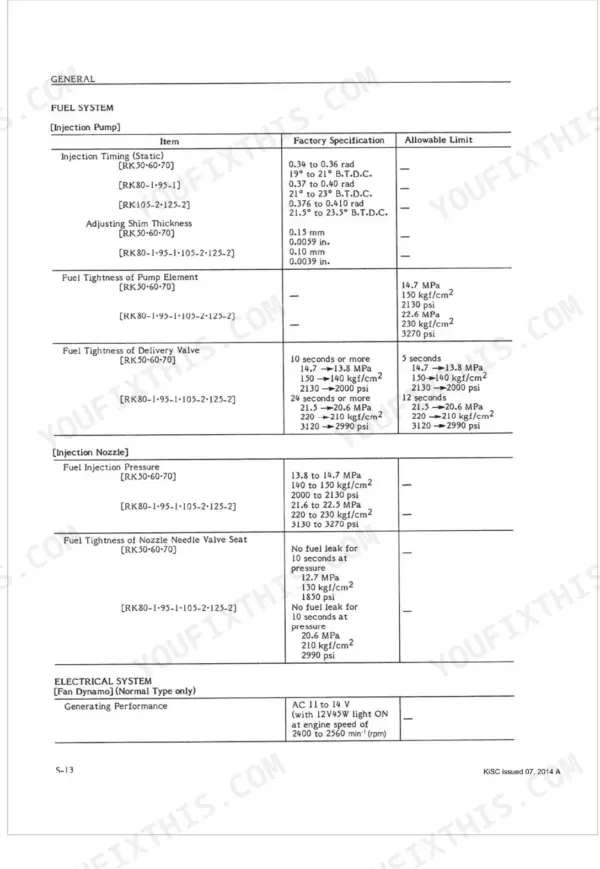
| Specifications | 3-4 | Engine Model and Type Specifications, Output and Speed Specifications, Combustion and Lubricating System Specifications, Cooling and Fuel System Specifications |
| Performance Curves | 5-6 | RK50 RK50-N RK50H Performance Curves, RK80-1 RK80-1-N RK80H-1 Performance Curves, RK95-1 RK95-1-N RK95H-1 Performance Curves, RK60 RK60-N RK60H Performance Curves |
| Appearance and Dimensions | 7-8 | Radiator Type Dimensions, Hopper Type Dimensions, Details of Flywheel |
| Optional Equipment | 9-10 | PTO Shaft Assembly with Bolt, Washer & Key, Pulley Flange Assembly, Flat Pulley, V-Pulley |
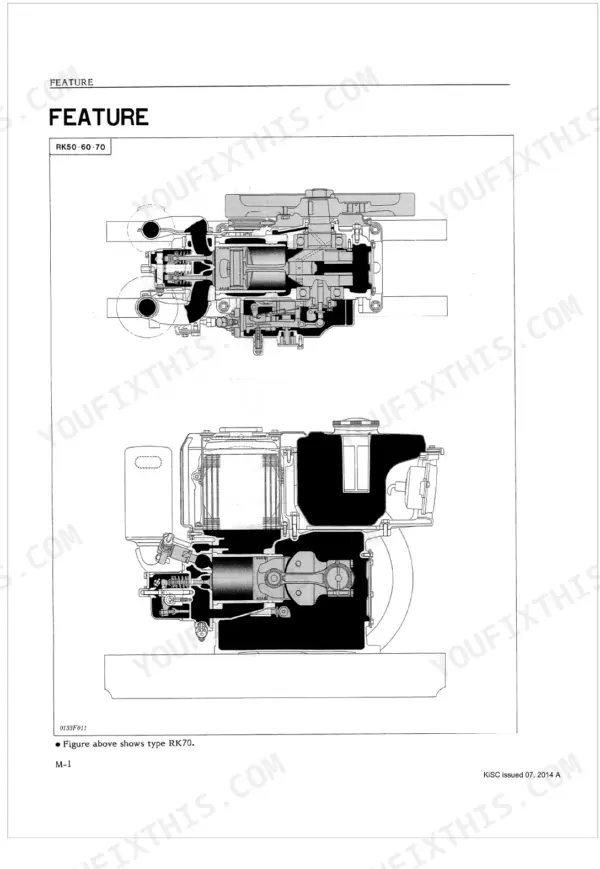
| Mechanism | 11-42 | Feature (Fuel Saving, Quiet/Low Vibration, Easy Operation/Starting, High Durability, New Design/Safety Engine) |
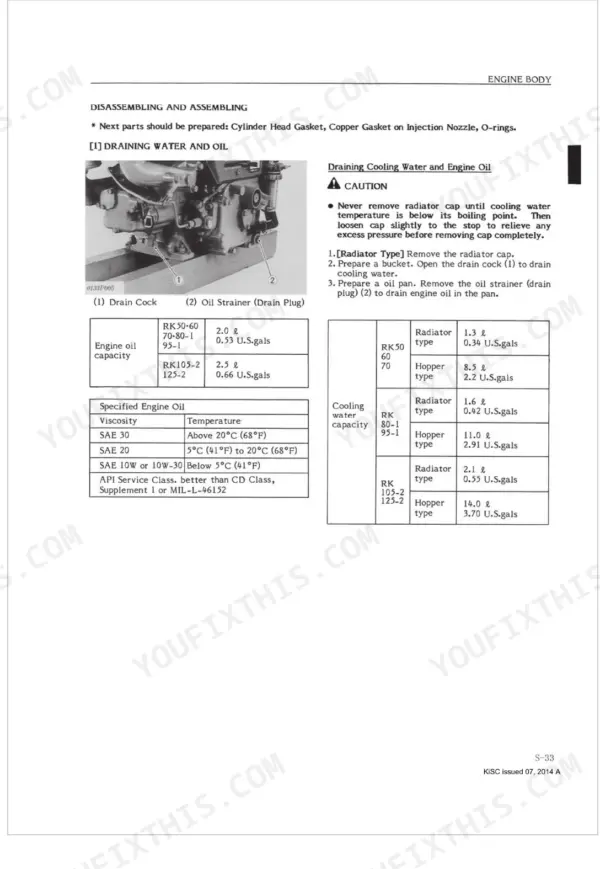
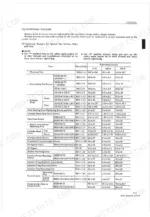
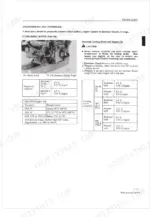
| Disassembling and Servicing | 43-125 | Engine Identification (Model Name and Engine Serial Number, Applying Grease to Oil Seal, Direction of Installing Snap Rings) |
Quick Reference Specifications
| Specification | Value | Page |
|---|---|---|
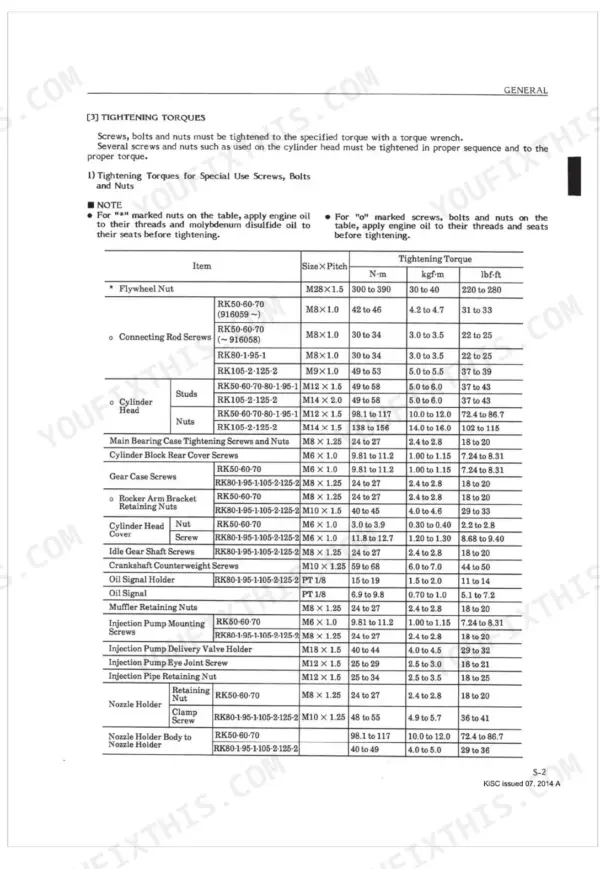
| Flywheel Nut Torque | 300 to 390 N-m | p. 44 |
| Cylinder Head Nuts Torque (RK50-60-70-80-1-95-1) | 98.1 to 117 N-m | p. 44 |
| RK50 Bore x Stroke | 72.0 x 75.0 mm | p. 3 |
| RK50 Lubricant Capacity | 2.0 ℓ | p. 3 |
| RK50 Fuel Tank Capacity | 7.5 ℓ | p. 3 |
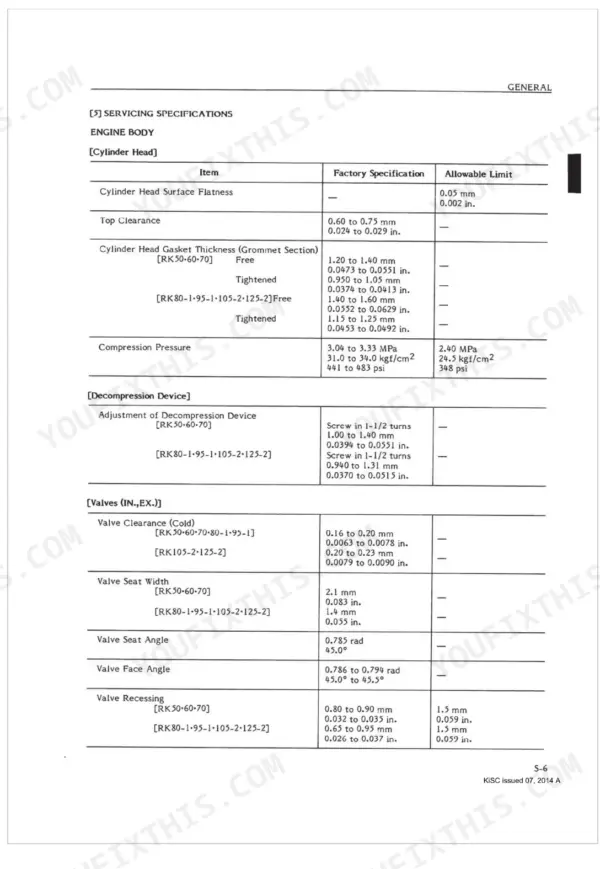
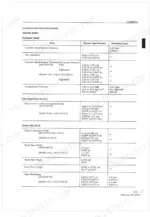
| Cylinder Head Surface Flatness Allowable Limit | 0.05 mm | p. 48 |
| Compression Pressure Allowable Limit | 2.40 MPa | p. 48 |
| Valve Clearance (Cold) [RK50-95-1] | 0.16 to 0.20 mm | p. 48 |
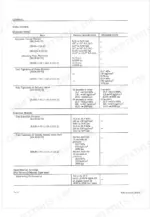
| Engine Oil Pressure (At Idle Speed) | 50 kPa or more | p. 54 |
| Oil Pump Rotor Lobe Clearance | 0.15 mm or less | p. 54 |
| RK80-1 Injection Pressure | 21.6 to 22.5 MPa | p. 55 |
| Radiator Leakage Test Pressure | 180 kPa | p. 54 |
Kubota RK Series Common Problems This Manual Covers
Hard starting and low compression
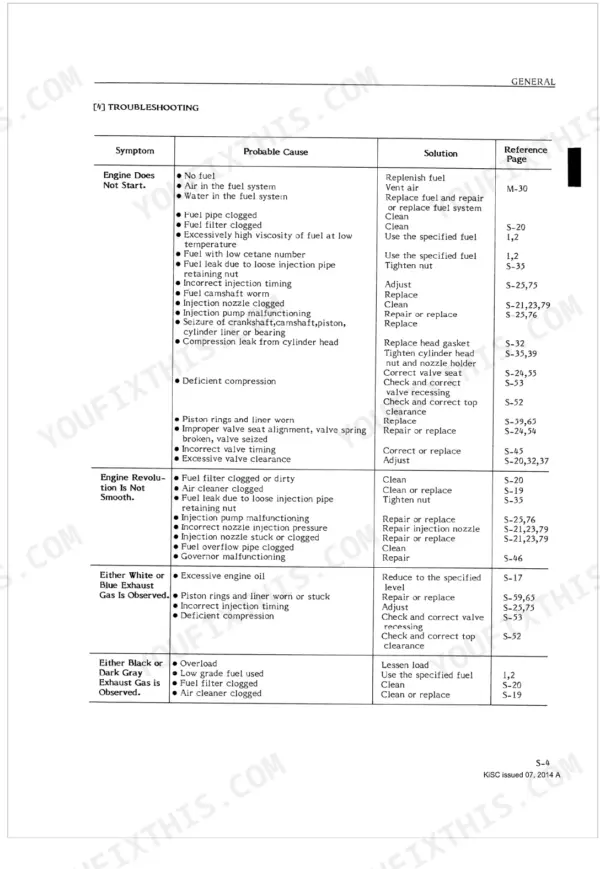
Worn valves or a warped cylinder head let compression fall below the 2.40 MPa limit, making the diesel hard to start and down on power. The disassembling and servicing section covers head inspection, flatness limits, and valve service.
Manual Section: Disassembling and Servicing p. 43Low engine oil pressure
A worn oil pump rotor or a stuck relief valve drops oil pressure below the 50 kPa idle minimum, risking bearing damage. The service section gives the pump clearances and pressure checks to find the cause.
Manual Section: Disassembling and Servicing p. 43Overheating under load
A clogged radiator, weak fan belt, or failed radiator cap lets the RK engine run hot during sustained work. The mechanism section explains the cooling system layout so you can find the restriction.
Manual Section: Mechanism p. 11Injection pump and nozzle wear
Worn injection nozzles or a tired injection pump cause smoke, rough running, and hard starting. The servicing section covers injection pressure testing and nozzle service.
Manual Section: Disassembling and Servicing p. 43Valve clearance drift
Valve clearance widens with hours and needs resetting to the 0.16 to 0.20 mm cold spec to keep the engine quiet and efficient. The service section details the adjustment.
Manual Section: Disassembling and Servicing p. 43Governor and idle instability
Surging or an unstable idle often traces to the governor mechanism or fuel system. The mechanism section describes how the governor and injection components are meant to work.
Manual Section: Mechanism p. 11Frequently Asked Questions
Which Kubota RK engines does this workshop manual cover?
It covers the Kubota RK Series diesel engines, including the RK50, RK60, RK70, RK80-1, RK95-1, RK105-2, and RK125-2 models along with their N and H variants.
Does it include torque specifications?
Yes. The disassembling and servicing section lists factory torques, such as the 300 to 390 N-m flywheel nut and the 98.1 to 117 N-m cylinder head nuts, plus injection and rod fasteners. p. 43
Are engine specifications and performance data included?
Yes. The specifications section gives bore and stroke, fluid capacities, and combustion, cooling, and fuel system figures, followed by performance curves for each RK model. p. 3
Can I use it to set valve clearance and service intervals?
Yes. The servicing section gives the cold valve clearance of 0.16 to 0.20 mm and the checking intervals, so you can keep the engine in tune. p. 43
What do I get after purchasing this Kubota RK Series manual?
Checkout delivers a 125-page searchable PDF right away. Open it on a laptop, tablet, or phone and take it straight to the shop floor.
Can I print specific sections of this Kubota RK Series Workshop Manual?
Yes. Many mechanics print the section they need for their own shop and bring it to the bench.





Reviews
There are no reviews yet.