
Part of the Hitachi Repair Manuals.
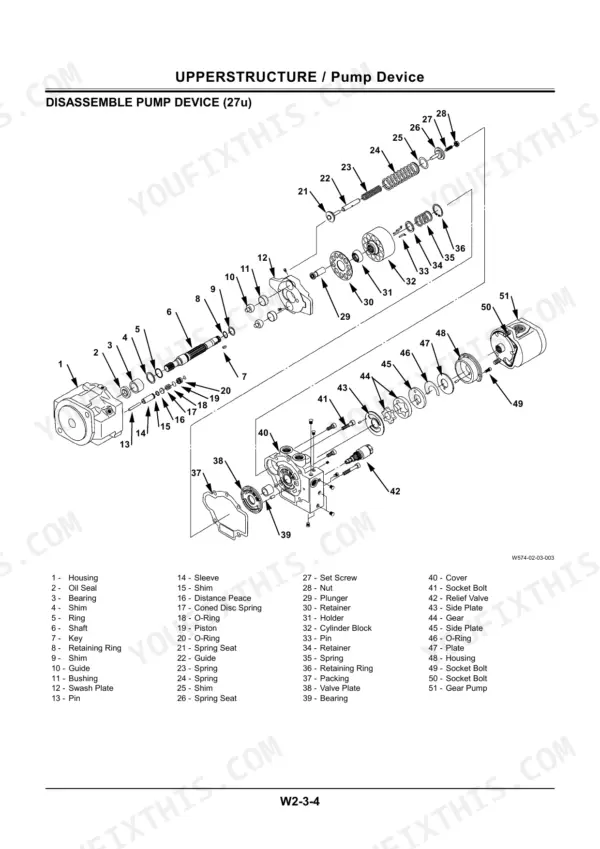
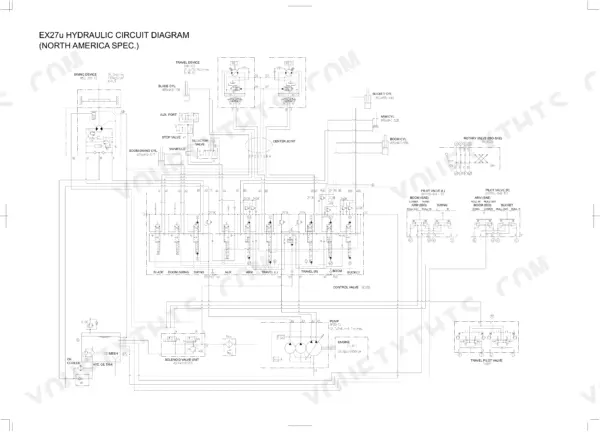
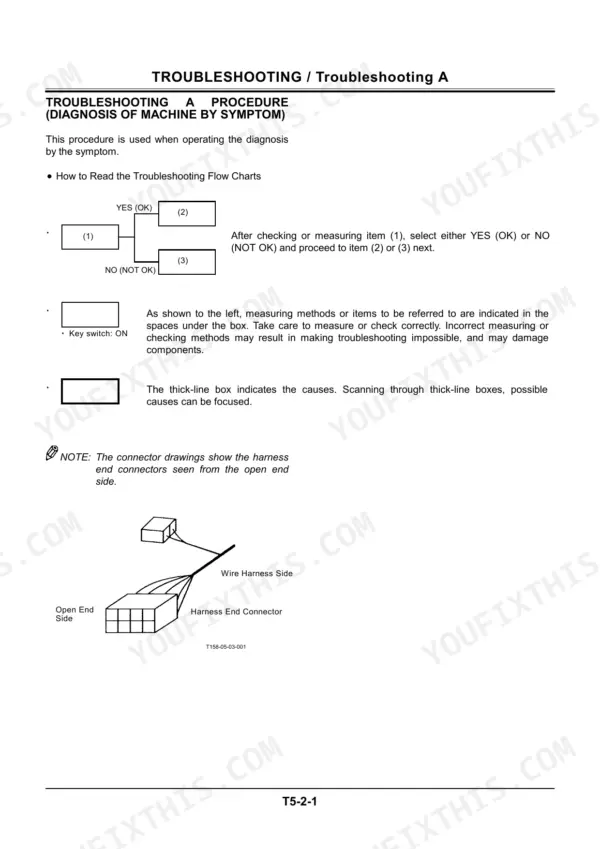
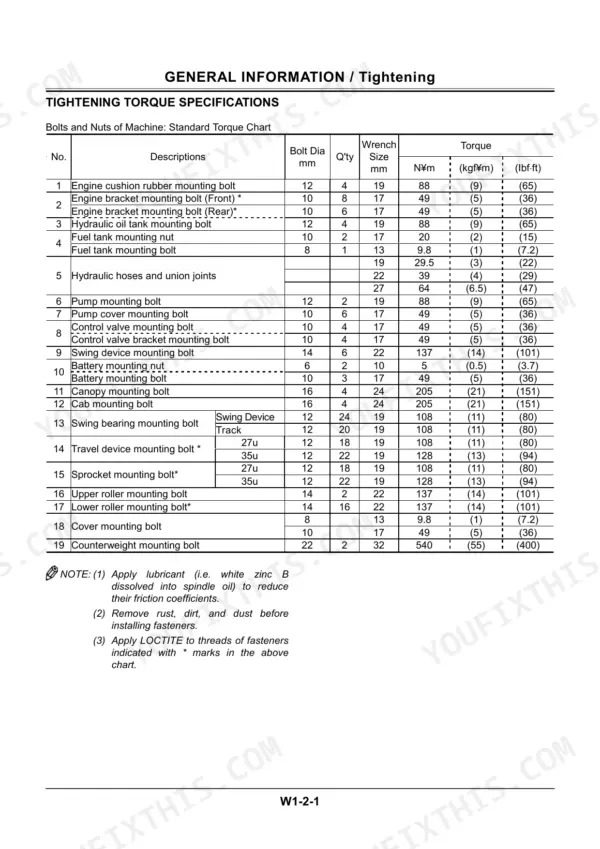
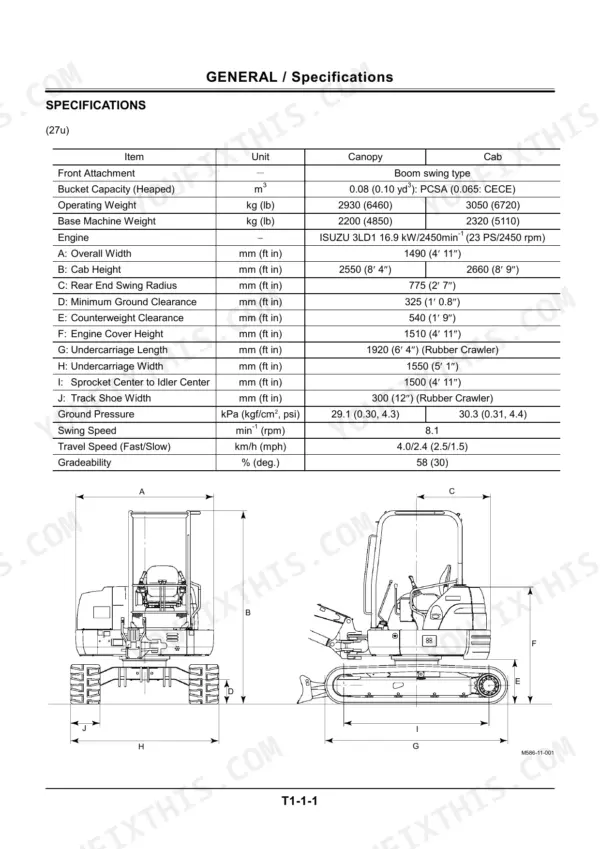
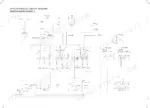
Wrenching on a Hitachi EX27u or 35u? This 539-page Hitachi EX27u, 35u Technical and Workshop Manual PDF covers both mini excavators, from pump device to final drive. Inside: hydraulic circuit diagrams for each model, a full electrical circuit diagram, troubleshooting flowcharts for engine and actuator faults, and page after page of tightening torque charts. You also get operational performance standards, so you can test cycle times, main relief pressure, and swing motor drainage against real factory numbers instead of gut feel. Measure your bucket cylinder pin against the 35 mm standard before ordering parts; on the EX27u, ground pressure runs 29.1 kPa. No more chasing hydraulic gremlins with forum guesses and crossed fingers. Bookmarked with a full text layer, so you can jump straight to a section or search any spec from any device in the shop.
Complete the set for your EX27U, EX35U
- Parts Catalog: Hitachi EX27U Excavator Parts Catalog
- Parts Catalog: Hitachi EX35U Hydraulic Excavator Parts Catalog
Other edition of this manual
What's Inside This Hitachi EX27U, EX35U Manual
| System | Pages | Key Topics |
|---|---|---|
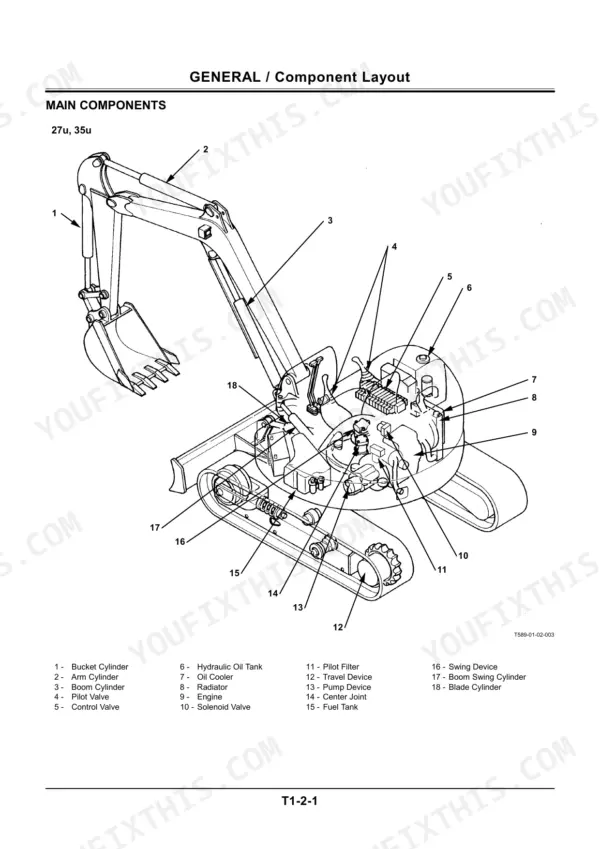
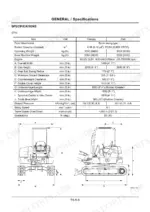
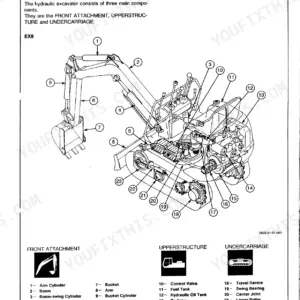
| Technical Manual - General and Specifications | 2-15 | Specifications, Engine Specification, Main Component, Electrical System, Relays, Monitor and Switches |
| Technical Manual - Hydraulic and Electrical Systems | 16-27 | Main Circuit, Pilot Circuit |
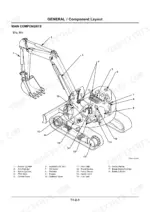
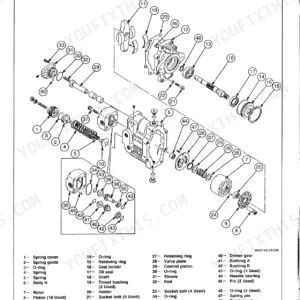
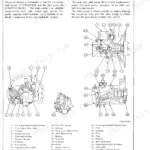
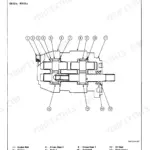
| Technical Manual - Component Operation | 28-93 | Pump Device, Swing Device, Control Valve, Pilot Valve, Travel Device, Solenoid Valve |
| Technical Manual - Operational Performance Test | 94-139 | Engine Speed, Hydraulic Cylinder Cycle Time, Main Relief Valve Set Pressure, Swing Motor Drainage, Travel Motor Drainage, Operational Performance Standard |
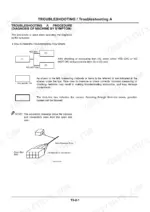
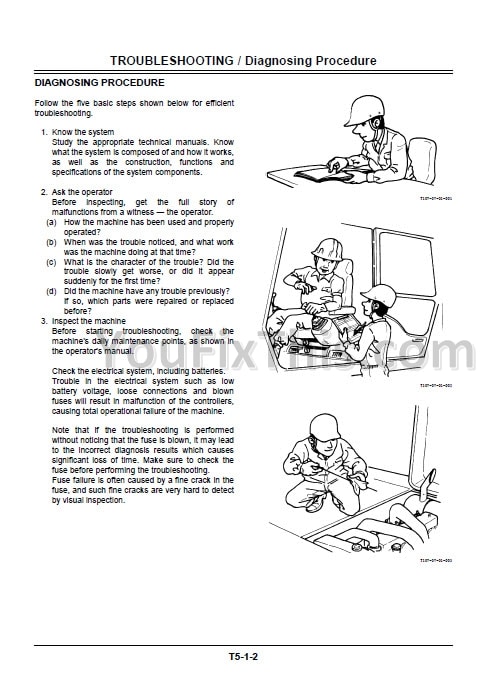
| Technical Manual - Troubleshooting | 140-185 | Diagnosing Procedure, Engine System Troubleshooting, Actuator Operating System Troubleshooting, Malfunction of Coolant Temperature Gauge, Electrical System Inspection |
| Hydraulic and Electrical Circuit Diagrams | 186-189 | EX27u Hydraulic Circuit Diagram, EX35u Hydraulic Circuit Diagram, EX27u, 35u Electrical Circuit Diagram |
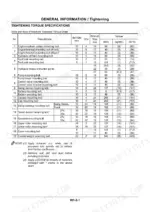
| Workshop Manual - General Information | 190-206 | Precautions for Disassembling and Assembling, Tightening Torque Specifications, Torque Chart, Main Data and Specifications, Gasket Location, Maintenance |
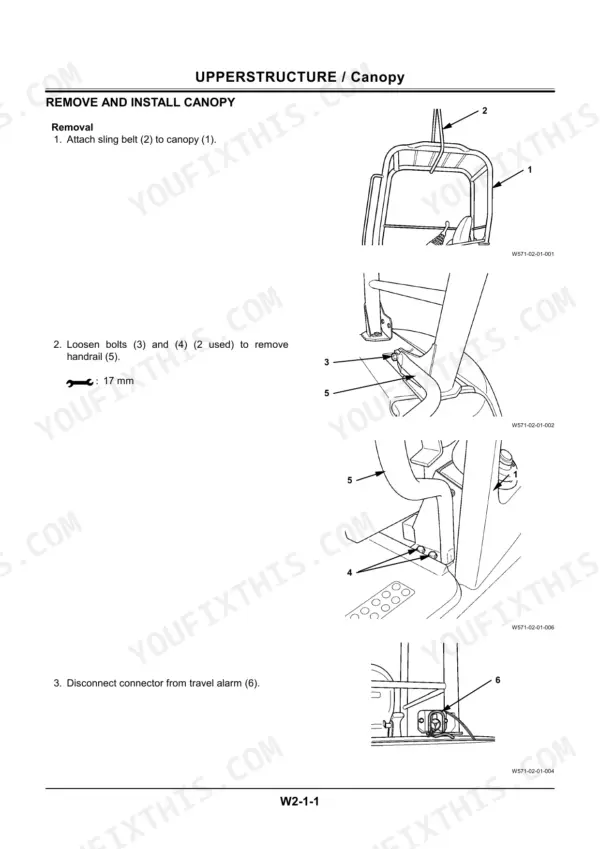
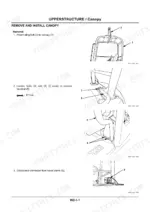
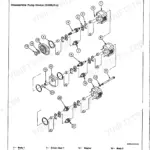
| Workshop Manual - Upperstructure | 207-309 | Canopy, Counterweight, Pump Device, Control Valve, Swing Device, Pilot Valve |
| Workshop Manual - Undercarriage | 310-365 | Swing Bearing, Travel Device, Center Joint, Track Adjuster, Front Idler, Track |
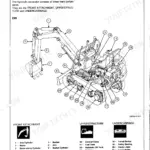
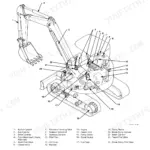
| Workshop Manual - Front Attachment | 366-417 | Front Attachment, Boom Cylinder, Arm Cylinder, Bucket Cylinder, Blade Cylinder, Swing Cylinder |
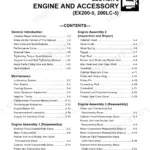
| Engine - Full Repair Section (Bundled Engine Manual) | 418-539 | Main Data and Specifications, Oil Pump, Water Pump, Thermostat, Governor, Nozzle Holder Assembly |
Quick Reference Specifications
| Specification | Value | Page |
|---|---|---|
| EX27u | ||
| Ground Pressure | 29.1 (0.30, 4.3) kPa (kgf/cm², psi) | p. 4 |
| Pin (Bucket Cylinder) Standard | 35 mm | p. 373 |
| Engine Rated Power (27u) | 16.9 kW/2450 min⁻¹ (23 PS/2450 rpm) | p. 7 |
| Main Relief Valve Set Pressure (27u) | 21.1 ± 1.0 MPa (215 ± 10 kgf/cm²) | p. 138 |
| All Models | ||
| Damaged wire connectors/cables | Broken harness between engine stop solenoid and ground. | p. 150 |
| Hydraulic system pressure is low or zero (servo system) | Failure in main pump. | p. 151 |
| Main pump failure causing loss of hydraulic power | Faulty main pump P1 or P2. | p. 153 |
| Piston Displacement | 1.496 L (91 in³) | p. 7 |
| Engine Dry Weight | 152 kg (335 Ib) | p. 7 |
| Valve Clearance (IN, EX) | 0.2 mm | p. 136 |
| EX35u | ||
| Engine Rated Power (35u) | 21.3 kW/2450 min⁻¹ (29 PS/2450 rpm) | p. 7 |
| Main Relief Valve Set Pressure (35u) | 25.0 ± 1.0 MPa (255 ± 10 kgf/cm²) | p. 138 |
Hitachi EX27U, EX35U Common Problems This Manual Covers
Hitachi EX27u hydraulic pressure low or zero, all functions weak and slow
Test main relief valve set pressure first; on the EX27u the standard is 21.1 ± 1.0 MPa (215 ± 10 kgf/cm²), listed on page 138. If pressure stays low across every circuit, work through the actuator troubleshooting flow on page 151. A pump that will not build pressure points to faulty main pump P1 or P2, covered on page 153.
Manual Section: Actuator Operating System Troubleshooting p. 151Engine cranks but will not start, or starter does not rotate when key turned
Check battery voltage and fuse continuity before pulling any parts. Verify the fuel pump circuit and engine stop solenoid are getting power; a broken harness between the stop solenoid and ground, noted on page 150, cuts fuel delivery completely. While the valve cover is off, confirm valve clearance is 0.2 mm on both intake and exhaust, per page 136.
Manual Section: Engine System Troubleshooting p. 150Upperstructure will not swing or swings slowly, and drifts too far after stopping
Measure swing motor drainage using the operational performance test procedure starting on page 94; the leakage standard is 0 mm of drift in 5 minutes. Check swing bearing play with a dial indicator next: 0.3 to 0.7 mm is standard and 2.0 mm is the allowable limit, per page 136. Replace the bearing once play exceeds that limit.
Manual Section: Operational Performance Test p. 94Bucket tooth pins keep working loose, deforming, or shearing off during hard digging
Remove the worn tooth pins and inspect each retainer spring; a deformed or fatigued spring will not hold the pin, so replace pin and spring together as a matched set. Never reuse an unmatched pin and seat. While the bucket is off, inspect the front attachment pins against section standards; the EX27u bucket cylinder pin standard is 35 mm, on page 373.
Manual Section: Front Attachment p. 373Machine creeps or a function moves when operator leaves the seat with engine running
Set the operation lock lever fully into the lock position, then confirm no function responds to any control input before dismounting. If a circuit still responds, trace the pilot circuit for a stuck or bypassing pilot valve, starting from the system section on page 16. While testing, verify boom lever operating force is 17.7 N (1.8 kgf) or less, per page 137.
Manual Section: Pilot Circuit p. 16Frequently Asked Questions
What fluids and capacities does this machine require?
The 3LD1 engine requires API Class CD, SAE30 engine oil with a total lubricant capacity of approximately 6.8 liters. Specific capacities for other fluids like hydraulic oil for the entire machine are not explicitly listed as a single value in the provided specifications. p. 425
How to troubleshoot engine won't start?
If the starter does not rotate, first check the battery voltage and electrolyte density. If these are normal, proceed to check the starter terminal voltages (B and #50 (S)) with the key switch in ON and START positions, ensuring 12V is present at terminal B and 12V at terminal #50 (S) in START position. p. 147
What are the valve clearance specifications?
The standard valve clearance (cold) for both intake and exhaust is 0.20 mm (0.008 in), with an allowable tolerance of ± 0.05 mm (0.002 in). p. 444
What torque specifications are listed?
The manual provides extensive tightening torque specifications for various bolts and nuts, categorized by bolt diameter, strength grade, and type (e.g., Hexagon T Bolt, Hexagon H Bolt, Hexagon M Bolt, Socket Bolt, Flanged Head Bolt). For instance, an M8 Hexagon T Bolt requires 29.5 N⋅m (3 kgf⋅m, 22 lbf⋅ft). p. 200
What are the common electrical problems?
Common electrical problems covered include faulty batteries, loose connections, blown fuses, faulty fusible links, issues with starter relays, engine stop solenoids, and fuel pump connectors. The manual provides procedures for checking voltage and continuity in various parts of the electrical system, for example, checking if fusible link b (45 A) is normal. p. 147
How quickly can I access this manual after buying?
Instant PDF download. You get the full 539-page searchable Technical Manual immediately after payment. Open it on your laptop, tablet, or phone right in the shop.
Does this Hitachi EX27U manual allow printing?
Yes. Print a chapter or just the pages for the job at hand, for use in your own shop. Any home or office printer works.
Reviews
There are no reviews yet.