
Part of the Kubota Operator Manuals.
This is the Kubota Operator Manual for the V3600-E3, V3600-T-E3, V3800-DI-T-E3, V3300-E3BG, V3600-T-E3BG, and V3800-DI-T-E3BG diesel engines, delivered as a 44-page PDF download. It covers the naturally aspirated, turbocharged, and BG-variant versions of these four-cylinder engines in one book.
Inside you get safe operation guidance, starting and cold-weather procedures, daily checks, service intervals, and periodic service for fuel, engine oil, the radiator, air cleaner, electric wiring, and fan belt. A troubleshooting section walks through hard starting, sudden stops, bad exhaust color, and overheating.
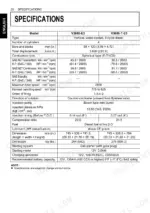
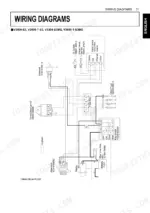
The manual closes with full specifications (displacement, injection pressure, compression ratio, firing order, battery capacity) and model-specific wiring diagrams, so owners and mechanics can operate, maintain, and diagnose these Kubota engines with the correct factory figures.
Complete the set for your V3300–V3800 Series
- Repair Manual: Kubota V3–V3800 Series Diesel Engine Workshop Manual
What's Inside This Kubota V3300–V3800 Series Operator Manual
| System | Pages | Key Topics |
|---|---|---|
| Safety First | 4 | |
| Safe Operation | 5-10 | Observe Safety Instructions, Safe Handling of Fuel and Lubricants, Exhaust Gases & Fire Prevention, Cautions Against Burns & Battery Explosion |
| Servicing of the Engine | 11 | |
| Names of Parts | 12 | Intake Manifold, Fuel Feed Pump, Cooling Fan, Oil Filter Cartridge, Alternator, Starter |
| Pre-Operation Check | 13 | Break-In, Daily Check |
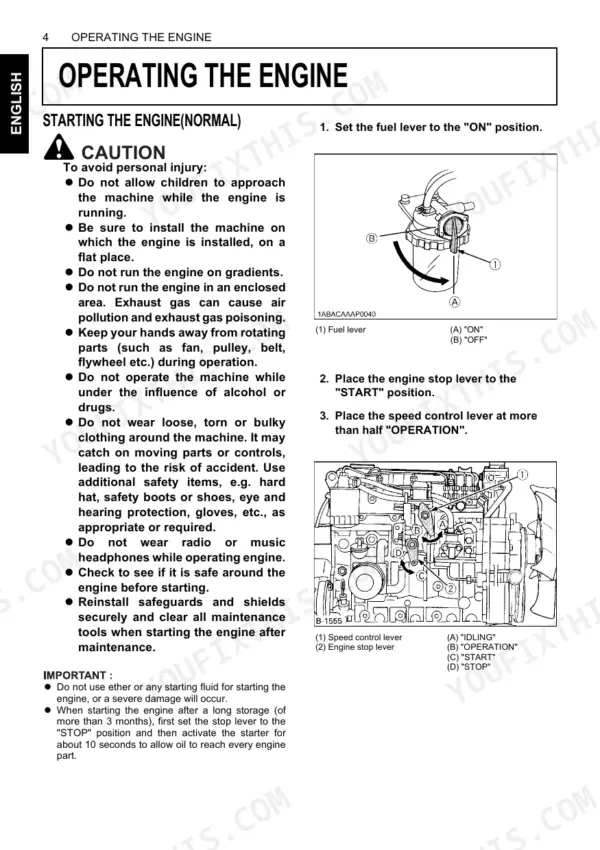
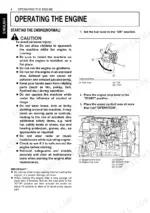
| Operating the Engine | 14-17 | Starting the Engine, Cold Weather Starting, Stopping the Engine, Checks During Operation, Reversed Engine Revolution and Remedies |
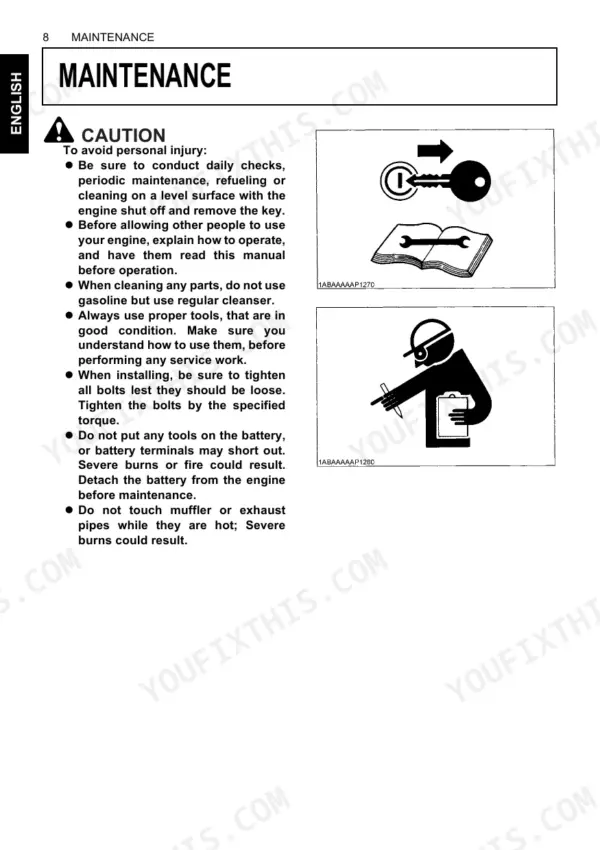
| Maintenance | 18-21 | Service Intervals |
| Periodic Service | 22-32 | Fuel, Engine Oil, Radiator, Air Cleaner, Electric Wiring, Fan Belt |
| Carriage and Storage | 33 | Carriage, Storage |
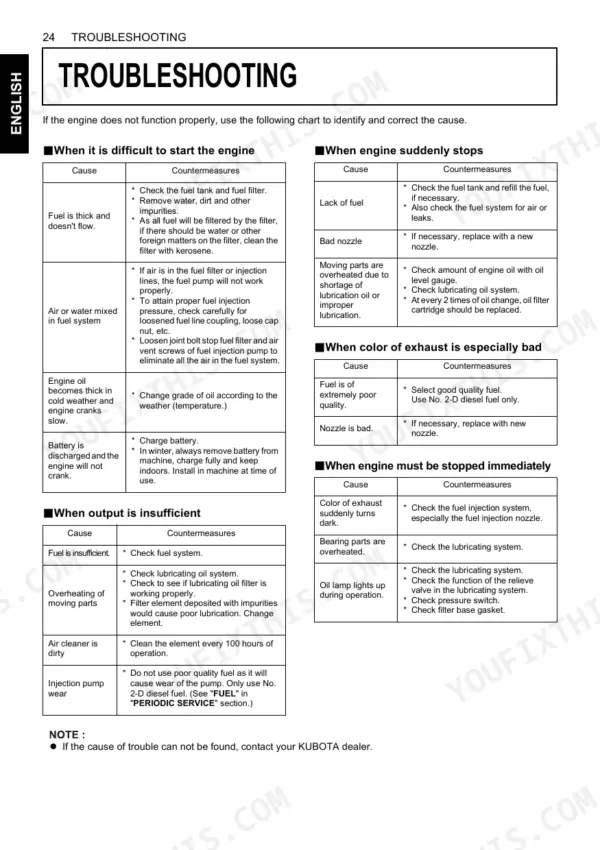
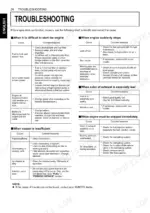
| Troubleshooting | 34-35 | When It Is Difficult to Start the Engine, When Engine Suddenly Stops, When Color of Exhaust Is Especially Bad, When Engine Must Be Stopped Immediately, When Engine Overheats |
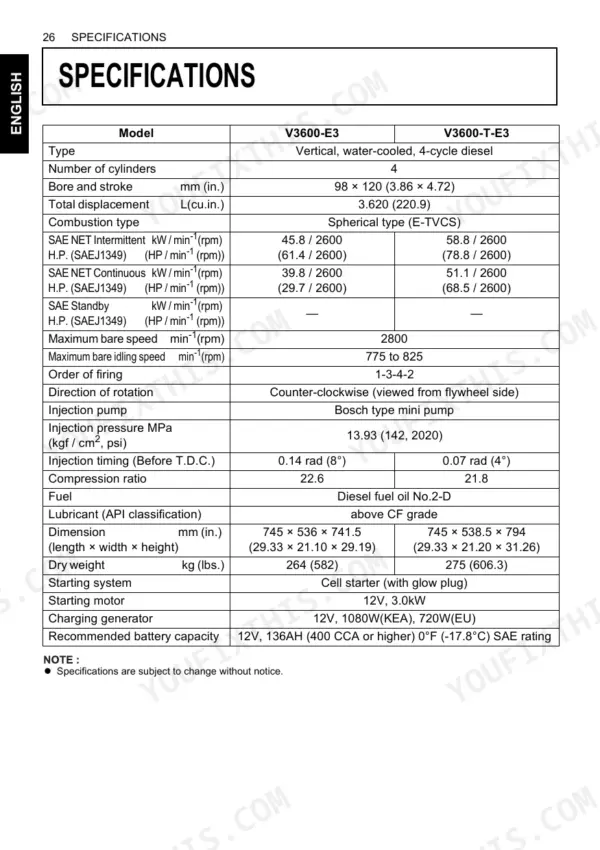
| Specifications | 36-40 | Model, Total Displacement, Combustion Type, Injection Pump, Lubricant (Api Classification), Recommended Battery Capacity |
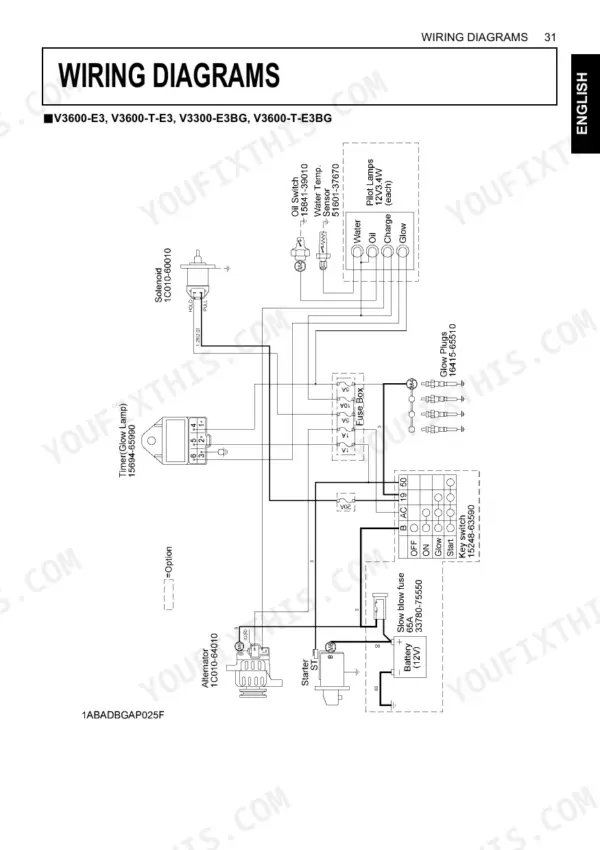
| Wiring Diagrams | 41-44 | V3600-E3, V3600-T-E3, V3300-E3Bg, V3600-T-E3Bg, V3800-Di-T-E3, V3800-Di-T-E3Bg |
Quick Reference Specifications
| Specification | Value | Page |
|---|---|---|
| Engine oil filter cartridge replacement interval | initial 50 hours of operation and every 500 hours thereafter | p. 27 |
| Engine oil filter cartridge tightening | tighten the cartridge enough by hand | p. 27 |
| Air cleaner element cleaning interval | Every 250 hours | p. 19 |
| Air cleaner element replacement interval (primary element) | every year or every 6 cleanings | p. 31 |
| Fuel filter pot cleaning interval | Every 100 hours of operation | p. 24 |
| Fuel filter cartridge replacement interval | every 500 operating hours | p. 25 |
| Intake air line replacement interval | Every two years | p. 19 |
| Radiator hoses and clamp bands inspection interval | Every 250 hours of operation or 6 months, whichever comes first | p. 29 |
| Radiator hoses and clamp bands replacement interval | Every 2 years or earlier | p. 29 |
| Oil pressure warning lamp condition and remedies | Lamp lights up when engine oil pressure drops below prescribed level or does not go off above 1000rpm. Immediately stop engine and check: oil level, oil dirt, wiring, lubricating system, relieve valve function, pressure switch, filter base gasket. | p. 16 |
| Engine overheating condition and remedies | Overheating occurs when coolant temperature is near or above boiling point. If warning lamp lights or steam squirts, stop engine, idle for 5 min, then check: coolant level/leaks, cooling air inlet/outlet obstacles, radiator fins/tube dirt, fan belt looseness, radiator water pipe clogging. Other causes include: insufficient engine oil, broken/elongated fan belt, insufficient coolant, excessive antifreeze concentration, corroded radiator parts, defective fan/radiator/cap, defective thermostat/sensor, overload running, defective head gasket/water leakage, unsuitable fuel. | p. 29 |
| Engine Oil Quantity | 13.2 L (3.49 U.S. gal.) | p. 26 |
Kubota V3300–V3800 Series Common Problems This Manual Covers
Hard starting after long storage
Engines that sit for months often crank without firing because fuel is not primed and oil has not reached all parts. The starting and cold-weather procedures cover priming and correct cranking before normal operation.
Manual Section: Operating the Engine p. 14Oil pressure warning lamp stays on
If the oil pressure lamp lights during operation or will not go off above 1000 rpm, the manual says to stop immediately and check oil level, wiring, the lubricating system, and the pressure switch.
Manual Section: Operating the Engine p. 14Overheating and coolant temperature rise
Low coolant, a clogged radiator, wrong antifreeze mix, or restricted airflow drive the temperature up. The troubleshooting section lists the checks to run before more damage occurs.
Manual Section: Troubleshooting p. 34Turbocharger trouble after heavy load
Shutting a turbocharged engine down right after full-load work causes heat soak and turbo damage. The stopping procedure calls for idling before shutoff.
Manual Section: Operating the Engine p. 14Air cleaner and filter service due
Restricted air cleaner elements and aged intake tubes cause power loss and rough running. Periodic service covers cleaning intervals and element replacement.
Manual Section: Periodic Service p. 22Fan belt tension out of range
A loose or worn fan belt leads to poor charging and cooling. Periodic service gives the deflection check and adjustment steps.
Manual Section: Periodic Service p. 22Frequently Asked Questions
Which Kubota engines does this manual cover?
It covers six variants: V3600-E3, V3600-T-E3, V3800-DI-T-E3, V3300-E3BG, V3600-T-E3BG, and V3800-DI-T-E3BG, including naturally aspirated, turbocharged, and BG versions in one book.
Does it include wiring diagrams?
Yes. The Wiring Diagrams section provides model-specific diagrams for each of the covered engine variants.
Are engine specifications like injection pressure and compression ratio included?
Yes. The Specifications section lists displacement, number of cylinders, firing order, injection pressure, and compression ratio values for each engine variant. p. 36
Can it help me diagnose a no-start or overheating engine?
Yes. The Troubleshooting section covers difficult starting, sudden stops, bad exhaust color, when to stop the engine immediately, and overheating. p. 34
Is this Kubota V3300–V3800 Series Operator Manual a digital download?
Yes, it's an instant PDF download. The full 44-page searchable Operator Manual is available immediately after payment, ready to open on a laptop, tablet, or phone in the shop.
Is this Kubota V3300–V3800 Series Operator Manual printable?
Yes. Print individual pages or full chapters for your own shop use, on letter or A4 paper.
Are there wiring harness diagrams in this Kubota V3300–V3800 Series manual?
Yes, this Kubota V3300–V3800 Series Operator Manual includes complete electrical wiring diagrams, wire routing, and connector pinouts.





Reviews
There are no reviews yet.