
Part of the JCB Repair Manuals.
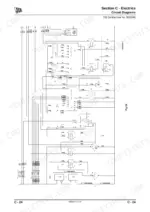
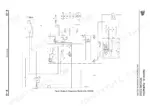
Need the factory breakdown for your heavy hauler? This 567-page JCB 722, Articulated Dump Truck - 722 Service Manual PDF (OEM #9803/7170-07) maps out every powershift transmission, hydraulic ram, and tipping control valve procedure for the models. Complete electrical circuit diagrams, basic system operation flowcharts, and full hydraulic schematics for the main control manifold block are all included. Open to the error code section to instantly decode display panel faults, or jump straight into routine maintenance schedules covering everything from center pivot greasing to cooling system flushes. Torque those M10 Grade 8.8 fasteners to exactly 47.0 Nm, and let the high-strength threadlocker cure for a minimum of 2 hours before filling the ram with oil. Stop throwing parts at a sluggish dump circuit. Download the bookmarked file, pull it up on your shop tablet, and get the job done right.
What's Inside This JCB 722 Manual
| System | Pages | Key Topics |
|---|---|---|
| Identification | 6-7 | Vehicle Identification, Vehicle Identification Plate, Explanation of the Vehicle Identification Number, Unit Identification |
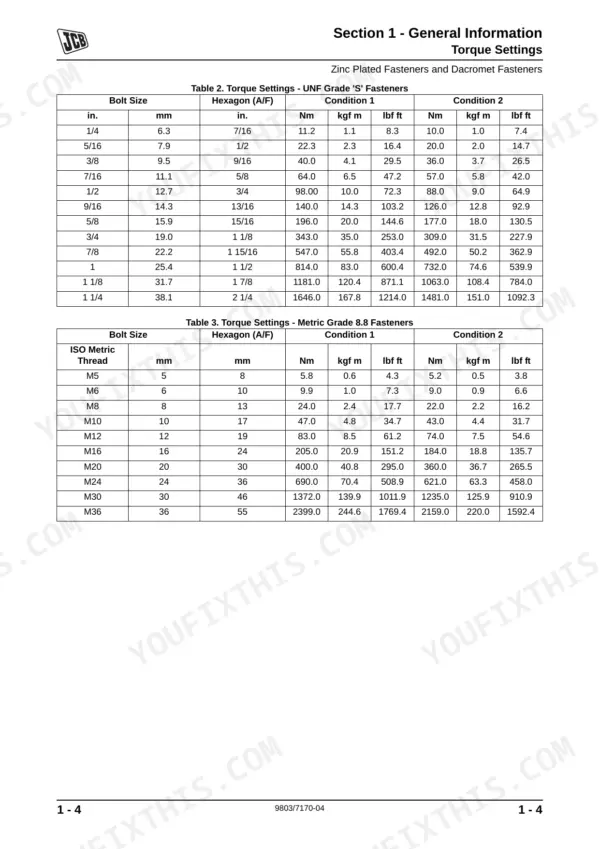
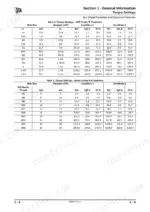
| Torque Settings | 8-11 | Zinc Plated Fasteners and Dacromet Fasteners, Introduction, Bolts and Screws |
| Sealing and Retaining Compounds | 29 | JCB Multi-Gasket, JCB High Strength Threadlocker, JCB Retainer, JCB Threadlocker and Sealer, JCB Activator, Black Polyurethane Sealant |
| Towing | 30-31 | General, Preparation for Towing |
| Hydraulic Hoses | 32-33 | Connecting/Disconnecting, Venting Hydraulic Pressure, Connecting the Hoses, Disconnecting the Hoses |
| Hydraulics | 34-35 | Hydraulic Contamination, Hydraulic Fluid Quality, Effects of Contamination, Cleaning Operation, Procedure, Contamination Standards, Filters |
| Care and Safety | 36-55 | Safety Notices, Operating Safety, Maintenance Safety |
| Routine Maintenance | 56-127 | Maintenance, Service Schedules, Greasing, Parking Brake, Engine Oil and Filter, Engine Cooling System, Fuel System, Front |
| Section B - Body and Framework | 128-149 | Cab, Centre Pivot, Tipper Body |
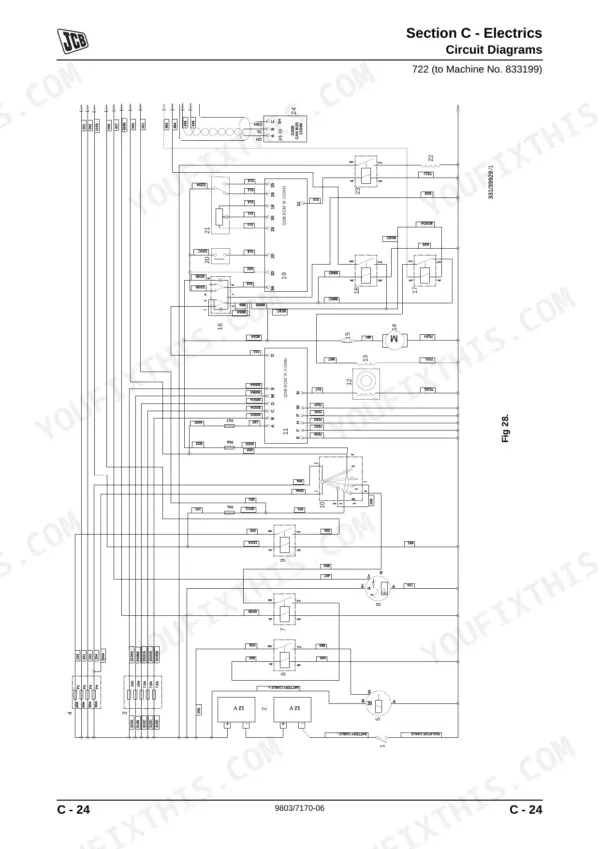
| Section C - Electrics | 150-259 | Technical Data, Service Procedures, Circuit Diagrams, Wiring Harnesses, Display Panel, Error Codes |
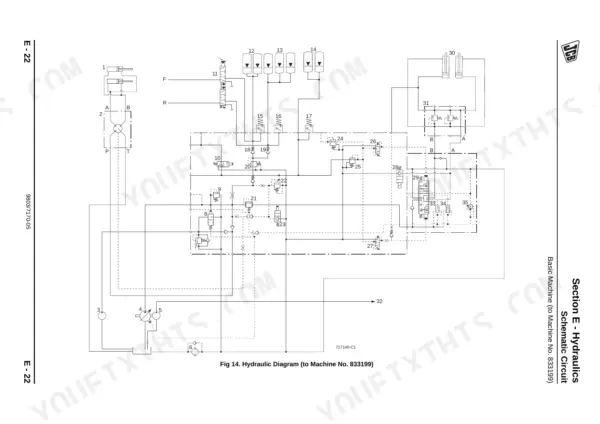
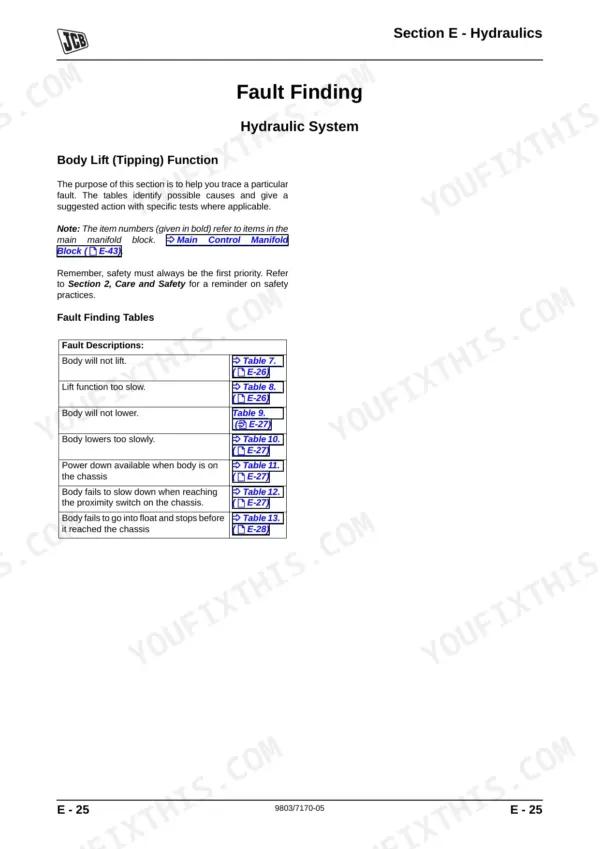
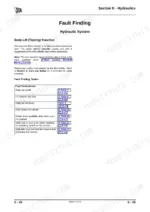
| Section E - Hydraulics | 260-328 | Basic System Operation, Schematic Circuit, Fault Finding, Service Procedures, Main Control Manifold Block, Tipping Control Valve, Hydraulic Rams |
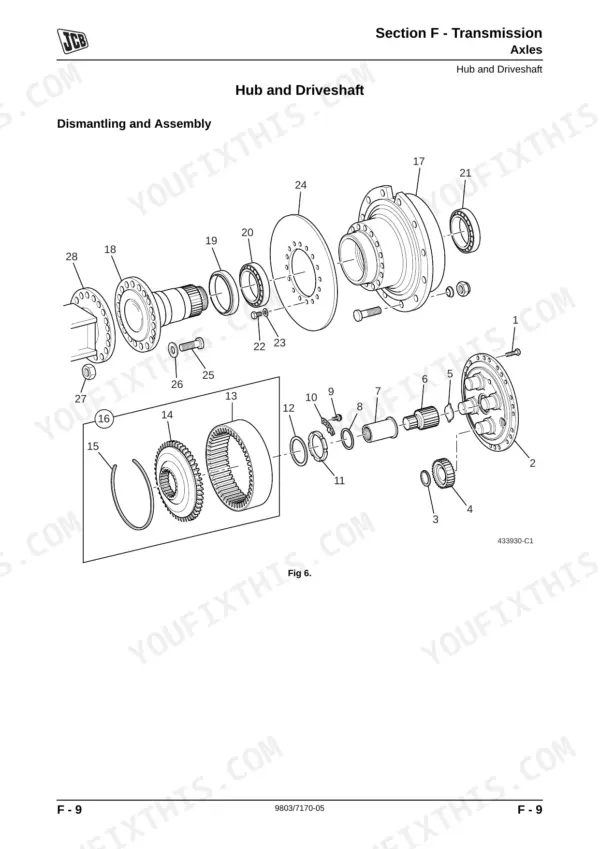
| Section F - Transmission | 329-442 | Axles, Powershift Transmission, Propshafts |
| Section G - Brakes | 443-479 | Service Procedures, Service Brakes, Parking Brake |
| Section H - Hydraulic Steering | 480-509 | Basic System Operation, Steering Unit, Steering Rams |
| Section K - Engine | 510-521 | Technical Data, Charge Air Cooler |
| Section S - Suspension | 522-567 | Front Suspension, Rear Suspension |
Quick Reference Specifications
| Specification | Value | Page |
|---|---|---|
| Service Required Reset Procedure | Reset when data is downloaded by JCB distributor | p. 226 |
| Hydraulic Fault Code Reset Procedure | Rectify underlying fault; no user-resettable procedure specified. Contact JCB distributor. | p. 258 |
| Metric Grade 8.8 Fasteners (M10) | 47.0 Nm (Condition 1) | p. 9 |
| Hydraulic Hose Replacement Interval (Pump Exit, Loader Ram Line, Crowd Ram Line) | Every 2 years or every 4000 hours, whichever comes first | p. 73 |
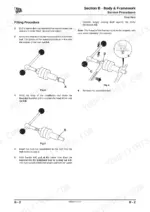
| JCB Threadlocker and Sealer (High Strength) Curing Time | Minimum of 2 hours between assembly and filling the ram with oil | p. 324 |
| Tipping Control Valve Cap Assembly (L) Torque | 10 Nm | p. 314 |
| Fuel Filter Element Replacement Frequency | 6 Monthly 500 Hr | p. 68 |
| Fuel Filter Element Installation Torque | Hand tight only | p. 108 |
| Air Filter Element Replacement Frequency (Inner Element) | Every third time the outer element is changed | p. 96 |
| Air Filter Element Replacement Frequency (Outer Element) | Monthly 100 Hr (check), 6 Monthly 500 Hr (replace) | p. 68 |
| Transmission Stall Speed | 1714 rpm | p. 334 |
| Axle Securing Bolts (8 off) Torque | 600 Nm | p. 337 |
JCB 722 Common Problems This Manual Covers
JCB 722 dump truck transmission engages intermittently after startup or refuses to move forward or reverse.
Test the transmission stall speed to verify torque converter operation. Run the engine and check if the stall speed reaches exactly 1714 rpm as specified on page 334. If RPM falls outside this range, inspect the clutch packs and verify the fluid temperature remains safe.
Manual Section: Transmission Error Codes p. 334Steering feels excessively heavy and body lift functions are weak or completely inoperative under load.
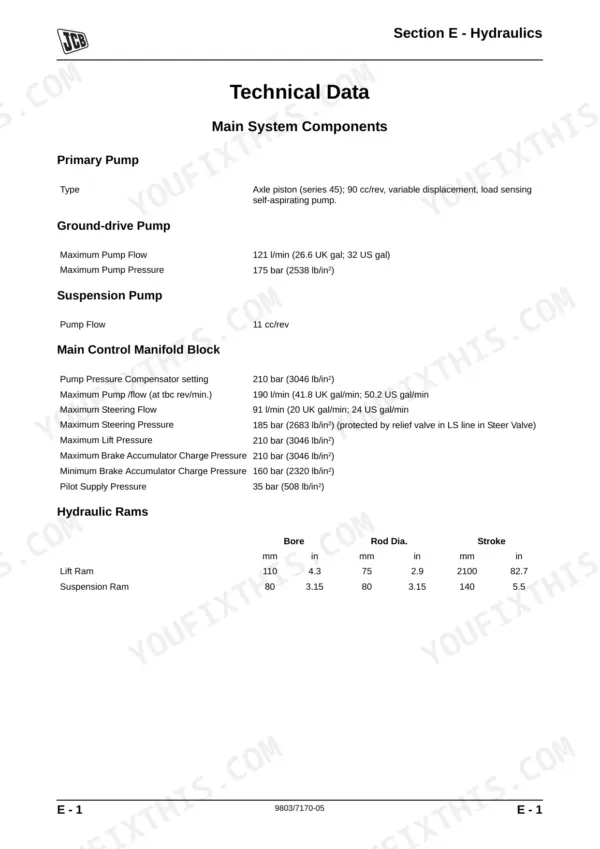
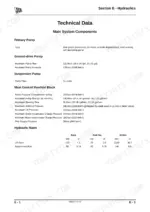
Install a flow meter and pressure gauge at the main test port. Verify the maximum pump flow reaches 190 l/min and the pressure compensator is correctly set to 210 bar (3046 lb/in2) as detailed on page 264. Adjust the compensator valve if pressures fall below specification.
Manual Section: Hydraulic System Fault Finding p. 264Engine experiences severe power loss on inclines accompanied by excessive black exhaust smoke and high temperatures.
Inspect the air intake system for restrictions. Check the outer air filter element and replace it if the 6-month or 500-hour service interval has passed, following the maintenance schedule on page 68. Verify the coolant level sits correctly between the cold and hot marks.
Manual Section: Routine Maintenance p. 68Drivetrain binds and produces severe mechanical grinding noises from the axles after emergency towing operations.
Inspect the propshafts and axles for damage caused during incorrect towing. Check all eight axle securing bolts and verify the hub and driveshaft M14 socket head screws are torqued to 190 Nm as shown on page 342. Reconnect any hydraulic lines disconnected for recovery.
Manual Section: Section F - Transmission p. 342Frequently Asked Questions
How to reset the service light on a JCB 722?
The manual indicates that the 'SERVICE REQD' message, which signals a service required, is reset when data is downloaded by your JCB distributor. Therefore, a user cannot directly reset the service light; it requires intervention from a qualified distributor. p. 226
What are the torque specs for JCB 722 wheel nuts?
For JCB 722 wheel nuts, the correct torque specification is 407 Nm (300 lbf ft). It is important to check the wheel nut torques every 10 hours on new machines or whenever a wheel has been removed, until they remain correct. p. 123
What do JCB 722 error codes mean?
The JCB 722 manual provides detailed tables explaining the meaning of various error codes. These codes are categorized into Engine Error Codes (starting on page 232), Transmission Error Codes (starting on page 238), and Body and Suspension Error Codes (starting on page 258), each with descriptions and the effect when the fault code is active. p. 232
What are the replacement specifications for hydraulic hoses?
For the JCB 722, important hydraulic hoses such as the Pump Exit Hose, Loader Ram Line Hose, and Crowd Ram Line Hose should be replaced every 2 years or every 4000 hours, whichever comes first. Additionally, if hose clamps are found to be deformed or cracked during replacement, they should also be replaced. p. 73
How will I receive this Service Manual?
This is a 567-page searchable PDF ready for immediate download. Works on any device, so pull it up on your phone while you're under the hood. No shipping, no waiting.
Can I print just the pages I need from this JCB 722 manual?
Yes. Print the pages or sections you need for your own shop use. Any standard printer works.
Does this JCB 722 Service Manual cover the hydraulic system?
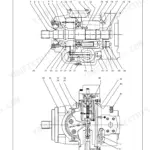
Full hydraulic system diagrams are included, covering circuits, valve locations, and hydraulic component specs for the JCB 722, Articulated Dump Truck - 722.
Reviews
There are no reviews yet.