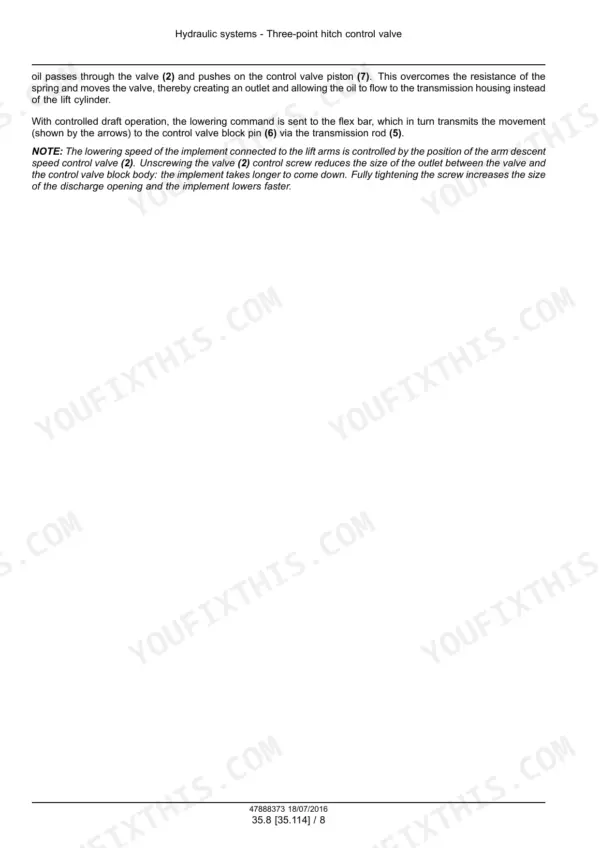
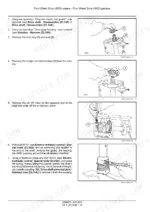
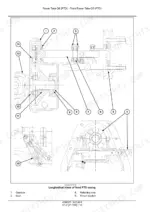
Part of the New Holland Repair Manuals.
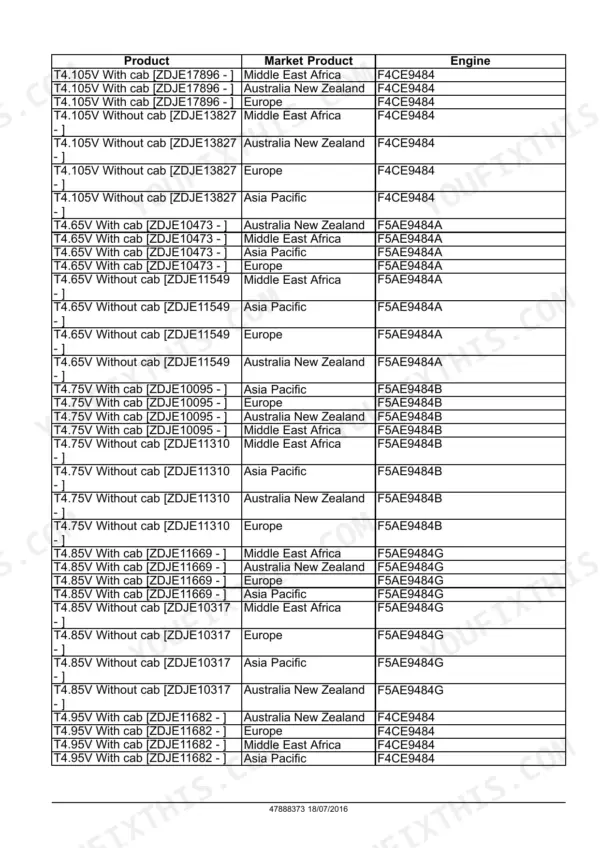
This is the factory service manual for the New Holland T4 narrow and vineyard tractors: the T4.75N, T4.85N, T4.95N and T4.105N narrow models and the T4.65V, T4.75V, T4.85V, T4.95V and T4.105V vineyard models. It follows the CNH product structure, so you work from the system rather than a chapter number: engine, clutch, transmission, four-wheel drive, axles, PTO, brakes, hydraulics, hitches, steering, wheels, cab climate and electrical. The hydraulic section gives the pump outputs and the pressure valve settings, and the electrical section runs from page 931 to page 1982, most of it schematic sheets, harness drawings and fault-code tables.
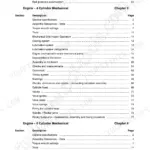
What's Inside This New Holland T4.65-T4.105 N and V Series Manual
| System | Pages | Key Topics |
|---|---|---|
| Introduction and Standard Torques | 11-22 | How to Use the Manual, Shop Safety, Standard Tightening Torque Tables, Approved Fluids and Consumables |
| Engine | 23-34 | Engine Installation and Mountings, Ancillaries and Drive Take-Offs, Engine Removal and Refit |
| Clutch | 35-74 | Clutch Assembly and Release Mechanism, Pedal Free Play, Clutch Removal and Overhaul |
| Transmission | 75-214 | Mechanical and Power-Shuttle Transmissions, Shuttle Unit and Range Gears, Synchronisers and Shift Forks, Control Valves, Transmission Strip-Down and Reassembly |
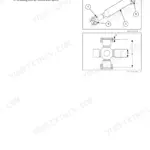
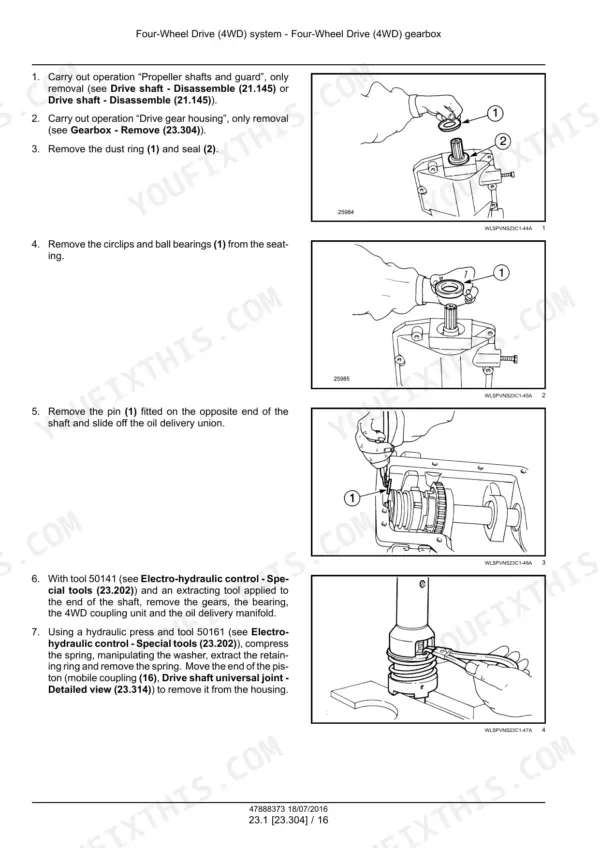
| Four-Wheel Drive (4WD) System | 215-246 | 4WD Engagement Clutch and Control, Drive Shaft and Supports, 4WD Testing and Overhaul |
| Front Axle System | 247-376 | Driven Front Axle, Bevel Drive and Differential, Hub Reducers, Steering Knuckles and Pivots, Axle Rebuild |
| Rear Axle System | 377-424 | Rear Bevel Gear Pair and Differential, Differential Lock, Final Drives, Bearing Preload and Backlash |
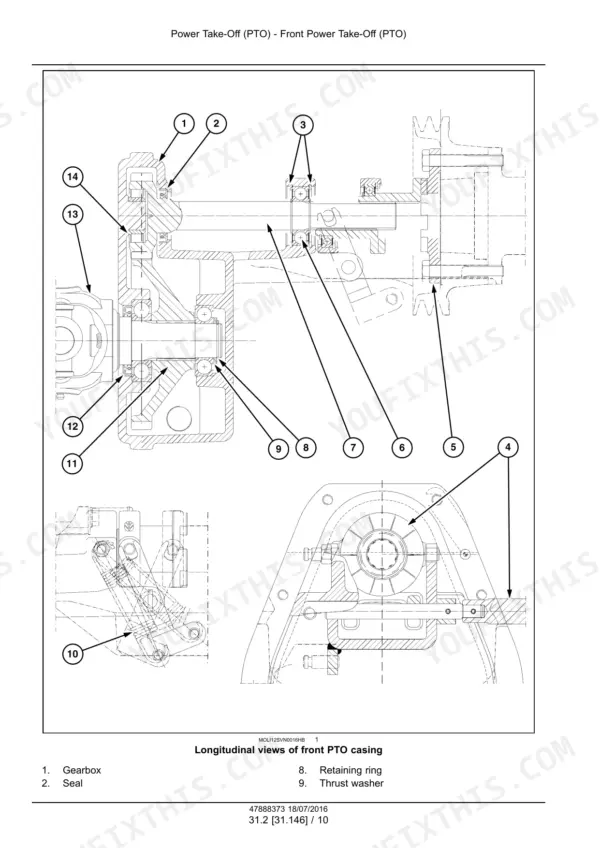
| Power Take-Off (PTO) | 425-486 | Rear PTO Clutch and Brake, Speed Selection and Output Shaft Change, PTO Control, PTO Overhaul |
| Brakes and Controls | 487-548 | Wet Disc Service Brakes, Parking Brake, Pedal Adjustment, Bleeding the Brake Circuit |
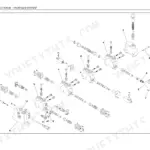
| Hydraulic Systems | 549-708 | Hydraulic Pumps and Their Rated Outputs, Maximum Pressure Valve Calibration, Flow Control and Hydraulic Motor Circuits, Rear Lift Operation and Pressure Rise, Control Valves, Pump and Valve Overhaul |
| Hitches, Drawbars and Implement Couplings | 709-806 | Rear Three-Point Hitch, Lift Links and Stabilizers, Front Hitch, Drawbars and Pick-Up Hitch, Implement Coupling and Setting |
| Steering | 807-852 | Hydrostatic Steering Unit and Circuit, Steering Control Valve and Cylinder, Steering Column, Fault Finding |
| Wheels | 853-860 | Wheel and Tyre Fitment, Narrow and Vineyard Track Settings, Wheel Nut Torques |
| Cab Climate Control | 861-930 | Heating, Ventilation and Air Conditioning, Compressor and Condenser, Refrigerant Handling, Charging and Leak Testing |
| Electrical Systems: Schematic Sheets | 931-975 | Numbered Electrical Schematic Sheets by Build, Including the Power-Shuttle Circuits, Component Location |
| Electrical Systems: Harnesses and Connectors | 976-1399 | Complete Wire Harness Drawings, Connector Component Diagrams, Fuse and Relay Layouts, Pin-Out Tables |
| Electrical Systems: Starting, Charging and Electronic Modules | 1400-1529 | Engine Starting System, Charging Circuit, Electronic Control Modules, Module Testing and Configuration |
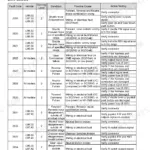
| Electrical Systems: Fault Codes and Diagnostics | 1530-1982 | Fault-Code Index and Tables, Guided Diagnostic Test Procedures, Circuit-Level Troubleshooting |
| Platform, Cab, Bodywork and Decals | 1983-2045 | Cab and Platform Assembly, Bodywork Panels, Hood and Grille, Glazing, Decals, Component Removal |
| Special Tool Index | 2046-2057 | Part Numbers of the Special Service Tools Each Procedure Calls for |
Quick Reference Specifications
| Specification | Value | Page |
|---|---|---|
| Hydraulic system | ||
| Maximum pressure valve calibration | 190 to 195 bar (2755 to 2827 psi) | |
| Flow control output | 18 to 22 l/min | |
| Rear lift, end of lifting movement | ||
| Oil pressure rise | 170 to 175 bar (2465 to 2537 psi) | |
| Standard pump | ||
| Rated output, Standard pump | 28.19 l/min; 11.35 l/min at 1000 rpm | |
| High-output pump | ||
| Rated output, High-output pump | 34.77 l/min; 14 l/min at 1000 rpm | |
| Implement hydraulic motor | ||
| Maximum flow rate, Implement hydraulic motor | 20 l/min | |
| Auxiliary control valves | ||
| Maximum flow rate, Auxiliary control valves | 20 L/min on pre-modification models, 33 L/min after modification | |
New Holland T4.65-T4.105 N and V Series Common Problems This Manual Covers
The rear lift is slow, will not hold, or an auxiliary implement runs weakly.
Measure against the manual figures instead of turning the valve. The maximum pressure valve is calibrated to 190 to 195 bar, and at the end of a lift the pressure should rise to 170 to 175 bar. Check which pump the tractor carries, since the standard one is rated at 28.19 l/min and the high-output one at 34.77 l/min. If an implement motor is starved, remember it is limited to 20 l/min and the auxiliary valves pass 20 L/min before the modification and 33 L/min after it.
Manual Section: Hydraulic SystemsA stored fault code, a dead circuit, or a control that will not respond.
Read the code and work the fault-code tables, which give the conditions that set each code and a guided diagnostic naming what to measure and where. When the test points at a circuit, go to the numbered schematic sheet for your build, then to the harness drawing and the connector component diagram, and back-probe the pin they specify. Check the charging circuit first if several unrelated codes appear together.
Manual Section: Electrical Systems: Fault Codes and DiagnosticsThe Power-Shuttle shifts harshly, slips, or will not change direction cleanly.
Treat it as hydraulic and electrical together. The transmission section covers the shuttle unit, the range gears and the control valves with the clutch pressure test procedure, and the electrical schematic sheets include the Power-Shuttle circuits so you can confirm the solenoids are being commanded before you strip the box. Work the codes first, then the pressures, then the mechanical strip-down.
Manual Section: TransmissionFrequently Asked Questions
Which tractors does this manual cover?
Nine models across two narrow-body lines: the T4.75N, T4.85N, T4.95N and T4.105N narrow tractors and the T4.65V, T4.75V, T4.85V, T4.95V and T4.105V vineyard tractors. They share the driveline, hydraulics, electrical architecture and cab, so almost every procedure applies across all nine, and the manual names the model wherever a component differs.
What hydraulic pressures and flows should I be seeing?
The maximum pressure valve is calibrated to 190 to 195 bar (2755 to 2827 psi). At the end of a lifting movement the oil pressure rises to 170 to 175 bar (2465 to 2537 psi). The standard pump is rated at 28.19 l/min, or 11.35 l/min at 1000 rpm, while the high-output pump gives 34.77 l/min, or 14 l/min at 1000 rpm. Flow control output runs 18 to 22 l/min.
How much flow can an implement motor take?
An implement hydraulic motor is limited to a maximum flow rate of 20 l/min. The auxiliary control valves themselves take 20 L/min on pre-modification tractors and 33 L/min after the modification, so check which build yours is before you fit a high-flow implement.
Does it include the wiring and the fault codes?
Yes, and it is about half the book. The numbered electrical schematic sheets, including the Power-Shuttle circuits, sit at pages 931 to 975. Harness drawings, connector diagrams and pin-out tables run from page 976 to page 1399, the starting, charging and electronic module chapters from 1400 to 1529, and the fault-code index and tables from 1530 to 1982.
How big is the manual and can I search it?
It is 2057 pages in English, a searchable and printable PDF. Search the text, print the pages you need for the bench, and keep the rest on a laptop in the workshop.
What do I get after purchasing this New Holland T4 Series manual?
A 2057-page Service Manual in searchable PDF format (120 MB), available the moment you complete checkout. View on computer, tablet, or phone, with no shipping wait.
Is this New Holland T4 Series Service Manual printable?
Yes. Many mechanics print the section they need for their own shop and bring it to the bench.