
Part of the Yanmar Repair Manuals.
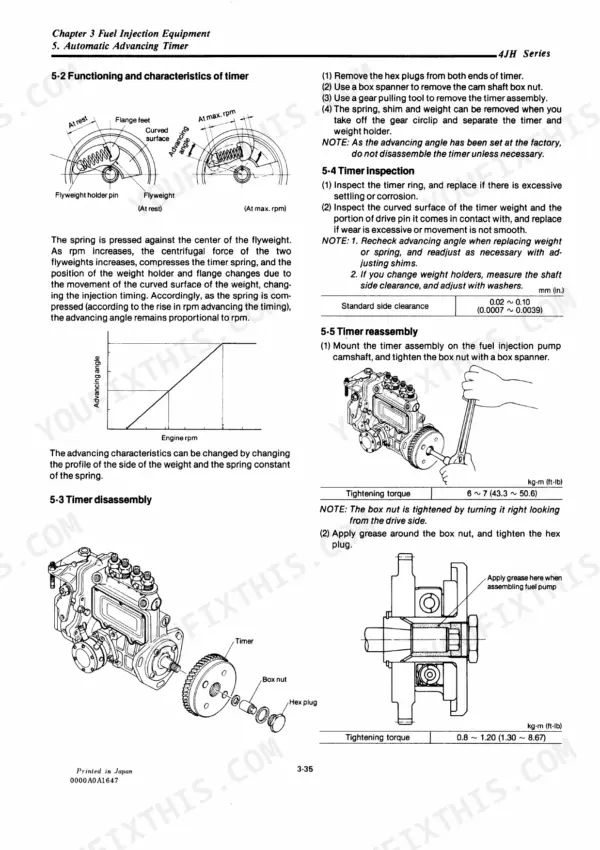
Chapter 3 of this manual strips the fuel injection pump and governor all the way down, and that is where a 4JH that cranks hard and smokes gets sorted: pump and governor disassembly, calibration and adjustment, the automatic advancing timer, and injector service at the correct 195 to 205 kg/cm² opening pressure.
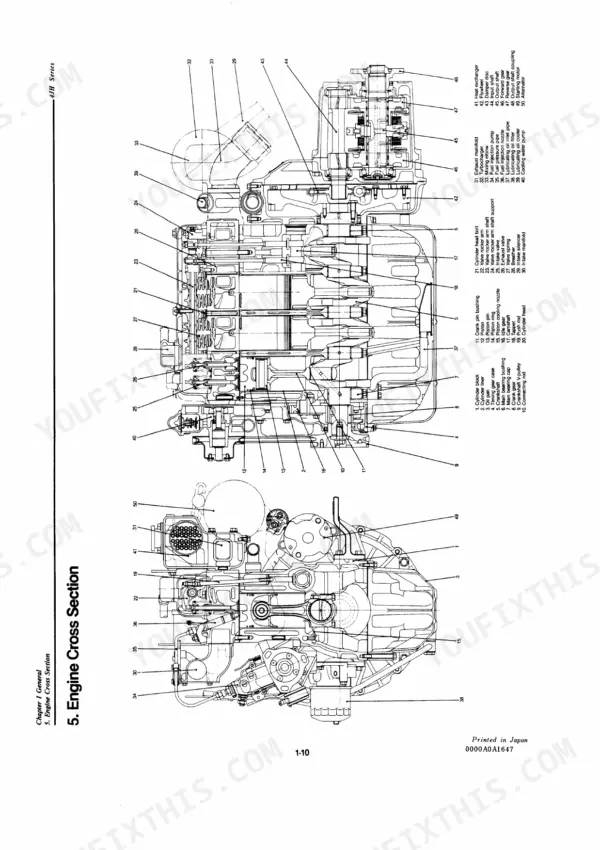
The rest of the 1985 factory book, publication 0000A0A1647, works through the whole engine across 317 pages: cylinder liners, piston ring end gap, crankshaft and main bearing clearance, the two stage cylinder head torque sequence, turbocharger service, lubrication, sea and fresh water cooling, the KBW 20/21 and KM4A marine gears, and the electrical system, covering the 4JHE, 4JH-TE, 4JH-HTE and 4JH-DTE and their (B) variants.
Every weekend the engine sits in pieces is a weekend off the water. The PDF goes wherever the work is, laptop at the bench or tablet in the engine bay, and prints page by page so the clearance tables sit beside the vise.
Complete the set for your 4JH Series
What's Inside This Yanmar 4JH Series Manual
| System | Pages | Key Topics |
|---|---|---|
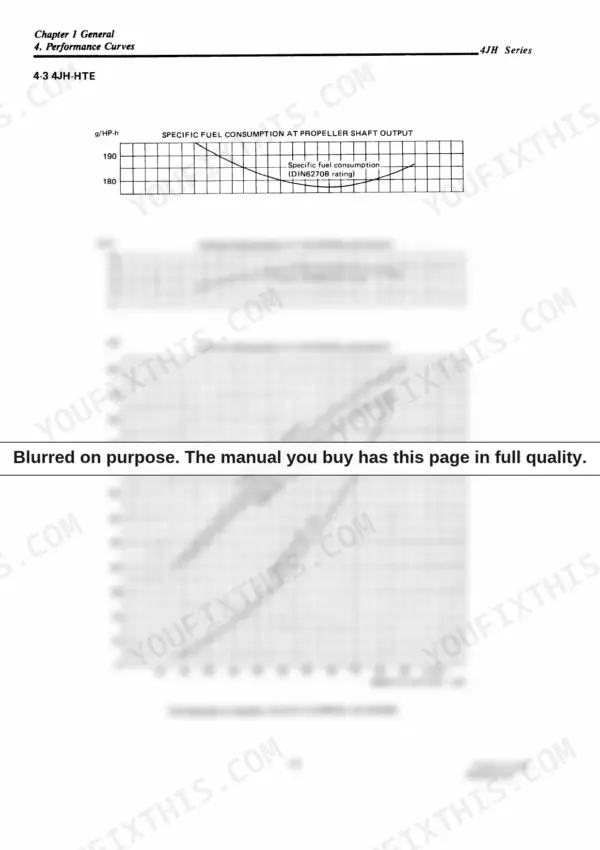
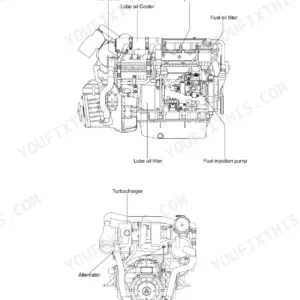
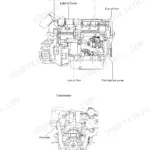
| General | 4-22 | Exterior Views, Specifications, Performance Curves, Engine Cross Section, Dimensions, Piping Diagrams, Parts Interchangeability |
| Inspection and Servicing of Basic Engine Parts | 23-54 | Cylinder Block, Cylinder Liners, Cylinder Head, Piston and Piston Pins, Connecting Rod, Crankshaft and Main Bearing, Camshaft and Tappets, Timing Gear |
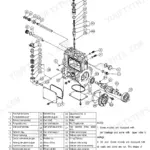
| Fuel Injection Equipment | 55-104 | Fuel Supply System, Disassembly, Reassembly and Inspection of Governor, Reassembly and Inspection of Fuel Injection Pump, Fuel Injection Pump and Governor |
| Intake and Exhaust System | 105-127 | Intake Silencer, Intake Manifold, Turbocharger, Mixing Elbow, Breather |
| Lubrication System | 128-140 | Lube Oil Pump, Lube Oil Filter, Oil Pressure Control Valve, Lube Oil Cooler, Piston Cooling Nozzle, Rotary Waste Oil Pump (Optional) |
| Cooling Water System | 141-159 | Sea Water Pump, Fresh Water Pump, Heat Exchanger, Pressure Cap and Sub Tank, Thermostat, Kingston Cock (Optional), Sea Water Filter (Optional) |
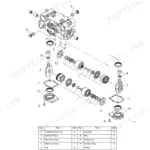
| Reduction and Reversing Gear | 160-221 | Marine Gear Model Kbw 20 and 21 (Construction, Installation, Servicing, Operation and Maintenance, Disassembly, Reassembly, Special Tools), Marine Gear Model KM4A |
| Remote Control (Optional) | 222-228 | Remote Control System, Remote Control Installation, Remote Control Inspection, Remote Control Adjustment |
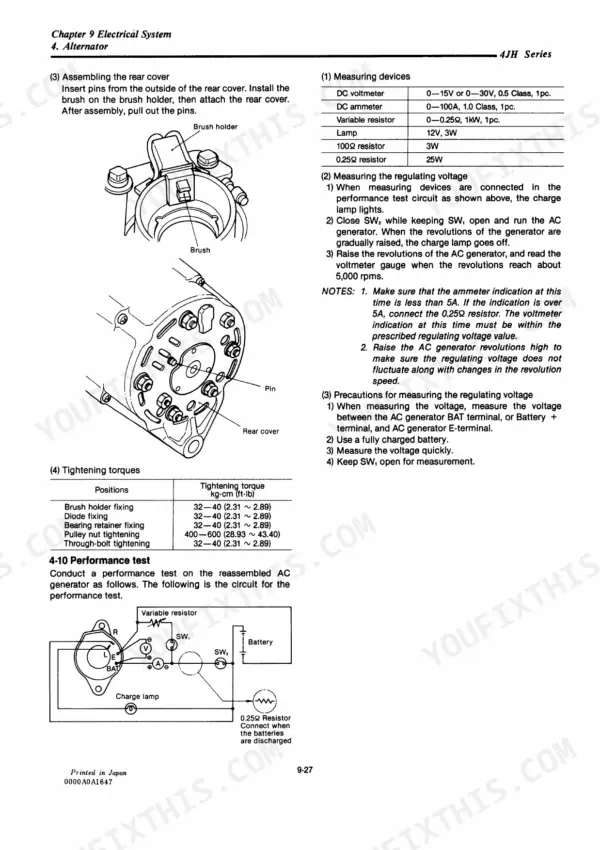
| Electrical System | 229-282 | Battery, Starter Motor, Alternator, Instrument Panel and Wiring Codes, Warning Devices, Air Heater (Optional) |
| Disassembly and Reassembly | 283-316 | Disassembly and Reassembly Precautions, Disassembly and Reassembly Tools, Bolt/Nut Tightening Torque, Test Running |
Quick Reference Specifications
| Specification | Value | Page |
|---|---|---|
| Fuel pump automatic timer box nuts tightening torque | 6.0 ~ 7.0 kg-m (43.39 ~ 50.63 ft-lb) | p. 315 |
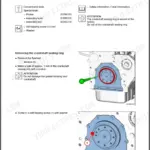
| Rotor play in shaft radial direction (Wear limit) | 0.08 (0.0031) mm (in.) | p. 116 |
| Blower blade nut tightening torque | 18 ~ 22 kg-m (1.30 ~ 1.59 ft-lb) | p. 118 |
| Nozzle nut tightening torque | 4 ~ 4.5 kg-m (28.9 ~ 32.5 ft-lb) | p. 94 |
| Injection starting pressure | 195 ~ 205 kg/cm² (2773 ~ 2915 lb/in.²) | p. 95 |
| Back lash (Standard) | 0.04 ~ 0.12 (0.0015 ~ 0.0047) mm (in.) | p. 49 |
| Idle shaft and bushing oil clearance (Standard) | 0.025 ~ 0.075 (0.0009 ~ 0.0029) mm (in.) | p. 50 |
| Fuel feed pump closed off pressure | 0.3 kg/cm² (4.26 lb/in.²) | p. 91 |
| Fuel feed pump tightening torque | 15 ~ 25 kg-cm (1.08 ~ 1.80 ft-lb) | p. 92 |
| Number of cylinders | 4 | p. 8 |
| Fuel injection pressure | 200 ±5 kg/cm² | p. 8 |
| Cylinder head bolt tightening torque (second stage) | 7.5 ~ 8.5 kg-m (54.25 ~ 61.48 ft-lb) | p. 35 |
Yanmar 4JH Series Common Problems This Manual Covers
Cranks strong but will not fire
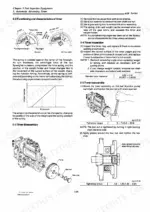
A 4JH that spins over well yet starts late or not at all is often timed one gear tooth off after a rebuild. The Timing Gear coverage in Chapter 2 shows gear mark alignment and gives backlash standards and wear limits for the whole gear train.
Manual Section: Chapter 2 Inspection and Servicing of Basic Engine Parts p. 23Black smoke and power loss under load
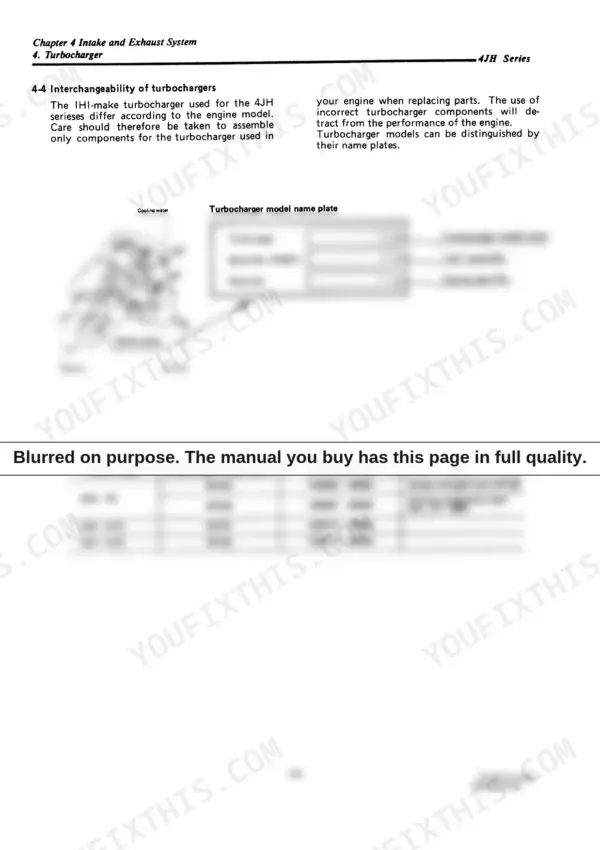
On the turbocharged 4JH-TE, 4JH-HTE and 4JH-DTE, a tired or seized turbocharger shows up as heavy black smoke and a boat that will not reach rated rpm. Chapter 4 covers turbocharger disassembly, rotor play measurement against wear limits, and reassembly, plus the intake silencer and mixing elbow.
Manual Section: Chapter 4 Intake and Exhaust System p. 105Sluggish throttle response, hunting rpm
When rpm takes seconds to follow the lever or surges at a set speed, the governor is the usual suspect. Chapter 3 walks through governor disassembly, inspection and reassembly, then adjustment of the pump and governor together on the bench.
Manual Section: Chapter 3 Fuel Injection Equipment p. 55Running hot on the sea water side
Rising temperature under load usually traces to the sea water pump, a fouled heat exchanger, or a lazy thermostat. Chapter 6 covers servicing all three, along with the fresh water pump, pressure cap and sub tank.
Manual Section: Chapter 6 Cooling Water System p. 141Low oil pressure warning
An oil pressure light or falling gauge reading calls for checking the lube oil pump, oil pressure control valve and oil cooler before condemning bearings. Chapter 5 covers inspection of each, including the piston cooling nozzles.
Manual Section: Chapter 5 Lubrication System p. 128Starter clicks or drags
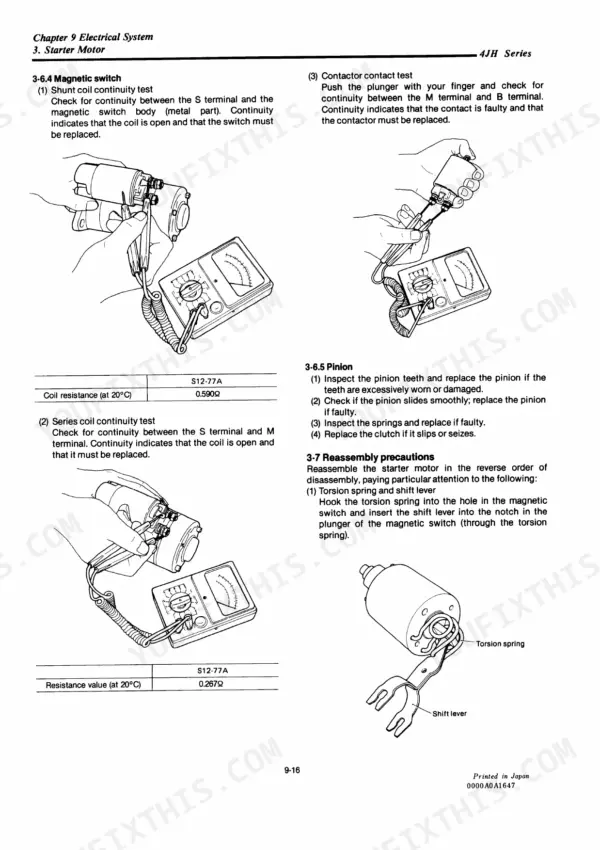
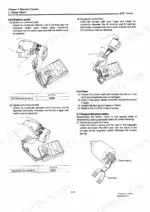
A starter that clicks, drags, or spins without engaging is a battery, motor or wiring problem before it is an engine problem. Chapter 9 covers battery checks, starter motor and alternator overhaul, instrument panel wiring codes and the warning devices.
Manual Section: Chapter 9 Electrical System p. 229Marine gear slips or shifts hard
Slipping under power or harsh engagement points to the reduction and reversing gear rather than the engine. Chapter 7 covers the KBW 20 and 21 and KM4A gears: construction, servicing, disassembly, reassembly and the special tools needed.
Manual Section: Chapter 7 Reduction and Reversing Gear p. 160Frequently Asked Questions
Which engines does this manual cover?
The Yanmar 4JHE, 4JH-TE, 4JH-HTE and 4JH-DTE marine diesels, plus the 4JH(B)E, 4JH-T(B)E, 4JH-HT(B)E and 4JH-DT(B)E variants. It is the 1985 factory service manual, publication 0000A0A1647, 317 pages in English, with applicable serial number prefixes listed for each model.
Does it cover turbocharger overhaul?
Yes. The Intake and Exhaust System chapter covers the turbocharger fitted to the 4JH-TE, 4JH-HTE and 4JH-DTE, including disassembly, rotor play checks against wear limits, and reassembly torques, alongside the intake silencer, intake manifold, mixing elbow and breather. p. 105
Are torque specs and clearances included?
Yes. Each chapter carries its own service data, from the two stage cylinder head torque to ring end gap and bearing clearances, and the Disassembly and Reassembly chapter finishes with a bolt and nut tightening torque table and test running procedure for final assembly. p. 283
Is the marine transmission covered?
Yes. The Reduction and Reversing Gear chapter covers the KBW 20 and 21 and the KM4A marine gears: construction, installation, operation and maintenance, full disassembly and reassembly, and the special tools involved. p. 160
How will I receive this Service Manual?
This is a 317-page searchable PDF ready for immediate download. Works on any device, so pull it up on your phone while you're under the hood. No shipping, no waiting.
Am I able to print pages from this manual?
Yes. Many mechanics print the section they need for their own shop and bring it to the bench.
Does this Yanmar 4JHE & variants manual include wiring diagrams?
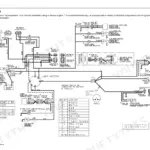
Yes, this Yanmar 4JHE & variants Service Manual includes complete electrical wiring diagrams, wire routing, and connector pinouts.




Reviews
There are no reviews yet.