
Part of the Hyundai Repair Manuals.
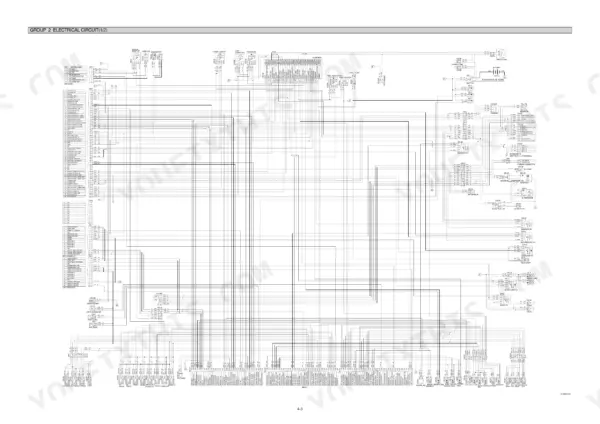
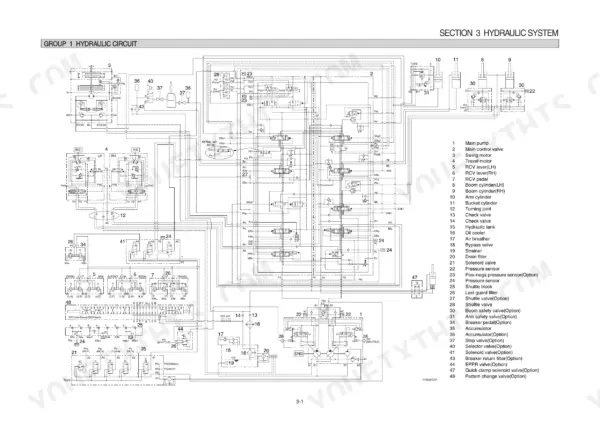
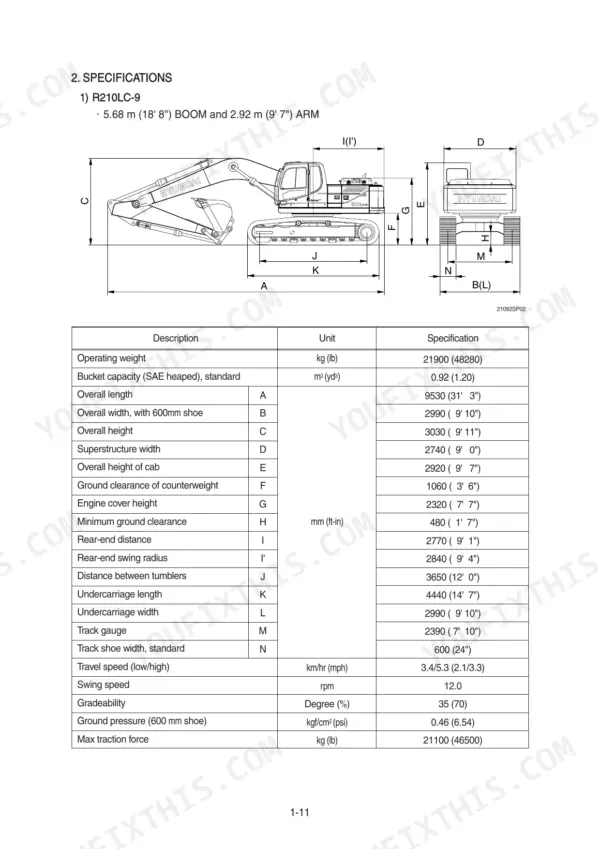
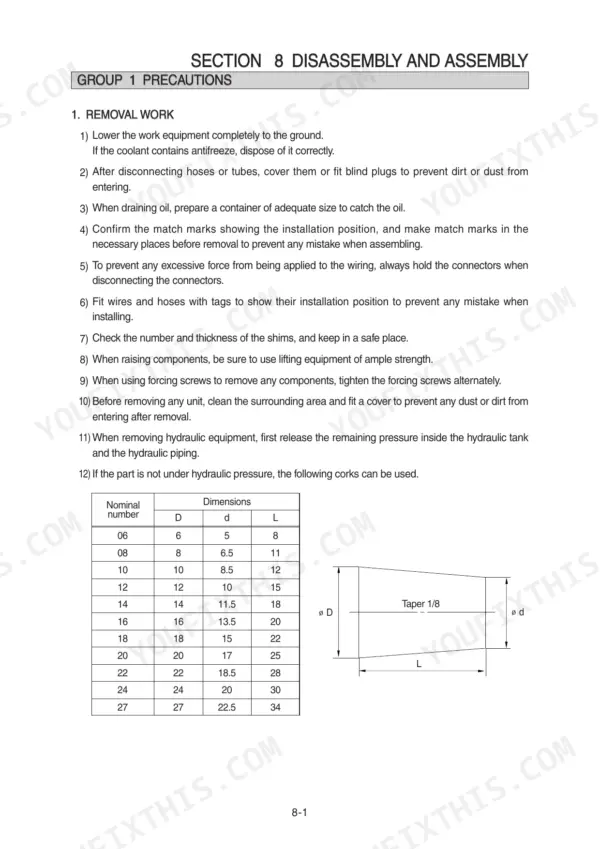
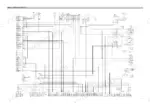
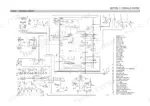
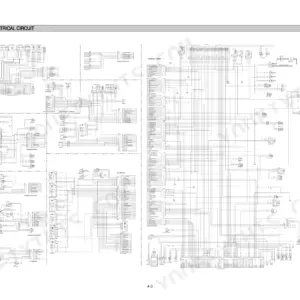
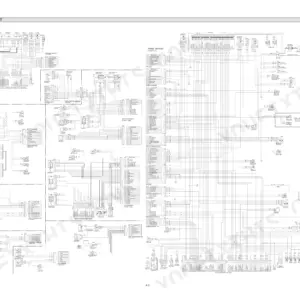
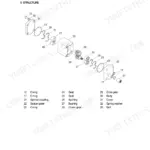
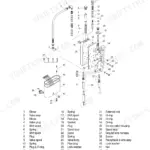
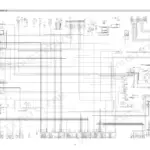
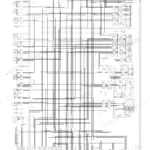
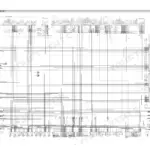
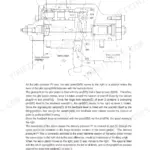
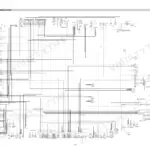
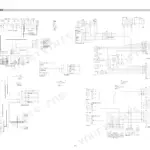
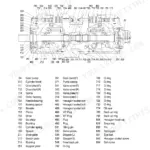
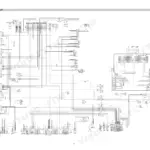
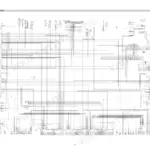
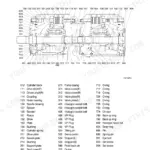
Every 551 pages of this Hyundai R210LC-9 Service Manual PDF cover one machine: the R210LC-9 crawler excavator, including the Long Reach and High Walker variants. Inside you get full hydraulic schematics tracing pilot and main circuits through single and combined operation, electrical wiring diagrams with connector pinouts, and a troubleshooting section that walks hydraulic, electrical, and mechatronics faults straight to the self-diagnostic error codes. Page after page of disassembly and assembly procedures handle the pump device, main control valve, swing device, travel device, and turning joint. Test the pilot pump at 40 bar, then torque the M20x2.5 mounting bolts to 57.9 kgf-m. No more chasing wiring faults with a multimeter and a prayer. Bookmarked and text-searchable; pull it up on your phone next to the machine and jump to any spec by keyword.
What's Inside This Hyundai R210LC-9 Manual
| System | Pages | Key Topics |
|---|---|---|
| General | 1-47 | Safety Hints, Specifications |
| Structure and Function | 48-126 | Pump Device, Main Control Valve, Swing Device, Travel Device, RCV Lever, RCV Pedal |
| Hydraulic System | 127-158 | Main Circuit, Pilot Circuit, Single Operation, Combined Operation |
| Electrical System | 159-210 | Component Location, Electrical Circuit, Electrical Component Specification, Connectors |
| Mechatronics System | 211-267 | Outline, Mode Selection System, Automatic Deceleration System, Self-Diagnostic System |
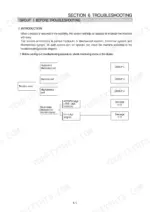
| Troubleshooting | 268-337 | Before Troubleshooting, Hydraulic and Mechanical System, Electrical System, Mechatronics System, Engine Stall Diagnosis, Voltage Test Procedures |
| Maintenance Standard | 338-372 | Operational Performance Test, Major Components, Track and Work Equipment |
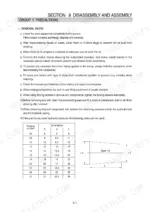
| Disassembly and Assembly | 373-535 | Precaution, Tightening Torque, Pump Device, Main Control Valve, Swing Device, Travel Device, RCV Lever, Turning Joint |
| Component Mounting Torque | 536-551 | Introduction Guide, Engine System, Electric System, Undercarriage, Structure, Work Equipment |
Quick Reference Specifications
| Specification | Value | Page |
|---|---|---|
| Pilot pump pressure | 40 bar | p. 273 |
| Swing pilot pressure | 0~40 bar | p. 273 |
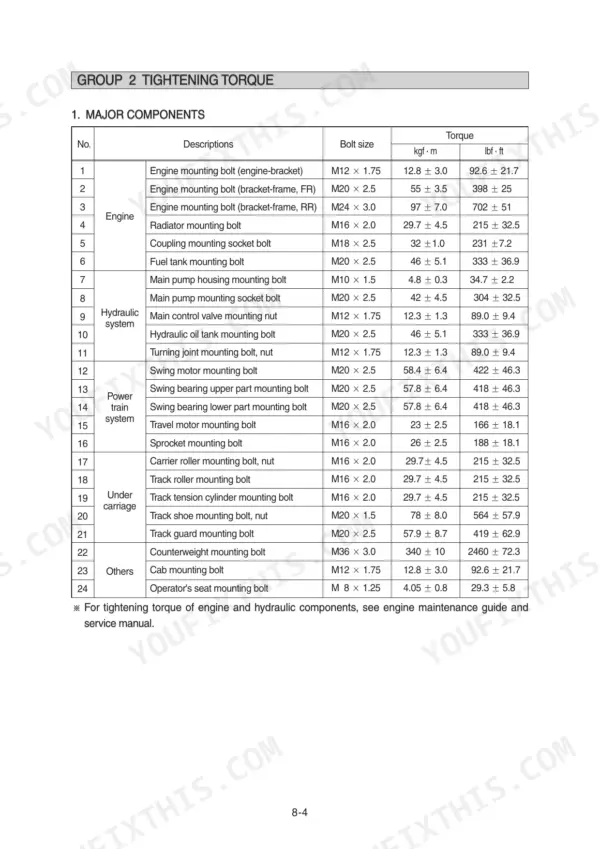
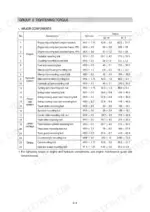
| M16x2.0 torque | 29.7 ± 4.5 kgf·m | p. 551 |
| M20x2.5 torque | 57.9 ± 8.7 kgf·m | p. 551 |
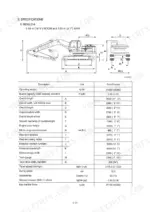
| Operating weight (R210LC-9) | 21900 kg | p. 23 |
| Engine oil quantity | 24 L | p. 43 |
| Main relief valve pressure | 350 kgf/cm2 | p. 44 |
| Swing motor relief pressure | 265 kgf/cm2 | p. 44 |
| Travel motor relief pressure | 350 kgf/cm2 | p. 44 |
| Travel speed (low/high) | 3.4/5.3 km/hr | p. 23 |
| Fuel tank capacity | 400 L | p. 47 |
Hyundai R210LC-9 Common Problems This Manual Covers
Hyundai R210LC-9 hydraulic functions slow and weak, boom struggles to lift a loaded bucket
Check hydraulic tank level and inspect the return filter for metal or debris. Test pilot primary pressure; standard is 40 kgf/cm2 per the chart on page 354. If pilot checks good, verify the main relief holds 350 kgf/cm2 (page 44). Cloudy oil means aeration, so chase the suction-side leak before it wrecks the pump.
Manual Section: Hydraulic & Mechanical System Troubleshooting p. 272Engine overheats and hydraulic oil temperature warning comes on during long digging cycles
Clean the radiator and hydraulic oil cooler with compressed air, blowing from the engine side out, daily in dusty conditions. Check coolant and hydraulic oil levels cold. If oil temperature still climbs, test the main relief valve; a relief stuck partially open dumps flow straight to tank as heat, so confirm it holds 350 kgf/cm2 (page 44).
Manual Section: Hydraulic & Mechanical System Troubleshooting p. 272Engine cranks but won't start, or starts then stalls under load in the morning
Drain the water separator and look for water or algae in the fuel. Replace the fuel filter and pre-filter, then bleed the system through to the injection pump. Keep the 400 L tank (capacity listed on page 47) topped up overnight; a half-empty tank breathes moist air and condenses water into the fuel.
Manual Section: Electrical System Troubleshooting p. 292Machine pulls to one side when traveling, one track noticeably slower than the other
Remove packed mud and rock from both track frames before condemning any components. Run a travel test on flat ground and compare each side against the 3.4/5.3 km/hr low/high spec on page 23. If one side still lags, check track tension, then swap the travel pilot lines side to side to isolate spool from motor.
Manual Section: Operational Performance Test p. 339Bucket pins knocking and linkage sloppy, grease disappearing from worn pin bosses
Inspect pins and bushings for wear; knocking means the bushings are gone, and grease will not fix steel on steel. Replace worn pins and bushings as matched sets. When reassembling, torque retainer bolts per the mounting torque table on page 551; M20x2.5 hardware takes 57.9 ± 8.7 kgf·m. Grease daily until parts arrive.
Manual Section: Component Mounting Torque p. 551Frequently Asked Questions
How do I clear the engine ECM fault code on a Hyundai R210LC-9?
The logged faults of the MCU or engine ECM can be deleted using the 'Delete fault' menu on the cluster. Navigate to the 'Monitoring' menu, select 'Logged fault', and then choose the 'Delete logged fault' option to clear the stored error codes. p. 225
How do I troubleshoot a Hyundai R210LC-9 hydraulic fault code?
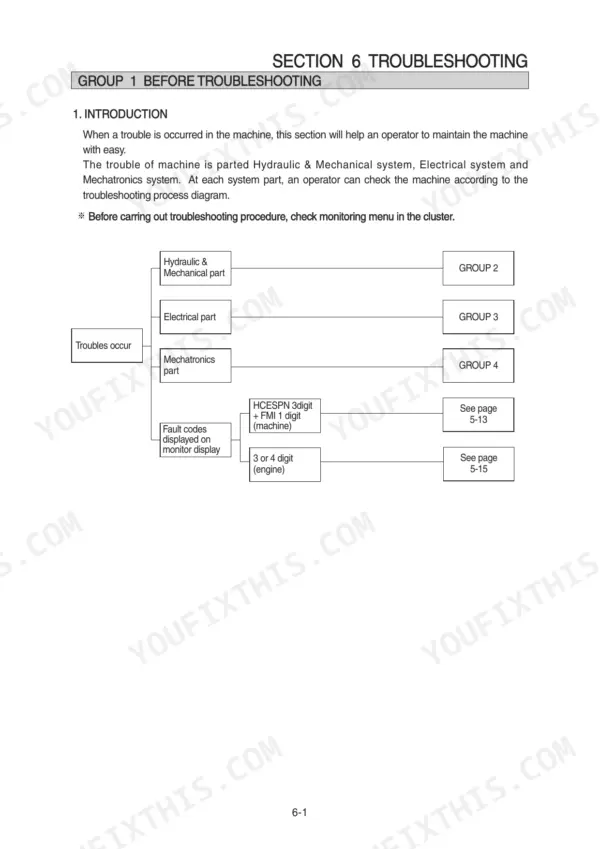
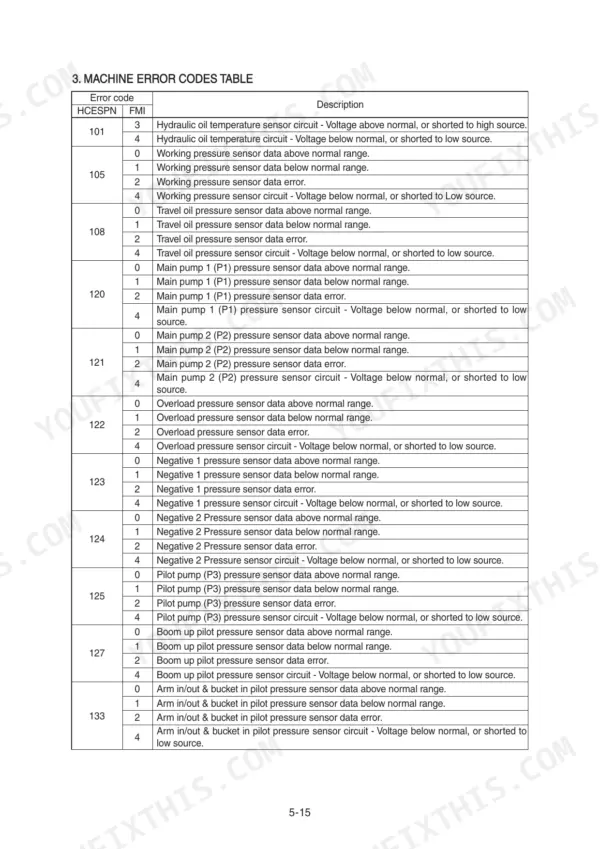
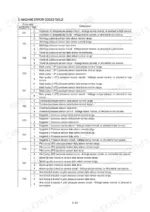
If a fault code is displayed on the monitor, identify the HCESPN 3-digit code and FMI 1-digit code. Refer to the 'MACHINE ERROR CODES TABLE' starting on page 226 to find the specific description and follow the troubleshooting process diagram on page 269 to determine if the issue is in the Hydraulic & Mechanical, Electrical, or Mechatronics system. p. 269
What are the replacement specifications for the engine oil filter?
The engine oil filter should be replaced every 500 hours of operation as part of the standard maintenance schedule. p. 260
What is the tightening torque for the engine mounting bolts (bracket-frame, FR)?
The tightening torque for the engine mounting bolts (bracket-frame, FR) is 55 ± 3.5 kgf·m (398 ± 25 lbf·ft). p. 377
What is the standard clearance between the track roller shaft and bushing?
The standard clearance between the track roller shaft and bushing is 0.39 to 0.476 mm, with a clearance limit of 2.0 mm. p. 367
How will I receive this Hyundai R210LC-9 Service Manual?
Instant PDF download. You get the full 551-page searchable Service Manual immediately after payment. Open it on your laptop, tablet, or phone right in the shop.
Is this Hyundai R210LC-9 Service Manual printable?
Yes. Print individual pages or full chapters for your own shop use, on letter or A4 paper.
Reviews
There are no reviews yet.