
Part of the Yanmar Repair Manuals.
When a 3TNV70 cranks slow and fires rough, the first honest answer comes from a compression gauge, and this Yanmar service manual tells you exactly how to take that reading and what to do with it. Publication M9961-02E070 covers the 2TNV70, 3TNV70, and 3TNV76 industrial diesels in 136 pages, whatever the engine happens to drive.
The core of the book is the full teardown: disassembly, inspection, and reassembly of the complete engine, with parts measurement, valve seat correction, and the service standards and bolt torque tables you check every clearance against. Around that sit maintenance schedules, troubleshooting charts, and chapters on the lubrication system, cooling system, fuel injection pump and governor, starter, alternator, and electric wiring.
An engine on a stand earns nothing, and neither does the machine waiting on it. Download the PDF, print the pages you need, and put real numbers under every measurement before it goes back together.
What's Inside This Yanmar 2TNV70, 3TNV70, 3TNV76 Manual
| System | Pages | Key Topics |
|---|---|---|
| Preface | 3 | Service Procedures for Tnv Series Engines, Standard Engine Specifications, Components, Work Equipment Service Manual, Engine Quality Improvement, Specification Changes |
| Safety Labels | 4 | Basic Safety Rules and Precautions, Safety Precautions, Inspection and Maintenance Procedures, Safety Consideration, Safety Marks and Their Meanings, Danger, Warning, Caution |
| Safety Precautions | 5-8 | Service Area, Work Wear, Tools, Genuine Parts and Materials, Fastener Torque, Electrical, Waste Management, Further Precautions |
| Precautions for Service Work | 9-11 | Precautions for Safety, Preparation for Service Work, Preparation Before Disassembly, Precautions in Disassembly, Precautions for Inspection, Measurement, Adjustment and Check |
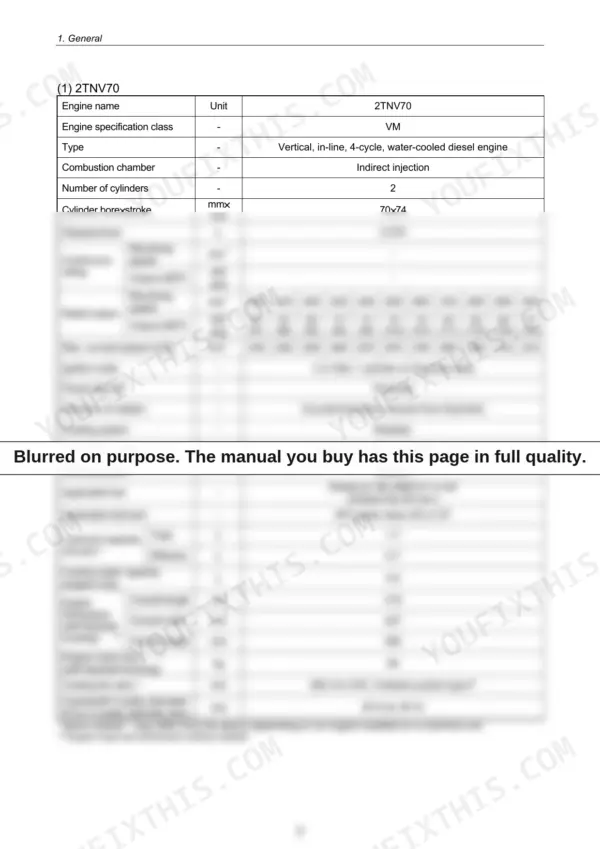
| General | 16-29 | Engine Nomenclature, Specifications, Fuel Oil, Lubricating Oil and Cooling Water, Engine External Views, Structural Description |
| Inspection and Adjustment | 30-56 | Periodic Maintenance Schedule |
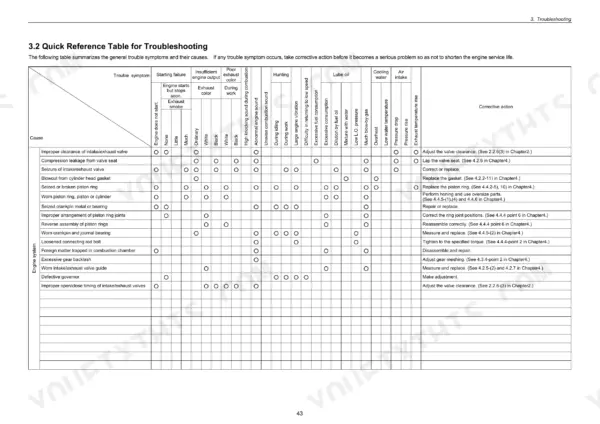
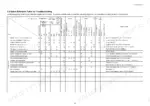
| Troubleshooting | 57-62 | Preparation Before Troubleshooting, Quick Reference Table for Troubleshooting, Troubleshooting by Measuring Compression Pressure |
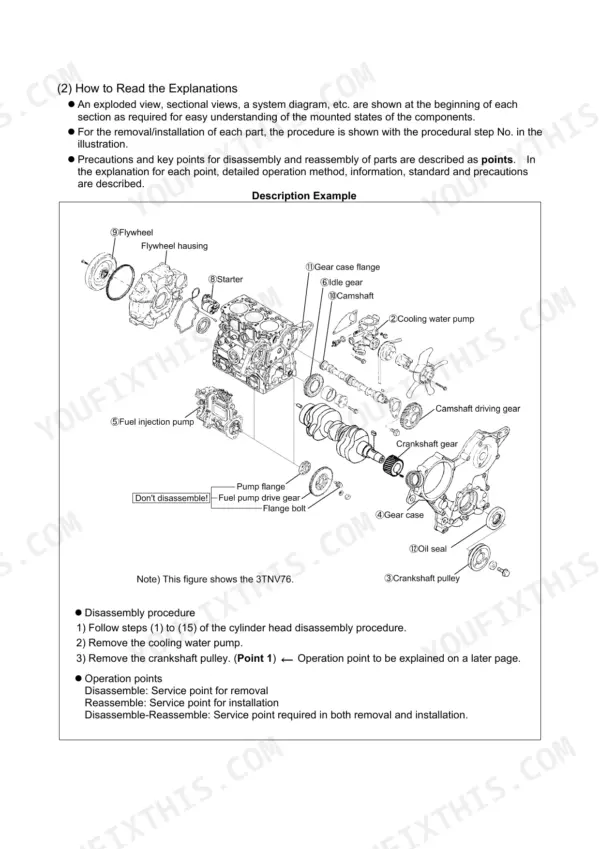
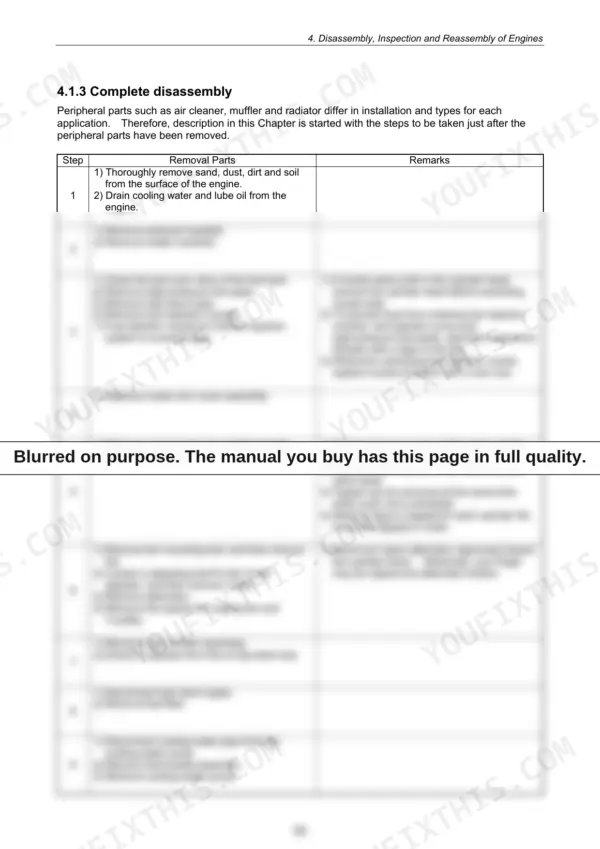
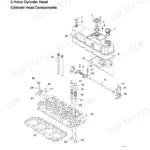
| Disassembly, Inspection and Reassembly of Engines | 63-102 | Complete Disassembly and Reassembly (Introduction, Special Service Tools, Precautions Before and During Reassembly, Operation), Cylinder Head: Disassembly |
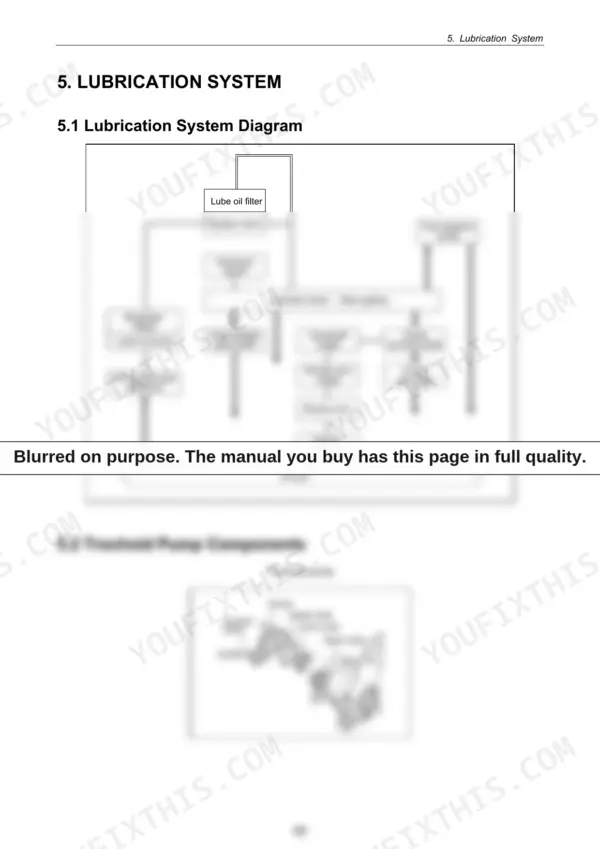
| Lubrication System | 103-105 | Lubrication System Diagram, Trochoid Pump Components, Disassembly, Servicing Points, Parts Inspection and Measurement (Trochoid Pump Inspection and Measurement) |
| Cooling System | 106-107 | Cooling Water System, Cooling Water Pump Components, Disassembly (Reverse the Below Procedure for Reassembly), Servicing Points |
| Fuel Injection Pump / Governor | 108-111 | Introduction |
| Starting Motor Specifications and Characteristics | 112-114 | Specifications and Characteristics, Structure of a Starting Motor and the Wiring Diagram, Performance |
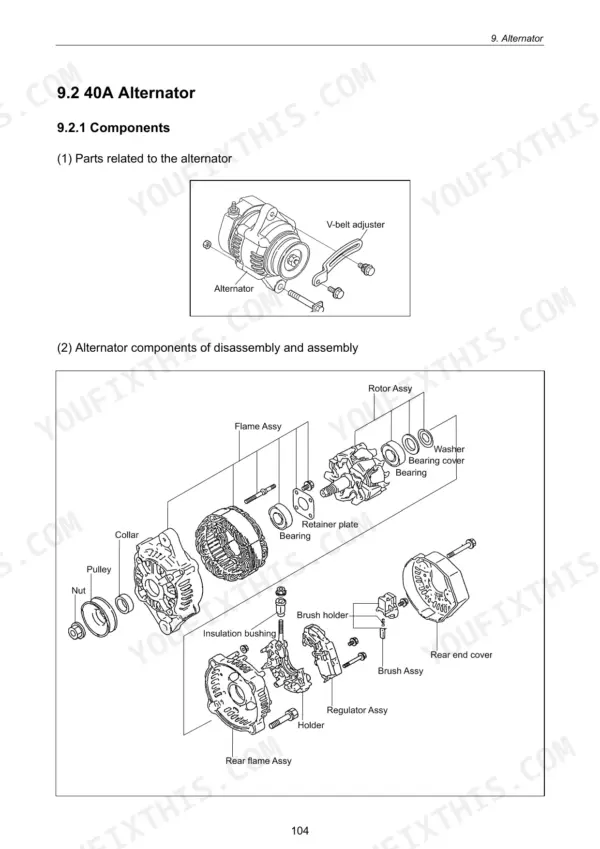
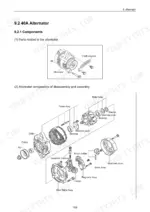
| Alternator | 115-122 | 20A Alternator (Specifications, Structure, Wiring Diagram, Standard Output Characteristics, Inspection) |
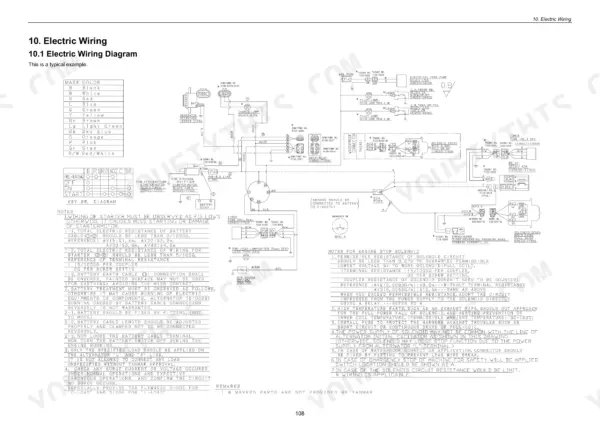
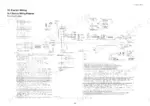
| Electric Wiring | 123-127 | Electric Wiring Diagram (Alternator, Starter) |
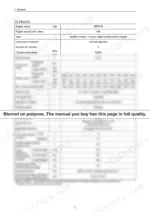
| Service Standards | 128-133 | Engine Tuning, Engine Body, Lubricating Oil System (Trochoid Pump) |
| Tightening Torque for Bolts and Nuts | 134-135 | Tightening Torques for Main Bolts and Nuts, Tightening Torques for Standard Bolts and Nuts |
Quick Reference Specifications
| Specification | Value | Page |
|---|---|---|
| All Models | ||
| Fuel injection nozzle pressure (Standard) | 11.8~12.8 MPa (120~130 kgf/cm²) | p. 48 |
| Fuel filter element replacement interval | Every 500 hours or 6 months | p. 43 |
| Fuel filter element Part No. | 119740-55650 | p. 43 |
| Air cleaner element cleaning/replacement interval | Every 250 hours or 3 months | p. 41 |
| Starter motor Manufacturer's model | P1.1 | p. 112 |
| Starter motor Yanmar code | 119717-77010 | p. 112 |
| Cooling water pump bearing inspection | Check for abnormal noise, sticking or play and water leakage. Replace whole pump assy if necessary. | p. 107 |
| Thermostat valve opening temperature | 69.5~72.5 °C | p. 55 |
| Thermostat full open lift (at 85°C) | 8 mm or more | p. 55 |
| 2TNV70 | ||
| Cooling water capacity (engine only) | 0.6 L | p. 128 |
| 2TNV70 Displacement | 0.570 L | p. 17 |
| 3TNV70 | ||
| 3TNV70 Displacement | 0.854 L | p. 18 |
Yanmar 2TNV70, 3TNV70, 3TNV76 Common Problems This Manual Covers
Hard starting or no start
A TNV that drags through cranking and will not light usually comes down to compression, fuel delivery, or air in the lines. The troubleshooting chapter includes a quick reference table and a procedure for diagnosing by measured compression pressure, so you rule causes out in order instead of swapping parts.
Manual Section: 3. Troubleshooting p. 57Rough running that ends in a stall
Owners of these engines report surging and rough running that finishes with a shutdown, and the trail usually leads through fuel delivery and governor behavior. The fuel injection pump and governor chapter covers that side of the engine.
Manual Section: 7. Fuel Injection Pump / Governor p. 108Low power from clogged filters
A dirty fuel filter starves the injection pump and shows up as lost power long before a breakdown. The maintenance schedule sets the fuel filter element (part number 119740-55650) at every 500 hours or 6 months and the air cleaner element at every 250 hours or 3 months.
Manual Section: 2. Inspection and Adjustment p. 30Slow cranking or dead starter
Weak cranking speed kills compression on a small diesel before anything else gets a chance. The starting motor chapter gives specifications and test values, including no-load figures of 11.5 V at 90 A or less, so you can bench test the motor instead of guessing.
Manual Section: 8. the Specifications of a Starting Motor and the Characteristics p. 112Overheating and coolant leaks
A cooling water pump with bearing play or a weeping seal will cook an engine quietly. The cooling system chapter walks the pump disassembly and has you check the bearing for abnormal noise, sticking, play, and water leakage, replacing the pump assembly when it fails inspection.
Manual Section: 6. Cooling System p. 106Low oil pressure at idle
When the oil pressure switch starts flickering warm at idle, trochoid pump wear is the place to look. The lubrication system chapter covers the system diagram, pump disassembly, and inspection and measurement of the trochoid pump.
Manual Section: 5. Lubrication System p. 103Blow-by, smoke, and weak compression
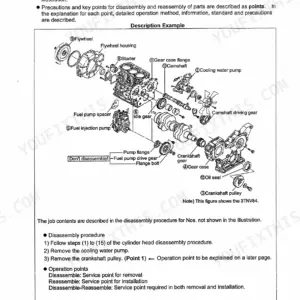
Worn rings, bores, and valve seats end in smoke and compression you can feel at the crank handle. The teardown chapter carries the complete disassembly, inspection, and reassembly sequence, with parts measurement, valve seat correction, and valve guide replacement.
Manual Section: 4. Disassembly, Inspection and Reassembly of Engines p. 63Frequently Asked Questions
Which engines does this manual cover?
It covers the Yanmar 2TNV70, 3TNV70, and 3TNV76 industrial diesel engines (0.570 L, 0.854 L, and 1.115 L displacement). It is Yanmar service manual publication M9961-02E070, 136 pages, in English, regardless of what equipment the engine is installed in.
Does it include torque specs for reassembly?
Yes. Section 12, Tightening Torque for Bolts and Nuts, lists torques for the main bolts and nuts plus standard fasteners, and the disassembly chapter covers cylinder head reassembly along with the precautions to follow before and during reassembly. p. 134
What are the valve clearance and injection pressure specs?
The Service Standards chapter lists intake and exhaust valve clearance at 0.15 to 0.25 mm and fuel injection pressure at 11.8 to 12.8 MPa, alongside engine tuning, engine body, and lubricating oil system standards. p. 128
Are wiring diagrams included?
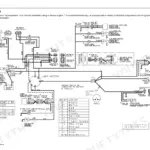
Yes. The Electric Wiring section carries wiring diagrams for the alternator and starter circuits. Separate chapters give starter motor specifications and test values, plus 20A alternator specifications, structure, wiring diagram, output characteristics, and inspection. p. 123
How quickly can I access this manual after buying?
A 136-page Service Manual in searchable PDF format, available the moment you complete checkout. View on computer, tablet, or phone, with no shipping wait.
Am I able to print pages from this manual?
Yes. Print the pages you need for the job in your own shop, and bin them when they get greasy.
Are there wiring harness diagrams in this Yanmar TNV Series manual?
Yes, full electrical schematics are included with wire colors, connector locations, and circuit descriptions.





Reviews
There are no reviews yet.