
Part of the Yanmar Repair Manuals.
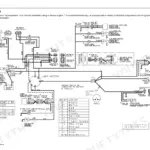
A slow bucket on a Yanmar V7 usually starts as a question with nobody around to answer it: is it the pump, the loader valve, or just tired oil? This service manual puts the answer in front of you, from the hydraulic circuit schematic and valve setting chart to the circuit operation pages for the loader, steering, and quick-coupling functions.
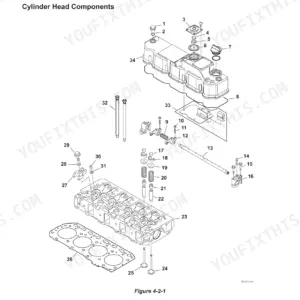
Across its 213 pages it covers the V7 wheel loader and its 4TN88DSA2 diesel engine: cylinder head work, fuel injection pump service and timing, cooling and lubrication systems, the starter motor, and fuse, relay, and connector identification for the electric system. Service standards let you measure bucket speed, arm lifting speed, and parking brake performance against factory figures instead of guessing.
Because it is a PDF, it rides along on a phone or laptop and prints page by page, wherever the machine happens to be down.
Complete the set for your V7
- Parts Catalog: Yanmar V7 Parts Catalog (Wheel Loader)
What's Inside This Yanmar V7 Manual
| System | Pages | Key Topics |
|---|---|---|
| General Cautions for Maintenance Work | 6-16 | Correct Work, Safety Precautions, Preparations, Cautions for Disassembly and Reassembly, Cautions for Removal and Installation of Hydraulic Equipment |
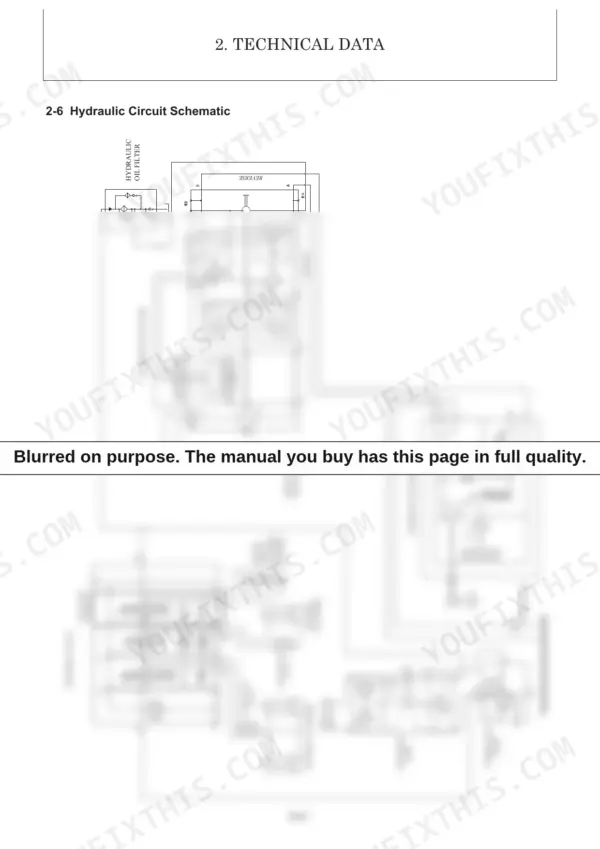
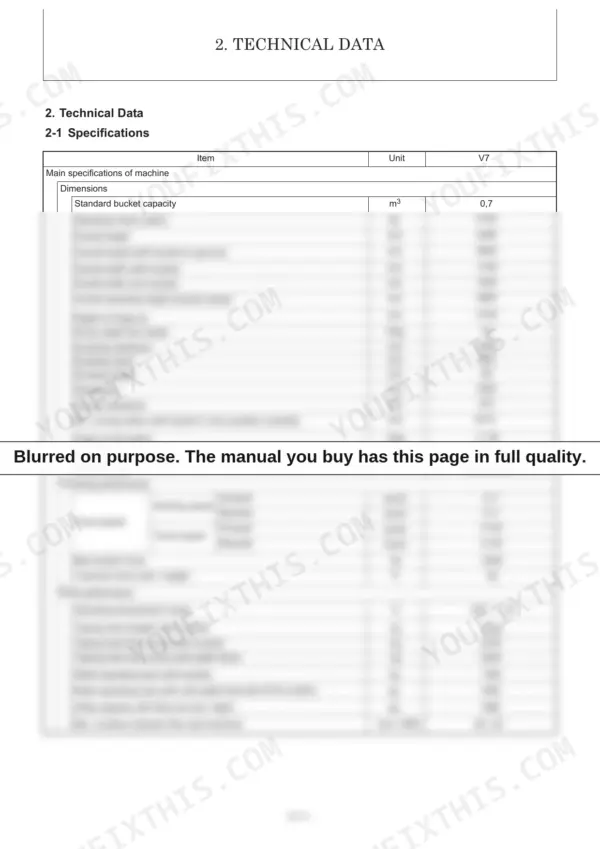
| Technical Data | 18-31 | Specifications, Outline Drawing and Working Area, Lifting Capacity, Periodic Inspection and Servicing, Fuel, Lube Oil and Grease Recommended, Hydraulic Circuit Schematic |
| Service Standards | 32-35 | Machine Performance, Bucket Speed, Arm Lifting Speed, Parking Brake Performance |
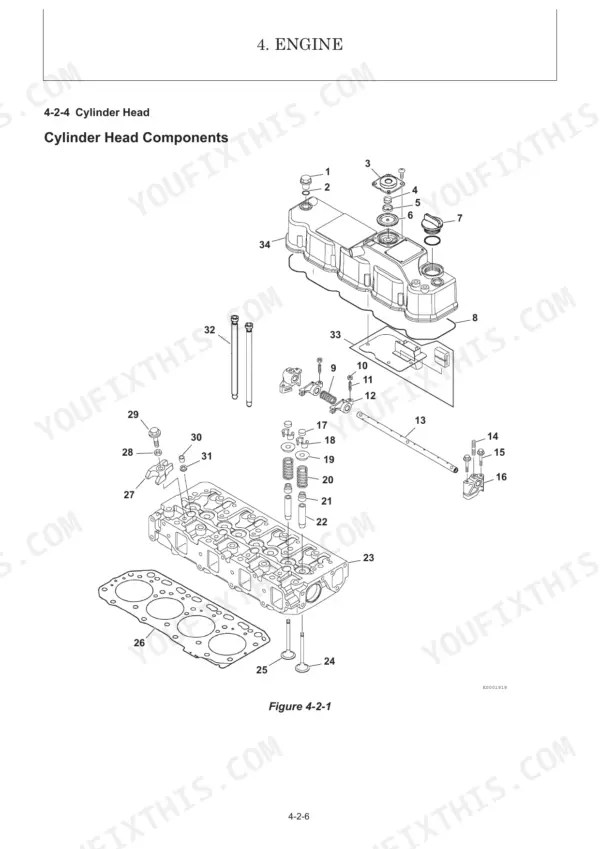
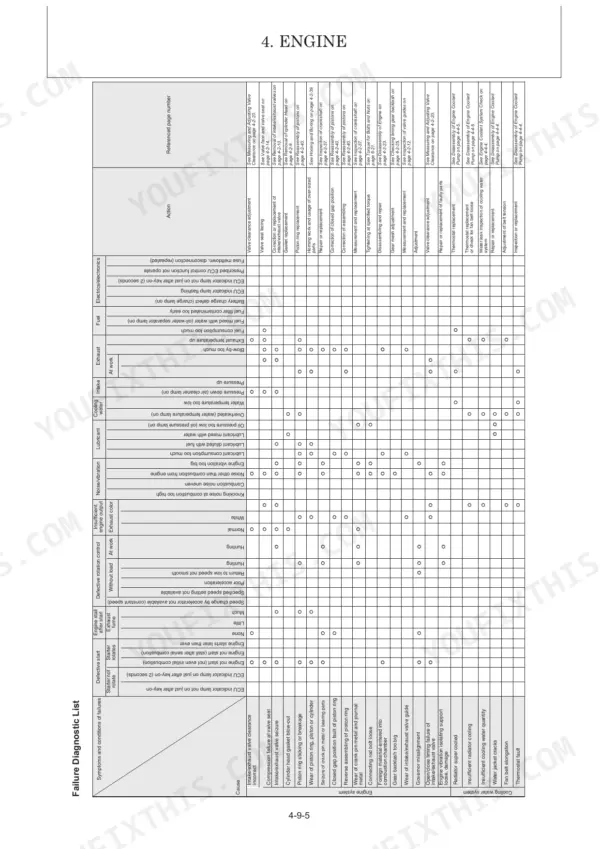
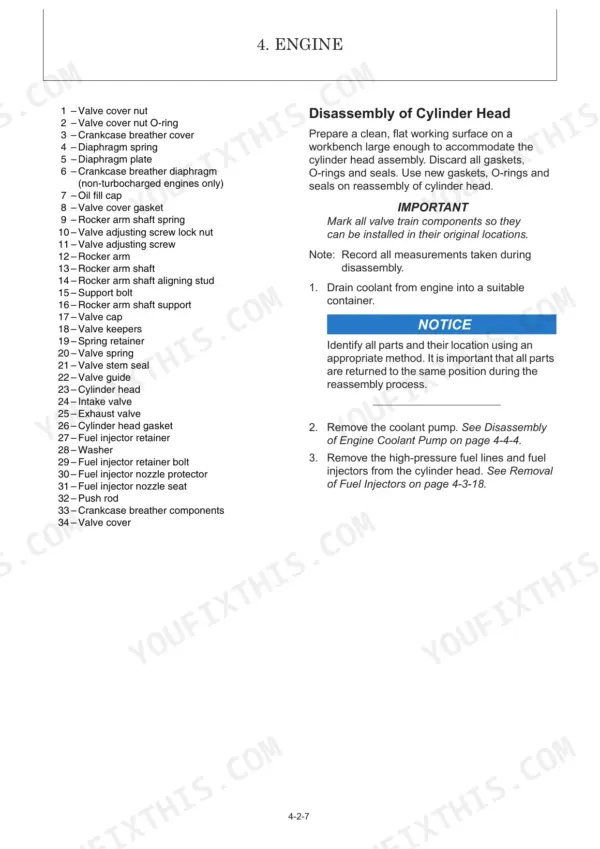
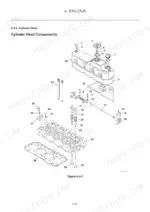
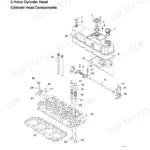
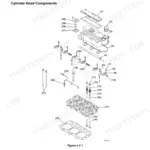
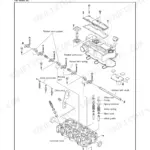
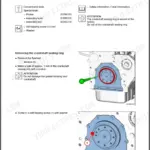
| Engine | 36-181 | Safety Statements, Special Service Tools, Measuring Instruments, Cylinder Head Components, Fuel System, Cooling System, Lubrication System, Starter Motor |
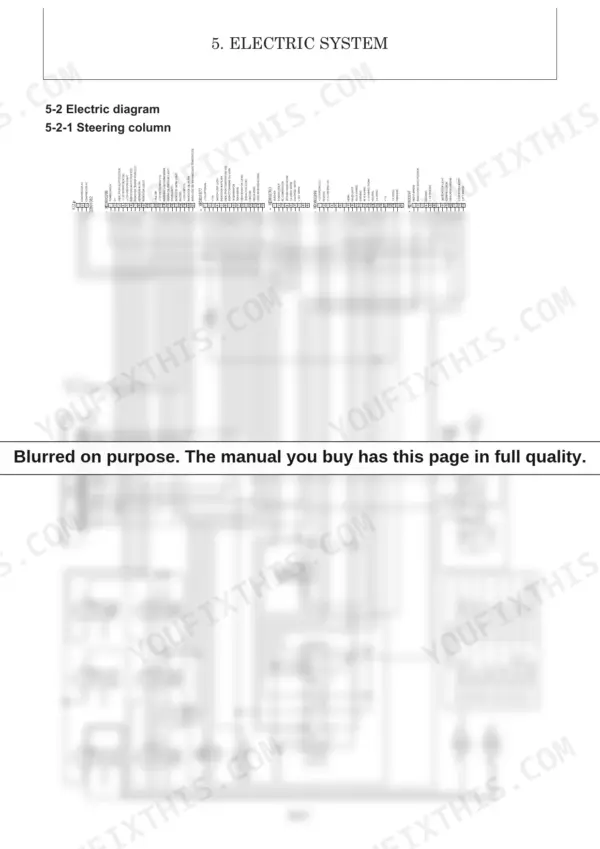
| Electric System | 182-191 | Electric Equipment of Machine (Localisation of Fuse and Relays, Identification of Fuses, Identification of Relays, Identification of Connectors) |
| Hydraulic System | 192-211 | Hydraulic Circuit (Valve Setting Chart, Pressure Outlets), Circuit Operation (Loader, Steering, Loader Quick-Coupling) |
Quick Reference Specifications
| Specification | Value | Page |
|---|---|---|
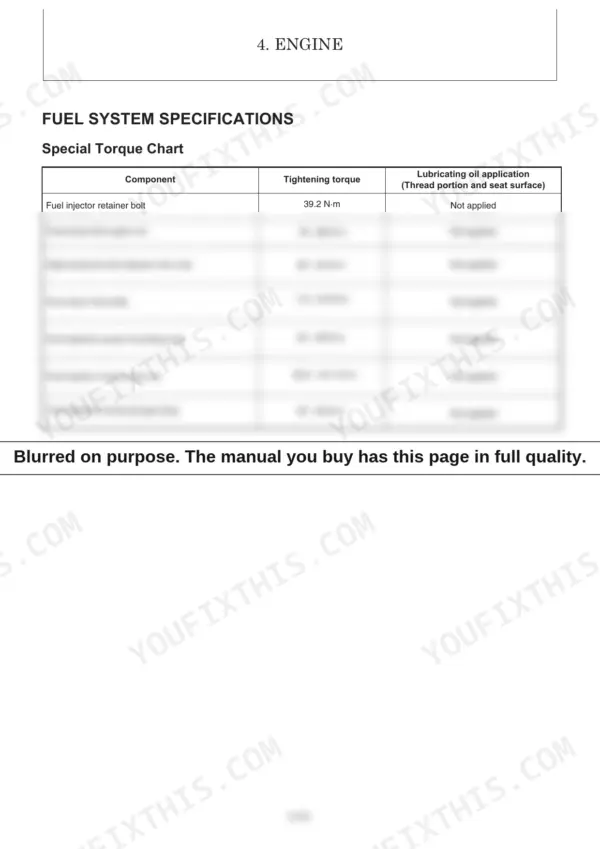
| Fuel injector retainer bolt tightening torque | 39.2 N·m | p. 101 |
| Fuel pump drive gear nut tightening torque | 78 - 88 N·m | p. 101 |
| Air cleaner type | Cyclone type | p. 23 |
| Air cleaner filtration type | Double | p. 23 |
| Fuel filter type | Filter paper with automatic air release device | p. 22 |
| Oil/water separator type | Screen type (100 meshes) | p. 22 |
| LO filter type | Full flow filter | p. 22 |
| Filter valve opening pressure | 0.08 to 0.12 MPa | p. 22 |
| Thermal engine oil type | YANMAR GOLDEN DIESEL HP/A 10W–30 | p. 29 |
| Thermal engine oil quantity | 8 L | p. 29 |
| Electric card fuse amperage | 40 A | p. 185 |
| Glow plugs relay fuse amperage | 40 A | p. 185 |
Yanmar V7 Common Problems This Manual Covers
Bucket lifts slowly or stalls under load
Weak lift is one of the most reported complaints on compact wheel loaders, and the causes range from dirty oil to a relief valve drifting off its setting. The Hydraulic System section gives the valve setting chart, pressure outlets, and circuit operation for the loader so you can test pressures instead of swapping parts.
Manual Section: Hydraulic System p. 192Engine runs hot in dusty work
Loading dry material packs debris into the cooling package until the temperature climbs on every long push. The Engine section covers the cooling system, including the coolant system check and coolant pump service, so you can rule out the pump before condemning the radiator.
Manual Section: Engine p. 36Hard starting and rough, uneven running
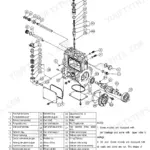
On the 4TN88DSA2 this usually traces back to the fuel system. The manual walks through the fuel injection pump, checking and adjusting injection timing, and injector service, with the tightening torques for the injection lines and pump mounting hardware.
Manual Section: Engine p. 36Blown fuses and intermittent electrical faults
A loader that cranks one morning and is dead the next is often a fuse, relay, or corroded connector. The Electric System section locates the fuse and relay boxes and identifies every fuse, relay, and connector on the machine, so you are not tracing wires blind.
Manual Section: Electric System p. 182Parking brake will not hold on grades
A loader that creeps on a ramp is a hazard around anyone working near it. The Service Standards section gives factory figures for parking brake performance, along with bucket speed and arm lifting speed, so you can measure the machine against spec.
Manual Section: Service Standards p. 32Spongy controls after hydraulic repairs
Replace a hose or cylinder and the functions can come back jerky until trapped air is purged. The opening section covers removal and installation of hydraulic equipment and piping, correct hose installation, and air release of the hydraulic system.
Manual Section: General Cautions for Maintenance Work p. 6Frequently Asked Questions
Which machine and engine does this manual cover?
It is the Yanmar service manual for the V7 wheel loader with the 4TN88DSA2 diesel engine, publication number MM547ENWL00101. The Technical Data section carries the specifications, outline drawing and working area, lifting capacity list, and periodic servicing schedule. p. 18
Does it cover the loader hydraulics and quick-coupler circuit?
Yes. The Hydraulic System section includes the valve setting chart, pressure outlets, and circuit operation for the loader, steering, and loader quick-coupling. It also lists the main relief valve loader setting of 20 MPa for pressure testing. p. 192
Are fluid capacities and recommended oils listed?
Yes. Technical Data lists 8 L engine oil, 57 L hydraulic circuit, 70 L fuel tank, and 10 L cooling system capacities, along with the recommended fuel, lube oil, and grease for each point on the machine. p. 18
How do I get the manual after purchase?
It is a direct digital download. After checkout you download the PDF and open it immediately on any device with a PDF reader, so there is no shipping and no waiting to start the repair.
What format is this manual in?
You get a 213-page searchable PDF that downloads instantly after checkout. Open it on your laptop, tablet, or phone, and bring it right to the shop floor.
Can I print specific sections of this Service Manual?
Yes. Print the pages or sections you need for your own shop use. Any standard printer works.
Can I find hydraulic circuit diagrams in this Yanmar V7 manual?
Full hydraulic system diagrams are included, covering circuits, valve locations, and hydraulic component specs for the Yanmar V7, Wheel Loader.


Reviews
There are no reviews yet.