
Part of the Doosan Repair Manuals.
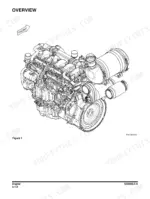
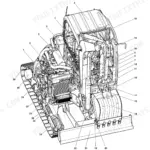
This is the factory shop manual for the Doosan DX300LC-5 crawler excavator, the DC 9 powered machine rated at 202 kW (271 HP) at 1,800 rpm. Inside: safety and transport procedures, full specs and working ranges, standard fastener torque charts, and teardown coverage of the DC 9 engine including cooling, fuel, and the EGR/SCR aftertreatment. Upper structure chapters walk the main pump, main control valve, swing device, EPPR valve, and accumulator. Lower structure covers the swing bearing, center joint, travel device, and tracks; the front group gets boom, arm, bucket, and cylinders. Hydraulic testing and adjustment, electrical troubleshooting, and attachment options round it out, and the final Schematic chapter prints both the hydraulic and electrical wiring schematics in this same book.
What's Inside This Doosan DX300LC-5 Manual
| System | Pages | Key Topics |
|---|---|---|
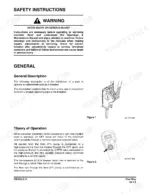
| Safety | 7-74 | Maintenance Safety, Instructions, Messages, General, Transportation, Operation, Environment |
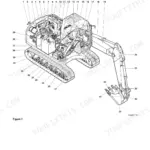
| Specifications | 75-108 | Safety Instructions, General Descriptions, Component Locations, General Dimensions, Working Ranges, General Specifications, Approximate Weights of Workload Materials, Performance Tests, Preparation for Performance Tests, Operational Performance Standard Tables, Operational Performance Tests |
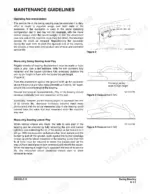
| General Maintenance | 109-146 | Maintenance Instructions, Standard Torques |
| Engine | 147-572 | Engine Coolant Heater |
| Upper Structure | 573-1024 | Cabin, Counterweight, Oil Tank, Fuel Tank, Main Pump, Drive Coupling, Main Control Valve, Swing Device, Fan Pump/Motor, Gear Pump, Joystick Valve, Travel Control Valve, Solenoid Valve, EPPR Valve, Accumulator |
| Lower Structure and Chassis | 1025-1150 | Swing Bearing, Center Joint, Travel Device, Track Assembly |
| Front | 1151-1212 | Boom and Arm, Bucket, Cylinders |
| Hydraulic System | 1213-1306 | Testing and Adjustment, Troubleshooting |
| Electrical System | 1307-1478 | Troubleshooting |
| Options | 1479-1570 | One Way, Two-Way, Rotating, Quick Coupler, Two Pump |
| Schematic | 1571-1576 | Hydraulic Schematic, Electrical Schematic |
Quick Reference Specifications
| Specification | Value | Page |
|---|---|---|
| Engine Model | DC 9 | p. 169 |
| Rated Net Power | 202 kW (271 HP) @ 1,800 rpm (SAE J1995) | p. 169 |
| Max. Torque | 1,275 Nm @ 1,300 rpm | p. 171 |
| Fuel Tank Capacity | 500 L (132.1 U.S. gal) | p. 92 |
| Hydraulic Reservoir Capacity | 165 L (44 U.S. gal) | p. 92 |
| Hydraulic System Capacity | 280 L (74 U.S. gal) | p. 92 |
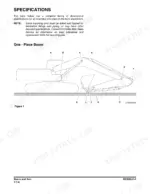
| Shipping Weight | 29.5 tons (65,036 lb), One-Piece Boom std config | p. 92 |
| Overall Shipping Length | 10,540 mm (34' 7") standard boom/arm | p. 93 |
| Ground Pressure Rating | 0.57 bar (8.1 psi), standard 600 mm shoe | p. 92 |
| Max. Digging Reach (3.1m STD Arm) | 10,860 mm (35' 7") | p. 91 |
| Max. Digging Depth (3.1m STD Arm) | 7,010 mm (22' 12") | p. 91 |
| Swing Speed | 18.5 sec / 3 revolutions | p. 98 |
Doosan DX300LC-5 Common Problems This Manual Covers
Hydraulic functions feel weak, slow, or the machine veers off during travel
When every function drags, work through Hydraulic System Testing and Adjustment before condemning parts: a worn main pump, low oil, a clogged intake strainer, or air in the system are the usual suspects. If it veers in neutral during travel, the troubleshooting table points at a weak pump on that side.
Manual Section: Hydraulic System Testing and Adjustment / Troubleshooting p. 1277Engine runs hot / coolant overheating under load
Treat it as a cooling system problem first, not a reason to thin the coolant or ignore the gauge. The Cooling System section walks the checks and carries an explicit burn hazard warning about hot coolant at operating temperature, so let the machine cool down before you open anything pressurized.
Manual Section: Cooling System p. 424Engine won't start after running out of fuel or fuel-system work
Air in the lines is the usual reason a DC 9 cranks but will not fire after running dry. Follow the priming procedure in the Fuel Tank section: it uses the fuel filter, bleed nipple, and hand pump to purge the air before you start blaming injectors.
Manual Section: Fuel Tank p. 642Travel drive feels weak or inconsistent
Low travel speed usually traces to low pump discharge volume, so verify pump output before tearing into the final drives. The Troubleshooting tables also flag an external oil leak from the travel motor - walk both tracks and look for wet housings before you pull anything apart.
Manual Section: Troubleshooting p. 1116Frequently Asked Questions
How do I check for stored fault codes on the DX300LC-5?
No laptop needed for the basics. Status and malfunction codes show on the display atop the EPOS controller box behind the operator's seat. Pull the codes there first, then take them into the Electrical System troubleshooting chapter to run them down. p. 1426
Does this shop manual include the electrical wiring diagrams?
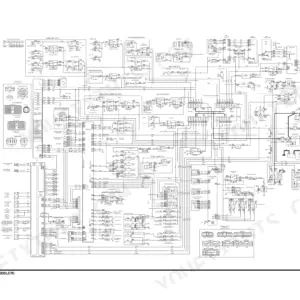
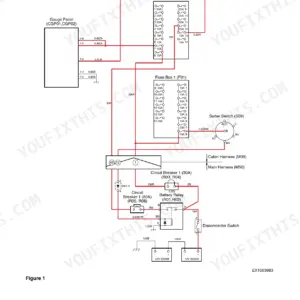
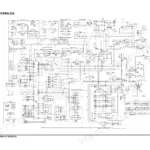
Yes. The full electrical schematic is printed in this book's own Schematic chapter at the back - you are not sent off to buy a separate wiring manual. Pair it with the Electrical System troubleshooting chapter when you are chasing a dead circuit or a flaky sensor. p. 1576
Does the manual include hydraulic schematics?
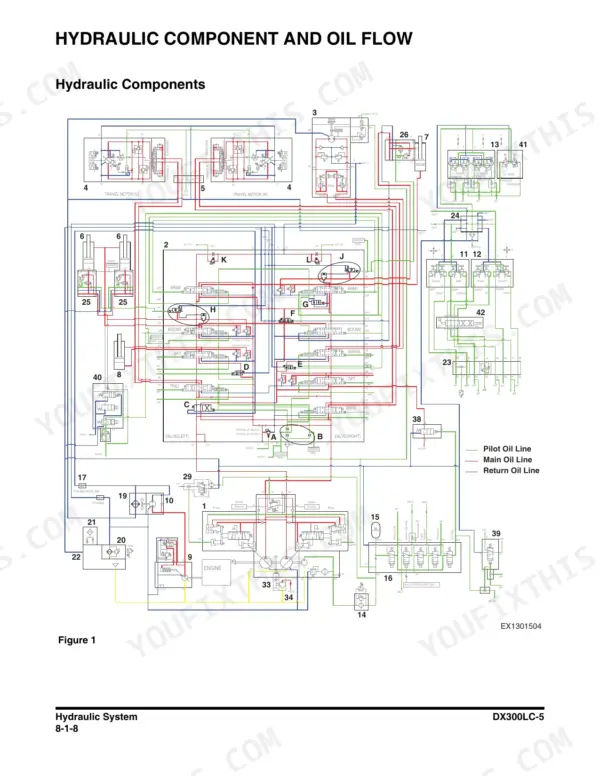
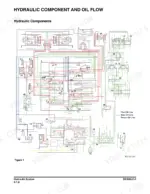
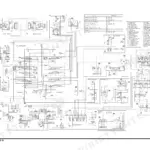
Yes, and it is actually printed twice: a flow diagram sits in the Hydraulic System chapter where you do testing and troubleshooting, and the full circuit schematic is printed again in the Schematic chapter. Handy when you are tracing pilot lines with the book open on the track frame. p. 1222
Are fastener torque specs included?
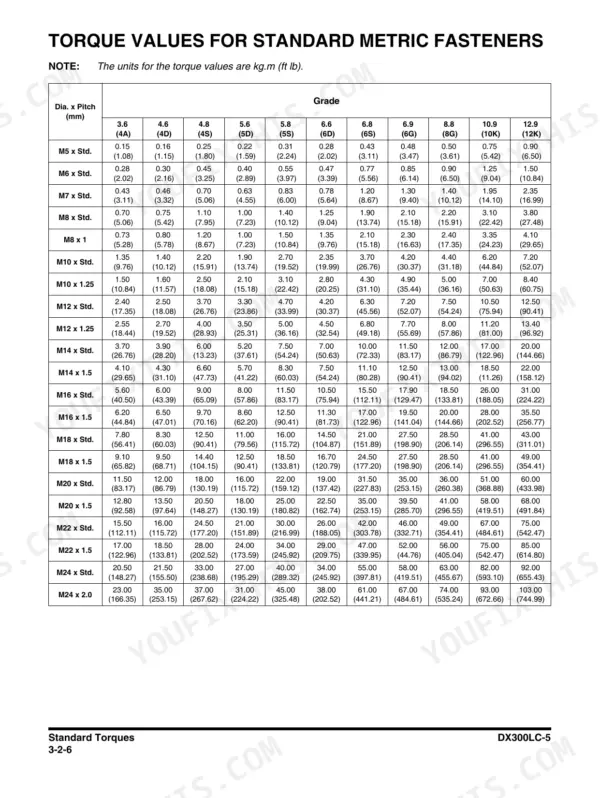
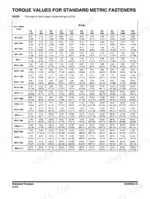
Yes. The General Maintenance chapter prints standard torque charts broken out by bolt class and size. There is no single magic number for the whole machine - torque depends on the fastener's grade and thread, so you look your bolt up in the chart before you lean on the wrench. p. 136
What year range does this DX300LC-5 shop manual cover?
Doosan scopes this book by serial number, not by model year. The cover prints two applicability lines, Serial Number 1001 and Up and Serial Number 50001 and Up. Match those against the plate on your machine; no build-year range is printed anywhere in the book, so the serial is the only reliable check. p. 1





Reviews
There are no reviews yet.