


Part of the Kubota Operator Manuals.
This is the Kubota operator's manual for the SVL75-2 compact track loader, the machine built around the Kubota V3307-CR-TE4 diesel engine. Across 129 pages it takes you from the technical data and machine controls through daily operation to full maintenance.
You will find how to start, drive and work the loader, operate the lift arms and auxiliary hydraulics, and use the mechanical quick hitch, along with lifting, loading and towing procedures. The maintenance chapters give the service intervals, fluid capacities and step by step checks for the engine, hydraulics, cooling system and rubber tracks.
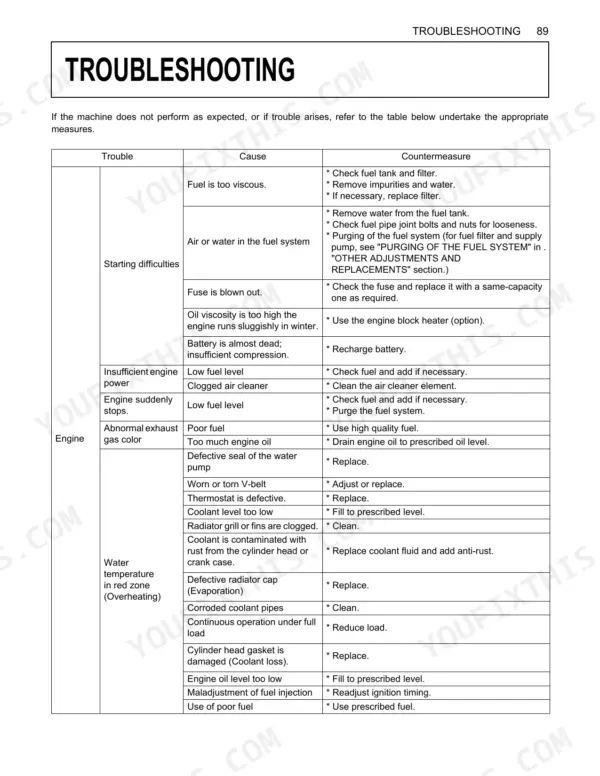
A troubleshooting section helps you trace starting problems, overheating and low power before they grow. This downloadable PDF puts the factory operating and service information for the SVL75-2 in one file you can keep on hand.
What's Inside This Operator Manual
| System | Pages | Key Topics |
|---|---|---|
| Dealer Service | 27-28 | Warranty Policy, Scrapping the Product and Its Procedure, Product Identification Number, Engine Serial No. |
| Technical Data | 29 | Model Name, Operating Weight, Engine Power, Performance, Battery Capacity, Fuel Tank Capacity |
| Description of Machine Parts | 30 | Bucket, Tilt Cylinder, Cab, Aux Supply Port, Rubber Track, Lift Arm Stopper |
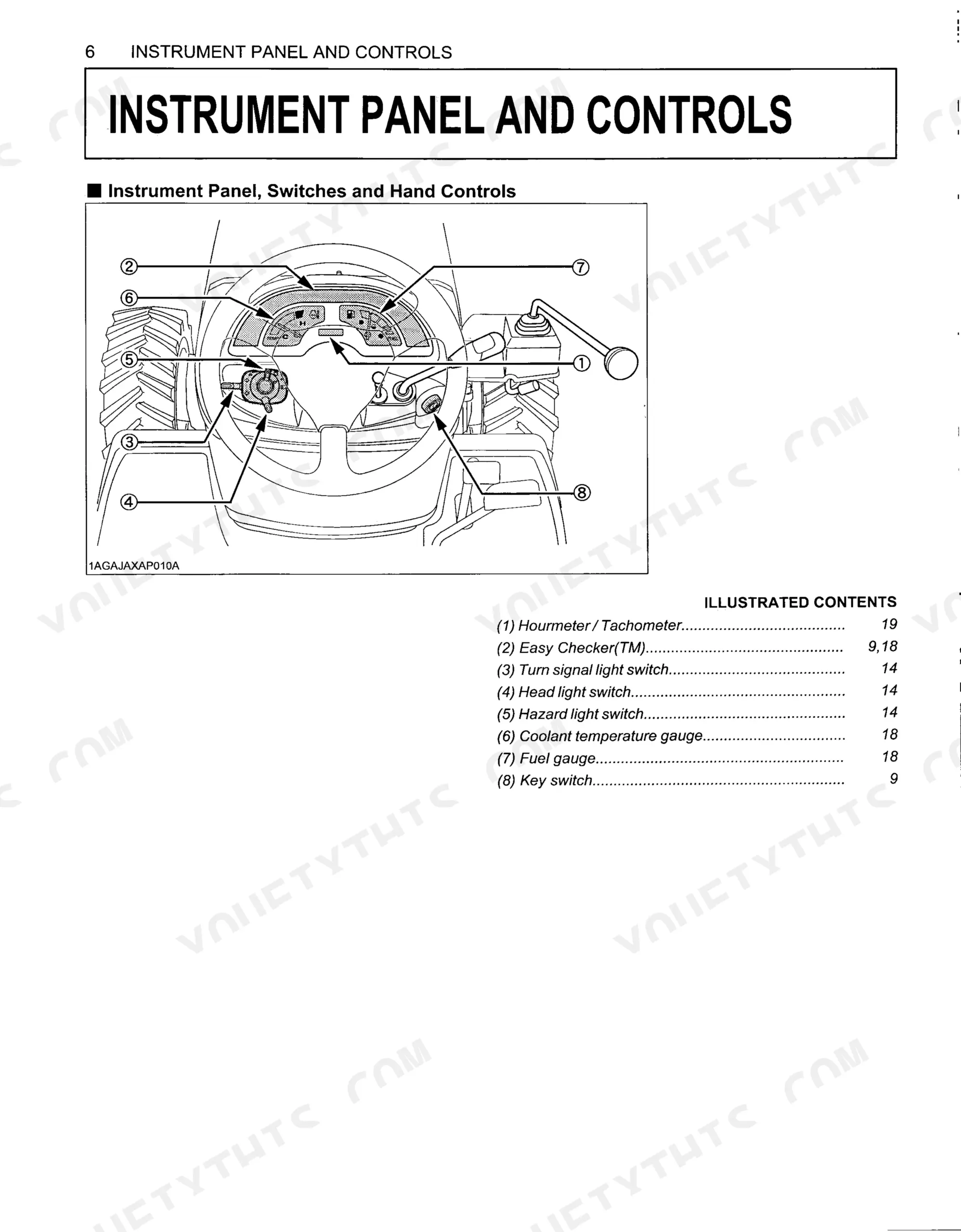
| Instrument Panel and Control Elements | 31-33 | Switch, Control Pedals, Levers, Electrical Outlet, Instrument Panel, Lamps and Indicators |
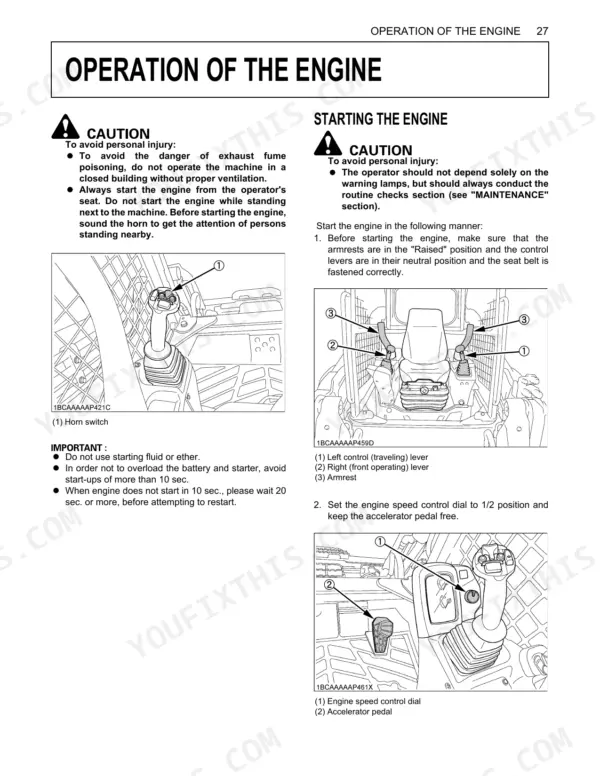
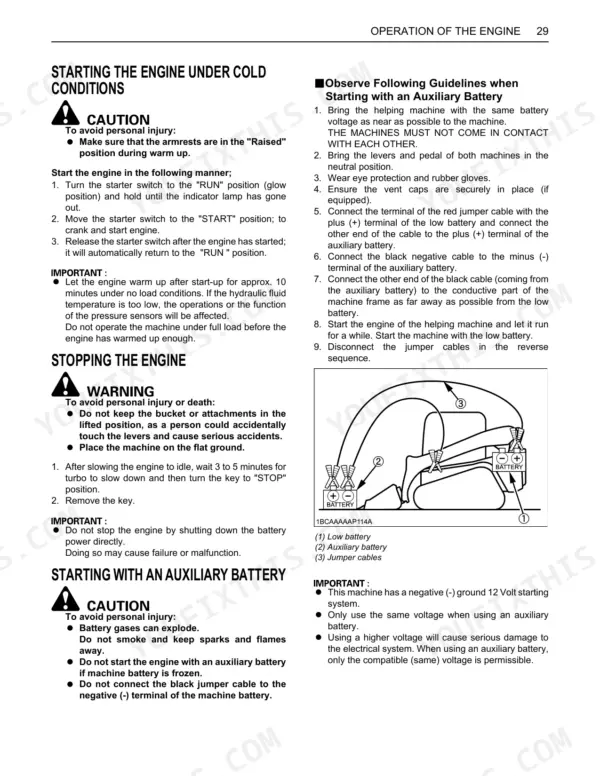
| Operation of the Engine | 53-55 | Starting the Engine, Checkpoints After Starting the Engine, Starting the Engine Under Cold Conditions, Stopping the Engine, Starting with an Auxiliary Battery |
| Operation of the Machine | 56-72 | Running-In of the Machine, Adjusting the Operator's Seat, Driving, Operation of the Lift Arms, Auxiliary Hydraulic Control, Mechanical Quick-Hitch |
| Lifting the Machine | 73-75 | Preparations, Chain Locations, Hook Positions, Applying the Pads, Procedure for Lifting |
| Transporting the Machine | 76-78 | Loading the Machine on a Transport Vehicle, Towing an Operable Machine, Towing an Inoperable Machine |
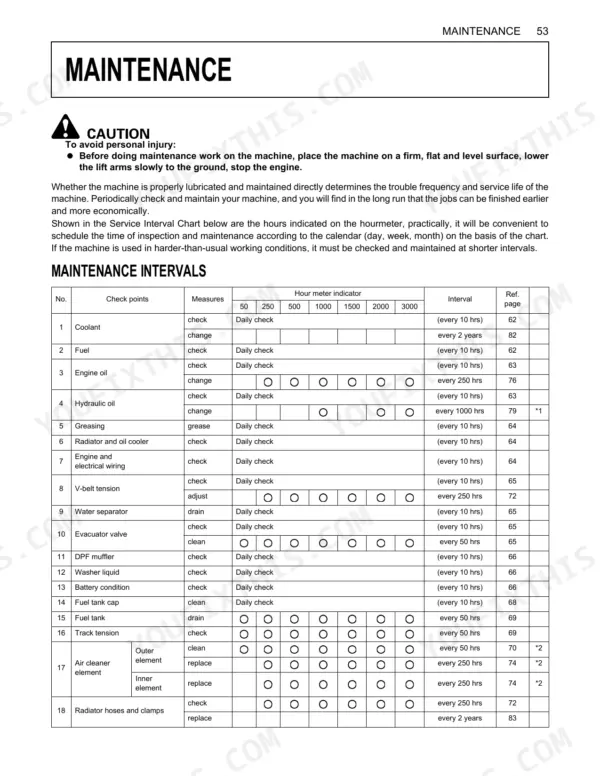
| Maintenance | 79-94 | Maintenance Intervals, Opening and Closing of Components, Daily Checks, Regular Checks and Maintenance Work |
| Regular Checks and Maintenance Work | 95-110 | Draining the Water From the Fuel Tank, Checking Track Tension, Checking Air Cleaner Element, Checking Radiator Hoses and Clamps, Changing Engine Oil |
| Other Adjustments and Replacements | 111-114 | Purging of the Fuel System, Adjustment of Tracks, Fuses, Replacing Fuses, Electrical Outlet, Slow Blow Fuse |
| Troubleshooting | 115-122 | Starting Difficulties, Engine Suddenly Stops, Abnormal Exhaust Gas Color, Water Temperature in Red Zone (Overheating), Lift Arms, Bucket, Drive Unit Power Is Too Low |
| Operation Under Cold Weather Conditions | 123 | Preparation for Operation in Cold Weather, Procedure After Completion Work, Replace Engine Oil and Hydraulic Oil, Battery Power, Add Anti-Freeze to Coolant |
| Long Storage | 124-125 | Should the Machine Be Stored for a Longer Period of Time, Observe Following Procedures When the Machine Is to Be Operated After Long Storage |
| Recommended Oils | 126-128 | Engine Oil Api Service Classification, Sae Engine Oil, Ambient Temperatures, Ultra Low Sulfur Fuel, Cetane Number, Diesel Fuels Specified to En 590 or Astm D975 |
| Appendices | 129 |
Quick Reference Specifications
| Specification | Value | Page |
|---|---|---|
| CAB lock bolts tightening torque | 77.5 to 90.2 N-m | p. 86 |
| Track adjustment grease fitting tightening torque | 98 to 108 N-m | p. 111 |
| Operating weight (Open Cab) | 4100 kg | p. 29 |
| Total engine displacement | 3331 cc | p. 29 |
| Net engine power (SAE J1349) | 51.3 kW | p. 29 |
| Fuel tank capacity | 93 L | p. 29 |
| Engine oil capacity (with filter) | 10 L | p. 76 |
| Total hydraulic oil capacity | 60 L | p. 79 |
| Cooling water capacity | 11 L | p. 82 |
| Track tension (clearance) | 20 to 30 mm | p. 86 |
| Air cleaner outer element replacement interval | every 250 hours | p. 79 |
| Hydraulic oil filter replacement interval | every 500 hours | p. 79 |