
Part of the Case IH Operator Manuals.
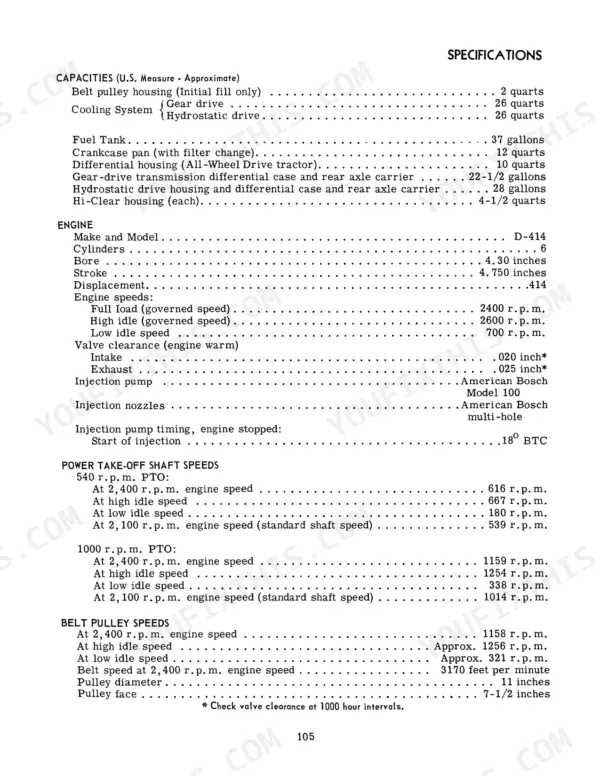
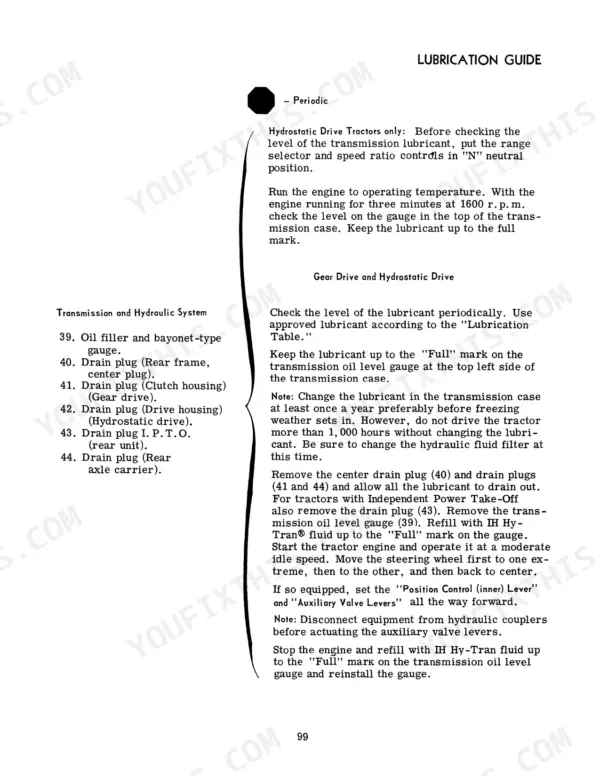
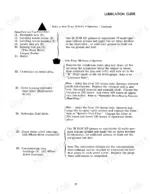
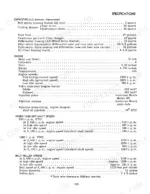
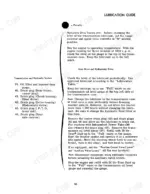
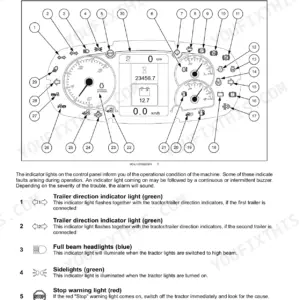
All 120 pages of this Operator Manual are written for the person in the seat, not the shop floor, covering every operating procedure, maintenance interval, and daily check your tractor requires. Inside: complete Gear Drive and Hydrostatic Drive procedures, full instrument panel walkthroughs from the charge indicator to the engine oil pressure gauge, a detailed Lubrication Guide mapping every grease point across front wheel hubs, rear axle housings, and hydraulic filters, plus Three-Point and Two-Point Hitch setup, auxiliary valve operation, and a Preventive Maintenance Guide with service intervals. You also get cold weather precautions and a full specs section covering ground speeds, capacities, and wheel tread settings. Shift to the 540 RPM PTO shaft for standard implements or the 1000 RPM shaft for high-speed equipment. Stop guessing and start wrenching. Search any spec by keyword; the bookmarks take you straight to the right page.
What's Inside This Case IH 966 Operator Manual
| System | Pages | Key Topics |
|---|---|---|
| Introduction | 6 | Hydrostatic Drive, Engine Starting, Engine Towing, High-Range Selector, Speed Ratio Control Lever, Filters |
| Work Safely - Follow These Rules | 7-8 | - |
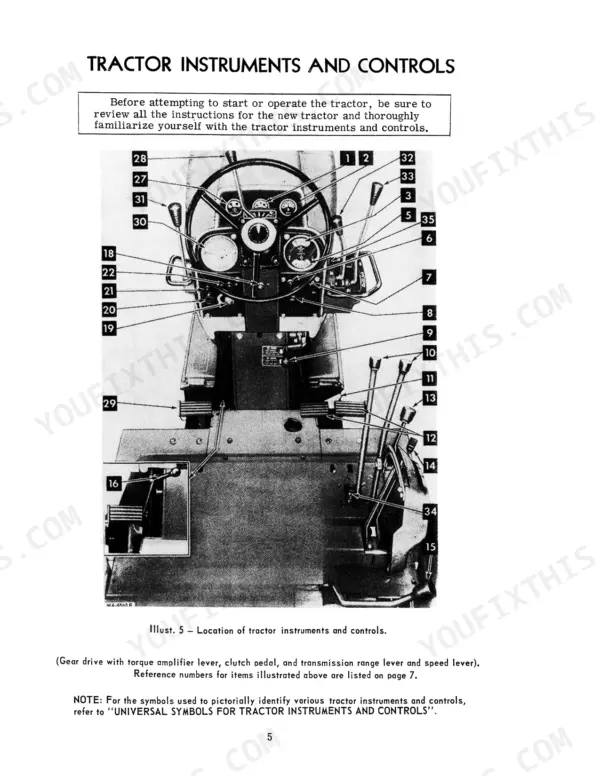
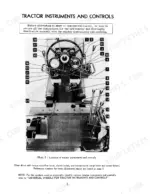
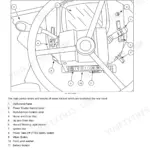
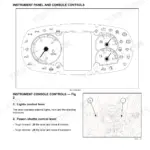
| Tractor Instruments and Controls | 9-11 | Fuel Gauge, Charge Indicator Gauge, Engine Oil Pressure Gauge, Hydrostatic Drive Controls, Gear Drive Controls, Auxiliary Valve Operating Levers |
| Cab Controls | 12-13 | Windshield Wiper Switch, Air Conditioner Switch and Cold Control, Pressurizer Fan Speed Switch, Heater Control, Air Recirculation Control, Dome Light |
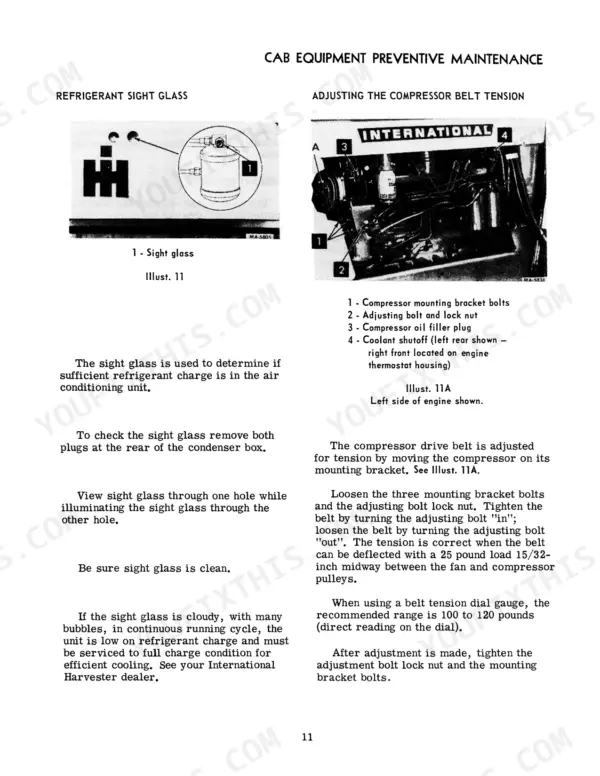
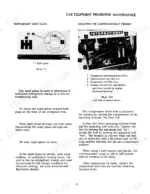
| Cab Equipment Preventive Maintenance | 14-17 | Pressurizer Filter, Recirculation Air Filter, Air Conditioner Condenser, Refrigerant Sight Glass |
Case IH 966 Common Problems This Manual Covers
Battery won't hold a charge or starter cranks sluggishly after tractor sits overnight
Check battery terminals for corrosion and clean with a wire brush. Verify electrolyte level in each cell — top up with distilled water only, never tap water. Test the charging system by watching the charge indicator gauge on page 9 after startup: if it does not move toward the charge range within a minute at operating RPM, inspect the alternator belt tension and connections per the Electrical System section on page 68. For a fully dead battery, follow the jump-start procedure on page 69.
Manual Section: Electrical System p. 68Tractor hard to steer or pulls to one side after sitting through cold weather
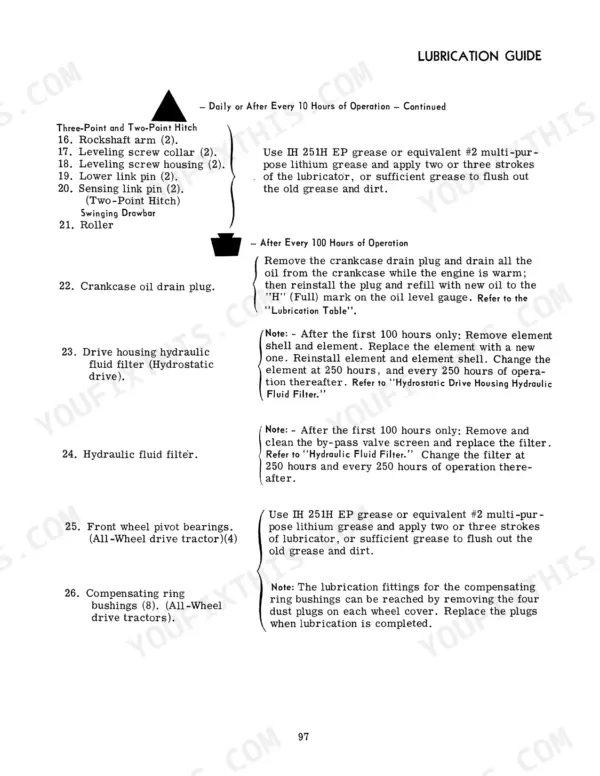
Check front tire inflation pressure first — cold temperatures drop PSI significantly and uneven pressure causes pull. Refer to the tire pressure specifications in the Pneumatic Tires section on page 88 and inflate to the correct pressure for your front tire size. Inspect the front wheel lubrication points covered in the Lubrication Guide on page 98. If pull persists, verify toe-in adjustment has not shifted; the adjustment procedure starts on page 74.
Manual Section: Pneumatic Tires p. 88Frequently Asked Questions
How do you fix engine cranks but won't fire in normal operating temperatures, fuel system suspected?
Check the fuel shutoff valve is fully open and the tank has clean diesel. Drain water from the sediment bowl at the primary fuel filter — loosen the drain screw until only clean fuel flows. Inspect both primary and final fuel filters on pages 29-31; replace if clogged or past interval. Bleed the injection pump following the procedure in the Engine and Fuel System section before attempting another start. p. 29
How do you fix engine temperature gauge climbs toward red zone during normal field operation?
Stop work immediately and let the engine idle. Check coolant level at the radiator filler neck — never open a hot pressurized cap. Inspect the radiator core for packed chaff or debris; clear it with compressed air blown from the engine side outward, as covered on page 63. Verify the fan belt is not slipping or cracked. If the system repeatedly overheats, flush and refill the cooling system per the Cooling System section. p. 63
How do you fix air cleaner service indicator shows red restriction warning during dusty field conditions?
Service the air cleaner immediately when the indicator trips — do not delay or engine damage follows. Remove the large filter element and clean by tapping gently on a flat surface, never wash with water. Inspect the safety element on page 65; replace it every third outer element service, not on condition alone. Check the automatic dust unloader valve at the bottom of the bowl — pinch and release it to confirm it seals properly after each service. p. 65
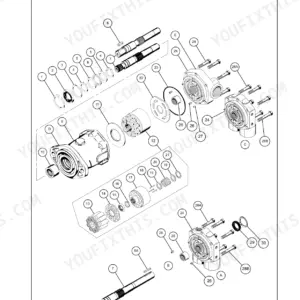
How do you fix manual bleeder pump leaks hydraulic fluid at the pump body during or after operation?
Shut down and relieve system pressure before touching the bleeder pump. Remove the pump assembly and inspect the O-ring — a worn, swollen, or incorrect O-ring is the most common cause of this leak. Replace with the correct O-ring specified for this pump; using a generic substitute is the usual reason the leak returns. Refer to the Auxiliary Valves, Remote Cylinders and Hydraulic Outlets section on page 57 for hydraulic system context before reinstalling. p. 57
What format is this manual in?
This is a 120-page searchable PDF ready for immediate download. Works on any device, so pull it up on your phone while you're under the hood. No shipping, no waiting.
Can I print this manual?
Yes. The PDF has no DRM restrictions, so print any page or section you need for your shop. Works with any standard printer.




Reviews
There are no reviews yet.