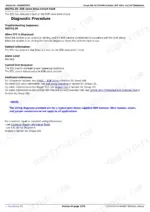
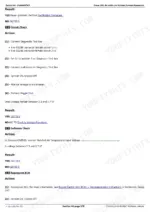
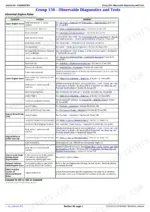
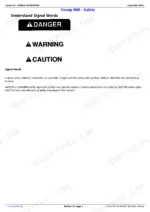
Part of the John Deere Repair Manuals.
This is CTM104719, the factory Component Technical Manual for the John Deere PowerTech 6068 6.8L inline-6 diesel above 130 kW (174 hp), variants 6068HFC95 and 6068HFG95 with the Level 21 ECU, built roughly 2011 to 2016. This is an Interim Tier 4 / Stage IIIB engine, so it covers the whole electronic package: high-pressure common rail fuel, VGT turbo, EGR, and fuel-dosing aftertreatment. The biggest part of the book is diagnostics - symptom-based checks plus full fault code tables for engine, air, fuel, ECU, aftertreatment, and CAN communication. You also get repair procedures for the head, block, pistons, injectors, and turbo, plus torque specs down to the aftertreatment fittings (dosing injector final torque 25 N·m).
What's Inside This John Deere PowerTech 6068 Manual
| System | Pages | Key Topics |
|---|---|---|
| General Information | 15-66 | Safety, Engine Identification and Emissions Certification, Fuels, Lubricants and Coolants |
| Repair and Adjustments | 67-665 | Cylinder Head, Valves, Block and Pistons, Hpcr Fuel System and Injectors, Turbocharger, EGR and Aftertreatment Service |
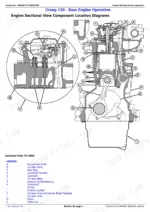
| Theory of Operation | 666-823 | Engine Systems Operation, ECU Control Strategy, Fuel Injection and Air Management |
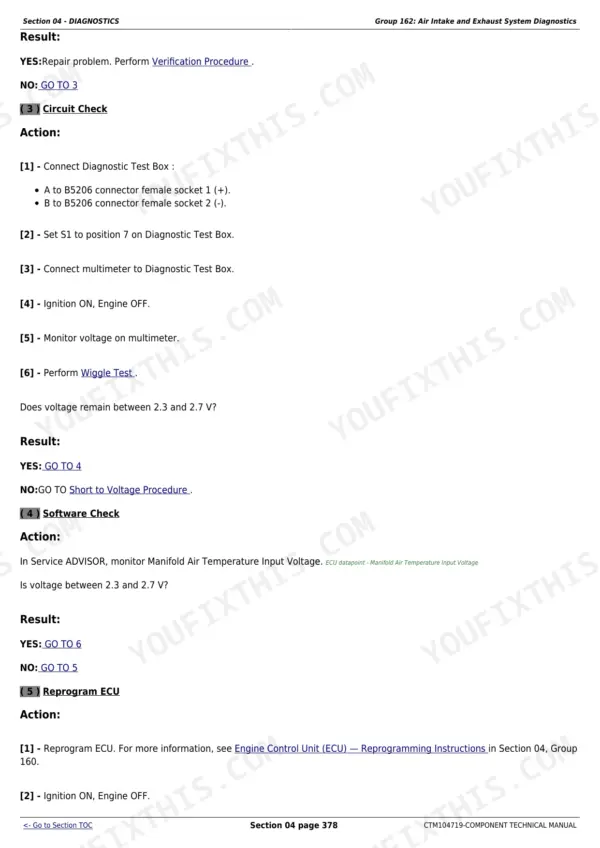
| Diagnostics - Observable Symptoms, Checks and Tests | 824-1200 | Symptom-Based Diagnostics, Operational Checks, Test Procedures |
| Diagnostics - Engine, Air and Fuel System Fault Codes | 1201-2100 | Engine Position Diagnostics, Air Intake and Exhaust Fault Codes, Lubrication, Cooling and Fuel-System Codes |
| Diagnostics - ECU, Aftertreatment and Communication Codes | 2101-2588 | ECU and Throttle Diagnostics, EGR, Vgt and Fuel-Dosing Aftertreatment Codes, Application and CAN Communication Diagnostics |
| Tools and Other Materials | 2589-2644 | Required Service Tools, Dealer-Fabricated Tools, Sealants and Lubricants |
| Specifications | 2645-2704 | Torque Values and Clearances, Test Specifications, Aftertreatment Fitting Torques |
Quick Reference Specifications
| Specification | Value | Page |
|---|---|---|
| 6068HFC95, 6068HFG95 | ||
| Engine | PowerTech 6068, 6.8 L inline-6 turbocharged diesel | p. 7 |
| Rated Power | above 130 kW (174 hp) | p. 7 |
| Emissions Tier | Interim Tier 4 / Stage IIIB | p. 7 |
| Fuel System | High-pressure common rail (HPCR), Level 21 ECU | p. 7 |
| Aftertreatment | ||
| 90-degree Elbow Fitting Torque | 34 N·m (25 lb-ft) | p. 2645 |
| Air Bleed Fitting Torque | 23 N·m (17 lb-ft) | p. 2645 |
| Fuel Dosing Injector Final Torque | 25 N·m (19 lb-ft) | p. 2645 |
| Coolant Line Adapter Fitting Torque | 30 N·m (22 lb-ft) | p. 2645 |
| Clamp Joint Torque | 16.9 N·m (12.5 lb-ft) | p. 2645 |
John Deere PowerTech 6068 Common Problems This Manual Covers
Engine does not develop full power, worse under load or after the engine warms up
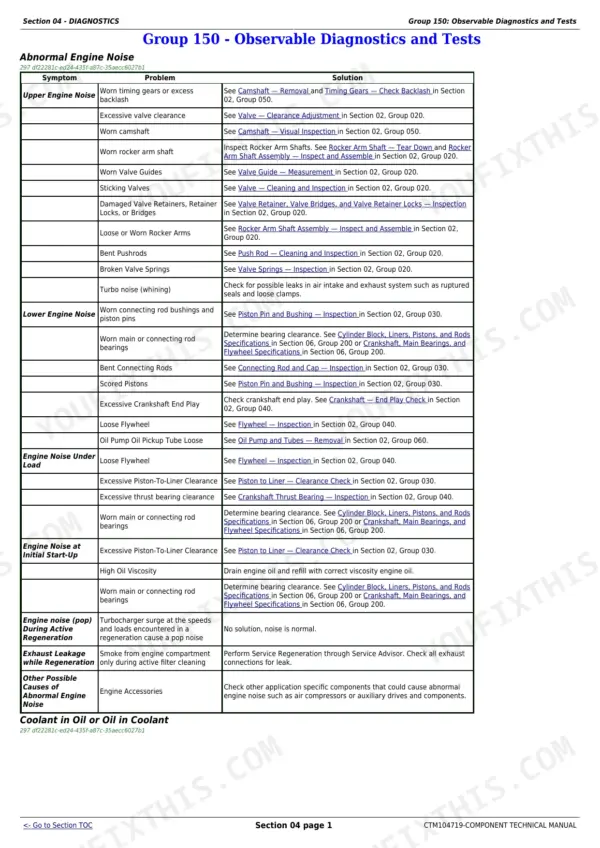
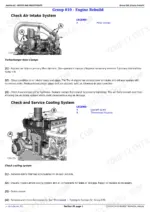
Work the E3 diagnostic procedure in the Observable Symptoms section: check the air intake restriction indicator and filter first, then turbo aspiration, then ECU faults. Most power loss on these engines is airflow or a logged code, not internal wear.
Manual Section: Diagnostics - Observable Symptoms, Checks and TestsExcessive black, gray, or white exhaust smoke
Use the E4 and E5 smoke diagnostic procedures to separate injector malfunction from air/fuel imbalance. White smoke points one way, black another, and the manual's step-by-step checks tell you whether an HPCR injector is actually at fault before you buy one.
Manual Section: Diagnostics - Engine, Air and Fuel System Fault CodesEngine will not crank or will not start
Follow the E6 no-crank procedure plus the F1 Fuel Supply System Check. The manual splits electrical causes (battery, ECU communication) from fuel supply causes (transfer pump, filters, air in lines) so you test in a sensible order instead of guessing.
Manual Section: Diagnostics - Observable Symptoms, Checks and TestsRecurring EGR, VGT, or aftertreatment fault codes and derates
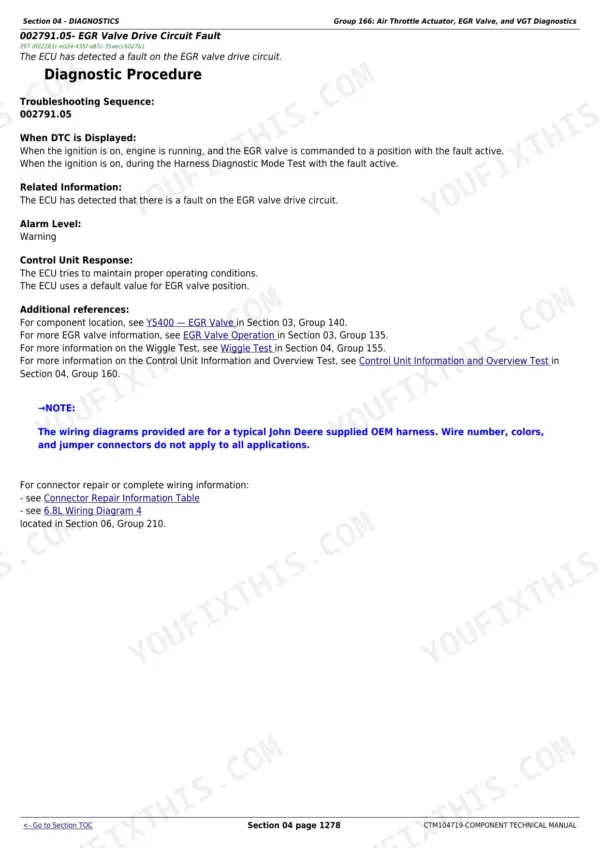
The ECU and aftertreatment fault code section covers EGR/VGT and fuel-dosing diagnostics, and the repair section covers removal and installation. Reinstall with the listed fitting torques - 90-degree elbow 34 N·m, air-bleed fitting 23 N·m, dosing injector 25 N·m final - so joints seal and codes stay cleared.
Manual Section: Diagnostics - ECU, Aftertreatment and Communication CodesFrequently Asked Questions
My 6068 loses power under load, especially after warm-up. Will this manual help me find the cause?
Yes, that is exactly what the E3 diagnostic procedure (Engine Does Not Develop Full Power) is for. It walks you through restricted air intake, turbo aspiration checks, and ECU-side faults in order, so you test cheap things like the air filter and indicator before condemning the turbocharger or an injector. The Observable Symptoms section gives you the test steps; the fault code chapters back it up when the ECU has already logged something.
Does this cover the fuel system fault codes, like the F1 Fuel Supply System Check that keeps coming back?
It does. There is a dedicated fault code section for the fuel system, including the F1 Fuel Supply System Check - Tier 1 procedure, plus F2 (excessive fuel consumption) and F3 (fuel in oil). Recurring F1 hits are usually a supply-side issue - transfer pump, filters, or air in the low-pressure circuit - and the manual gives the checks to isolate which one before you start throwing HPCR parts at it.
Can I replace injectors and work on the high-pressure common rail system with this manual?
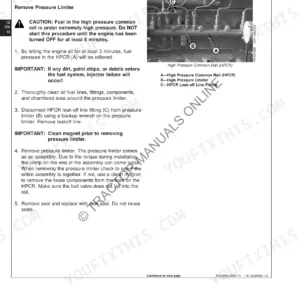
Yes. The Repair and Adjustments section covers HPCR fuel system removal and installation, including injectors, and the Specifications section has the torque values you need. One warning from experience: HPCR runs extreme pressures, so follow the safety and depressurization steps in the manual exactly. The Theory of Operation chapter is worth reading first so you understand how the ECU controls rail pressure before you start pulling lines.
Is this the right manual for the whole machine, or just the engine?
Engine only. This is a Component Technical Manual, which means it covers the 6068HFC95 and 6068HFG95 engine and its systems - fuel, air, cooling, lubrication, ECU, aftertreatment. It does not cover the transmission, hydraulics, electrical harness beyond the engine, or chassis of whatever machine the engine sits in. For that you need the technical manual for the specific tractor, combine, or other host machine.
Do I need special tools or a dealer laptop to use the diagnostics in this manual?
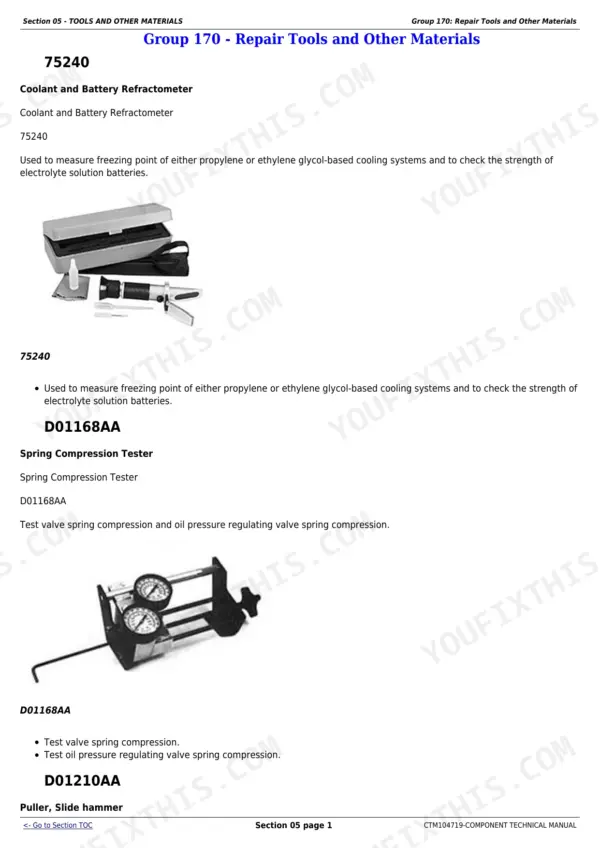
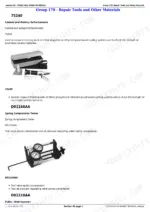
Many procedures are readable through fault codes and hands-on checks you can do with normal shop equipment - gauges, a multimeter, basic hand tools. The Tools and Other Materials section lists the required John Deere service tools and even dealer-fabricated tools with enough detail to source or make them. Some ECU-level work goes faster with diagnostic software, but the manual gives you the code definitions and test procedures either way.