

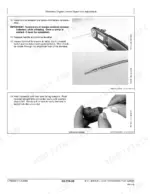
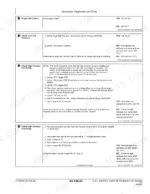
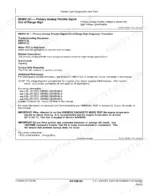
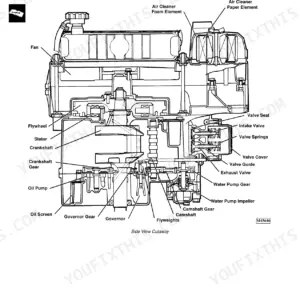
Part of the John Deere Repair Manuals.
This is CTM320, the factory component technical manual for John Deere PowerTech Plus 4.5L and 6.8L diesels with the Level 14 electronic common-rail fuel system, roughly 2006-2012. It covers the engine itself, not the machine wrapped around it. You get full teardown and rebuild procedures for the cylinder head, valve train, pistons, crankshaft, timing gear train, injectors and turbo, plus the theory behind the Level 14 ECU control. The heart of the book is a large diagnostics section: trouble codes, sensor and actuator tests, wiring checks, and fuel system pressure tests with real pass/fail numbers, like the 20 MPa minimum rail pressure during cranking. Specifications, torque values and clearances fill out the back. 1236 pages total.
What's Inside This John Deere PowerTech Plus 4.5L/6.8L Manual
| System | Pages | Key Topics |
|---|---|---|
| General Information | 5-43 | Engine Identification, Safety, Fuel and Lubricant Specifications, Engine Break-In |
| Repair and Adjustments | 44-145 | Cylinder Head, Valve Train, Pistons, Crankshaft, Timing Gear Train, Fuel Injectors, Turbocharger Repair |
| Theory of Operation | 146-222 | Level 14 Electronic Fuel System Operation, Air Intake, Cooling, Lubrication Theory, ECU Control |
| Diagnostics | 223-1094 | Diagnostic Trouble Codes, Electronic Fuel System Diagnostics, Sensor and Actuator Tests, Wiring Checks, ECU Diagnostics |
| Tools | 1095-1106 | Dealer Service and Diagnostic Tools |
| Specifications | 1107-1236 | Fuel Rail and Low-Pressure Fuel Specifications, Torque Values, Clearances, Test Specifications |
Quick Reference Specifications
| Specification | Value | Page |
|---|---|---|
| Minimum Low Pressure Fuel - Actual Pressure (Cranking) | 30 kPa (0.3 bar) (4.4 psi) | p. 1115 |
| Minimum Low Pressure Fuel - Actual Pressure (Running Low Idle) | 40 kPa (0.4 bar) (5.8 psi) | p. 1115 |
| Minimum Fuel Rail Pressure (Cranking) | 20 MPa (200 bar) (2900 psi) | p. 1115 |
| Minimum Fuel Rail Pressure (Running Low Idle) | 35 MPa (350 bar) (5076 psi) | p. 1115 |
John Deere PowerTech Plus 4.5L/6.8L Common Problems This Manual Covers
Engine will not develop full power or derates under load
Start with the fuel system diagnostics in the Diagnostics section. Check actual rail pressure against the minimum spec of 35 MPa (5076 psi) at low idle, then follow the injector test procedures, since clogged or worn common rail injectors are the usual cause of derate on these engines.
Manual Section: Diagnostics (pages 223-1094)Excessive black, gray or white exhaust smoke
Smoke color points at the failure. The Diagnostics section covers injector testing and DTC checks for incomplete combustion, while the Repair and Adjustments section handles injector and turbocharger replacement once you have isolated whether the problem is fueling or air delivery.
Manual Section: Diagnostics; Repair and AdjustmentsHard starting or stalling, often with fuel pressure codes
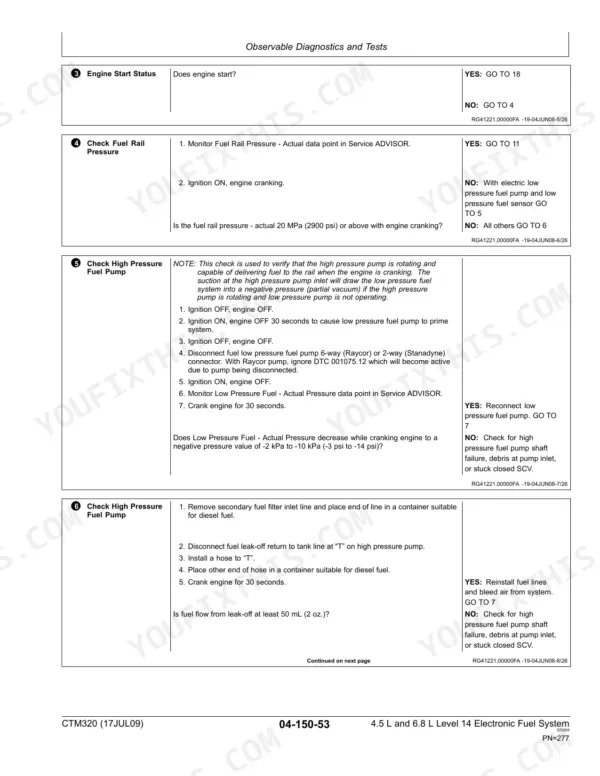
Follow the low-pressure fuel test first: the manual calls for at least 30 kPa cranking and 40 kPa at low idle. If that passes, move to the rail pressure and injector solenoid tests in the electronic fuel system diagnostics before condemning the high-pressure pump.
Manual Section: Diagnostics - electronic fuel systemRising oil level from fuel dilution
Use the injector leak-down and cylinder isolation tests in the Diagnostics section to find the leaking injector, then replace it per the Repair and Adjustments procedures. Change the diluted oil and filter immediately, since fuel-thinned oil takes out bearings on the bottom end.
Manual Section: Diagnostics; Repair and Adjustments (pages 44-145)Frequently Asked Questions
My PowerTech Plus cranks but will not start. Will this manual tell me where to look?
Yes, and it gives you hard numbers to test against. On a Level 14 common-rail engine, no-start almost always comes down to fuel pressure. The manual specifies minimum low-pressure fuel at 30 kPa (4.4 psi) during cranking and minimum rail pressure at 20 MPa (2900 psi) cranking. The Diagnostics section walks you through measuring both, so you know in minutes whether you are chasing a transfer pump, a high-pressure pump, or leaking injectors instead of guessing.
Does it cover the diagnostic trouble codes and how to actually fix them?
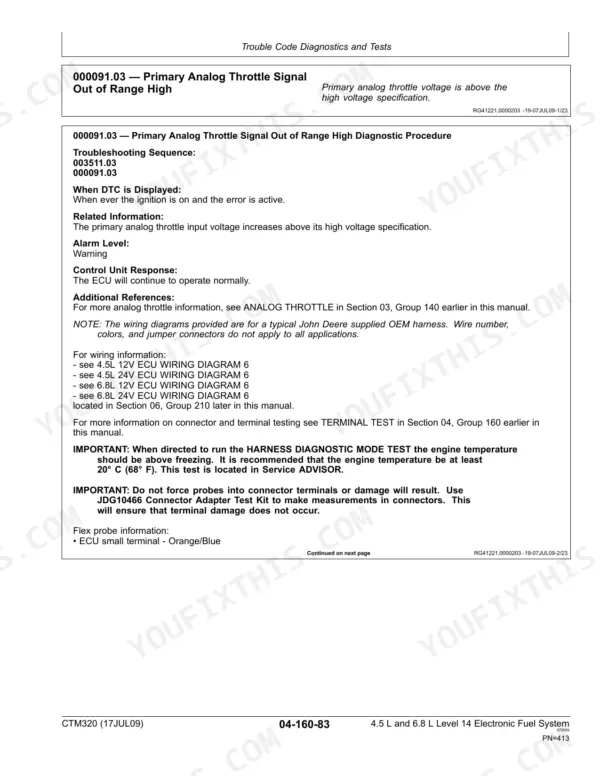
That is most of the book. Pages 223 through 1094 are diagnostics: DTC listings for the Level 14 electronic fuel system, step-by-step sensor and actuator tests, wiring and connector checks, and ECU diagnostics. Each code walks you through the test sequence rather than just naming the fault, so you can clear a code by fixing the cause instead of watching it come back on the next key cycle.
Can I replace common rail injectors with this manual, or is that dealer-only work?
The removal, installation and adjustment procedures are all in the Repair and Adjustments section, alongside cylinder head and valve train work. Injectors are the number one failure part on these engines. Be aware that on Level 14 engines, new injectors need their calibration codes programmed into the ECU, and the manual describes the dealer service tools involved in the Tools section, so plan for that step before you order parts.
My engine oil level is rising between services. Is that covered?
Yes, and take it seriously. A rising oil level on a common-rail PowerTech Plus usually means diesel is diluting the oil from a leaking injector or a fuel system fault. The diagnostics section covers injector leak testing and fuel system pressure checks that isolate which cylinder is at fault, and the Theory of Operation section explains how fuel gets into the crankcase in the first place. Keep running it diluted and you will be reading the crankshaft chapter next.
Does this manual cover my tractor or combine, or just the engine?
It is a component technical manual, so it covers the 4.5L and 6.8L PowerTech Plus engine itself: rebuild, fuel system, electronics and diagnostics. Machine-specific items like the chassis harness, transmission or hydraulics live in the technical manual for your particular machine. In practice you use both together: the machine manual gets you to the engine, this one takes over from there. Make sure your engine is Level 14 fuel system, not Level 12 or 16.






Reviews
There are no reviews yet.