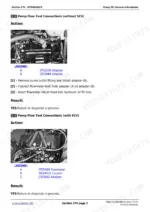
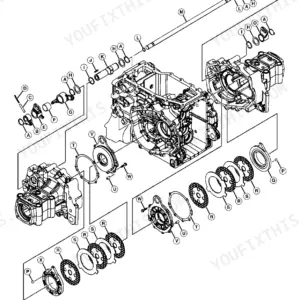
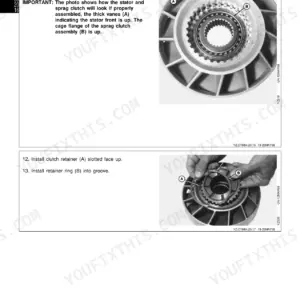
Part of the John Deere Repair Manuals.
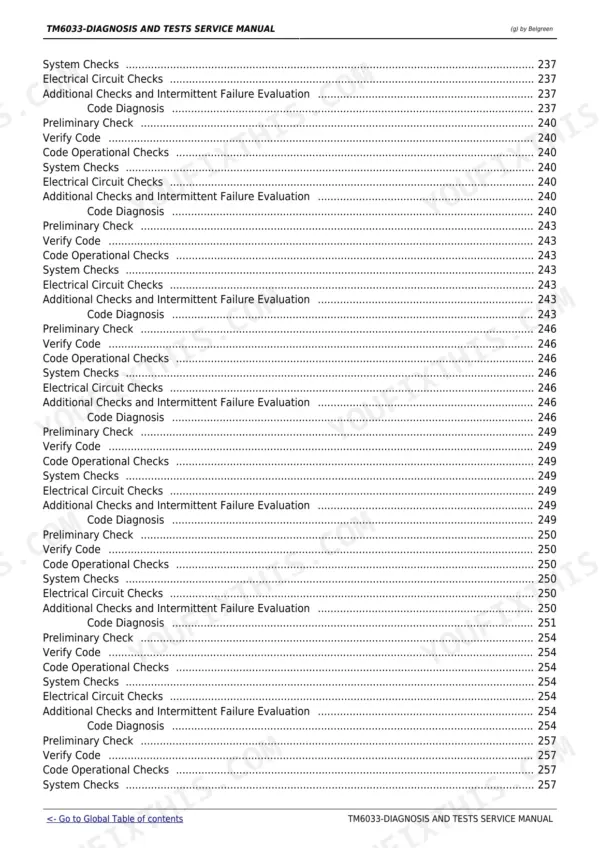
This is the factory Diagnosis and Tests manual (TM series) for John Deere 5425, 5525-family and 5625 tractors, covering the 5425, 5625, 5725 plus the HC high-crop and N narrow versions built 2005 to 2008. It is the book dealer techs use to chase problems, not to tear parts down: trouble codes, observable symptoms, and step-by-step tests for the engine, fuel and air, electrical system, the CCU/HCU/PTR/EHC/ICC control units, all three transmissions (Collarshift, SyncShuttle, PowrReverser), drive systems, steering and brakes, hydraulics, and the cab. The Electrical section (pages 511-512) covers wiring schematics for the ignition, charging, control and related circuits. You also get hydraulic schematics, theory of operation for each circuit, and the spec tables to test against, like main relief pressure of 18 995 to 19 685 kPa (2755 to 2855 psi). Service tool and dealer-fabricated tool lists included.
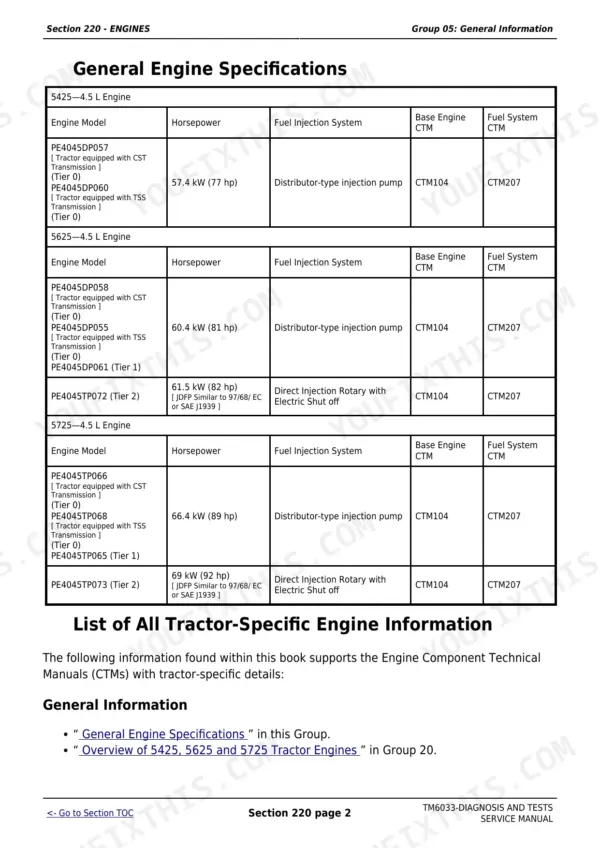
What's Inside This John Deere 5425/5425HC/5425N/5625/5625HC/5725/5725N Manual
| System | Pages | Key Topics |
|---|---|---|
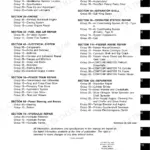
| General | 9-120 | Safety, Specifications, References |
| Diagnostics | 121-442 | Trouble Codes, Observable Symptoms, System Diagnosis |
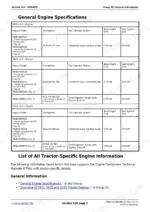
| Engine | 443-448 | General Information, Tests and Adjustments, Theory of Operation |
| Fuel and Air | 449-460 | General Information, Theory of Operation |
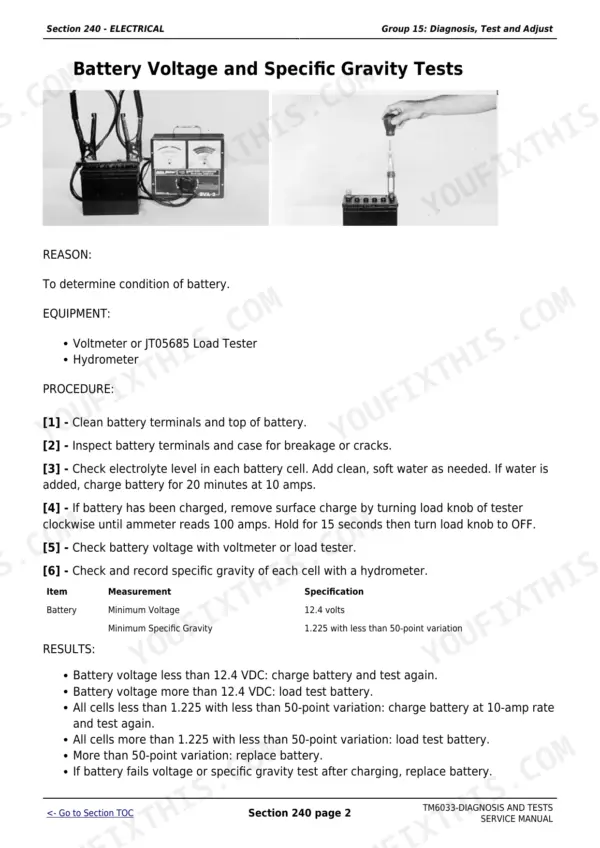
| Electrical | 461-625 | Diagnosis, Test and Adjust, Wiring Schematics |
| Control Units | 626-1024 | General References, Tests and Adjustments, CCU, HCU, PTR, EHC, ICC |
| Transmission | 1025-1151 | Collarshift, Syncshuttle, PowrReverser, Tests, Theory, Schematics |
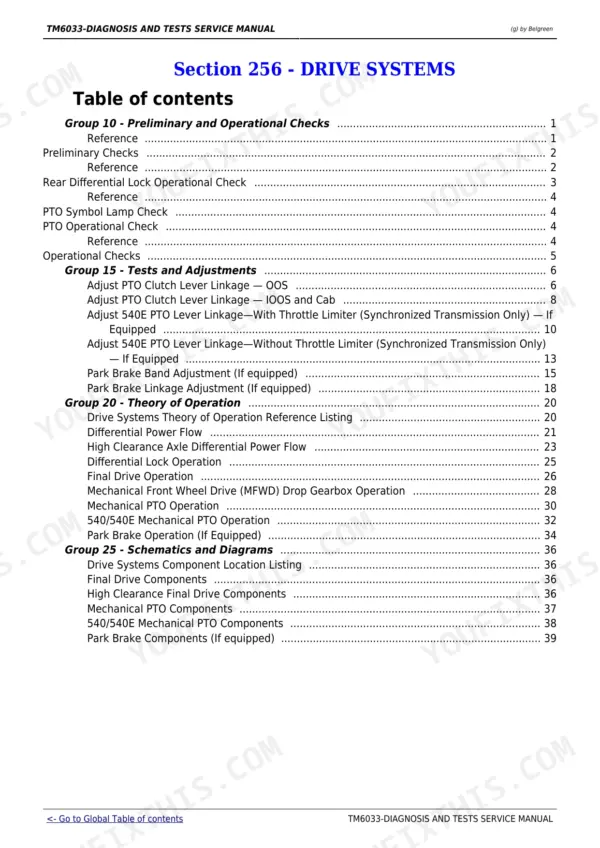
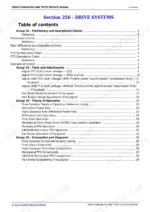
| Drive Systems | 1152-1193 | Preliminary Checks, Tests, Theory, Schematics |
| Steering and Brakes | 1194-1228 | Preliminary Checks, Tests, Theory |
| Hydraulics | 1229-1346 | Hydraulic Oil Warm-Up and Preliminary Checks, Pump Flow Test, Main Relief Valve Pressure Test, Rockshaft and SCV Tests, Power-Beyond |
| Operator Cab | 1347-1424 | Operational Tests |
| Service Tools | 1425-1445 | Dealer Fabricated Tools, Service Tools and Kits |
Quick Reference Specifications
| Specification | Value | Page |
|---|---|---|
| All Models | ||
| Hydraulic Pump Flow | 47.6 - 60 Lpm (12.6 - 16 gpm) | p. 1238 |
| SCV Leakage Test Time to Drop Pressure | At Least 5 Seconds | p. 1248 |
| Hitch Raise Time | Less than 3 Seconds | p. 1252 |
| Rockshaft Position-Sensing Feedback Linkage Vertical Distance | 416 ± 4 mm (16.400 ± 0.157 in.) | p. 1259 |
| Hydraulic Pump Displacement | 12 cc (Power Steering/Transmission Lubrication Pump) / 29 cc (Rockshaft/SCV Pump) / 12 cc (Narrow Tractors Power Steering/Transmission Lubrication Pump) / 20 cc (Narrow Tractors Rockshaft/SCV Pump (Option 1)) / 29 cc (Narrow Tractors Rockshaft/SCV Pump (Option 2)) | p. 1265 |
| Hydraulic System Pressure | 18995-19685 kPa (190.1-196.9 bar) (2755-2855 psi) | p. 1266 |
| Hydraulic Pump Maximum Flow (Before Low Flow Regulator) | 47 L/m (12 gpm) | p. 1276 |
| Tractors Without SCV | ||
| Main Relief Valve Pressure | 18 995-19 685 kPa (190-197 bar) (2755-2855 psi) | p. 1242 |
| Tractors With SCV | ||
| Main Relief Valve Test Outlet Pressure | 18 995-19 685 kPa (190-197 bar) (2755-2855 psi) | p. 1244 |
| Mechanical Hitch | ||
| Rockshaft Load Sense Relief Valve Pressure | 18 995-19 685 kPa (190-197 bar) (2755-2855 psi) | p. 1246 |
| Hydraulic Filter | ||
| Filter Relief Valve Pressure Differential | 55 kPa (0.5 bar) (8 psi) | p. 1271 |
| Rockshaft Control Valve (Small Hitch Movements) | ||
| Rockshaft Cylinder Flow (Low Flow Regulator Output) | 4 L/m (1 gpm) | p. 1276 |
| Rockshaft Control Valve (Raise Position) | ||
| Rockshaft Cylinder Flow (Initial Raise) | 11 L/m (3 gpm) | p. 1283 |
| Rockshaft Control Valve (Large Hitch Movements) | ||
| Rockshaft Cylinder Flow (Total Raise) | 14 L/m (4 gpm) | p. 1284 |
John Deere 5425/5425HC/5425N/5625/5625HC/5725/5725N Common Problems This Manual Covers
Engine runs hot, or the transmission/hydraulic oil temperature climbs under load
The Engine section's Tests and Adjustments covers cooling system testing, and the Theory of Operation chapters explain how heat moves through the hydraulic and transmission circuits, so you can separate a plugged cooler or slipping fan from an internal leak dumping energy into the oil.
Manual Section: Engine - Tests and Adjustments p. 636Hard starting or stalling caused by fuel delivery: clogged filters, air in the lines, weak transfer pump
The Fuel and Air section gives the general information and theory of operation for the fuel supply and injection circuit, and the Diagnostics section maps hard-start and stall symptoms to specific checks, so you bleed and test in the right order instead of cranking the battery flat.
Manual Section: Fuel and Air - Theory of Operation p. 451Hitch or SCV problems: slow lift, leak-down with an implement raised, weak remote circuits
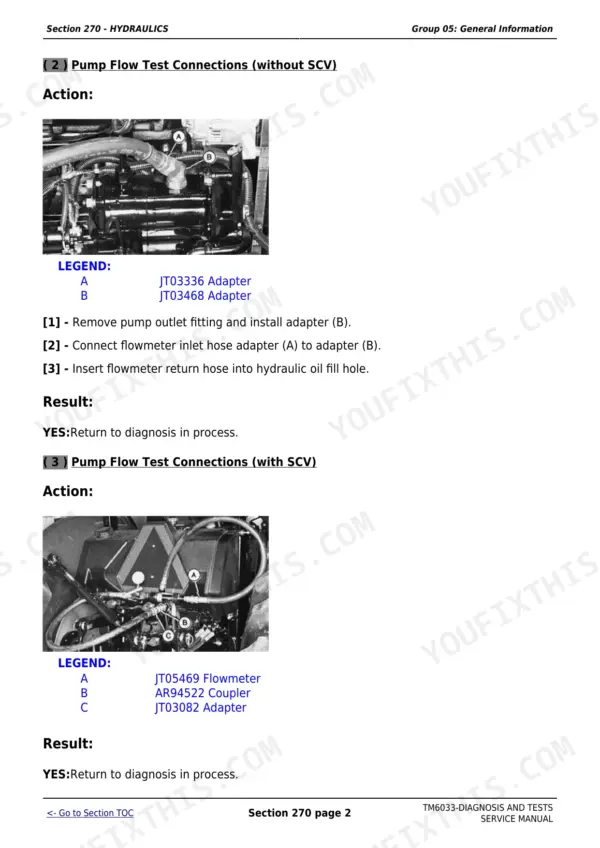
The Hydraulics section runs preliminary checks, then pump flow (47.6 to 60 Lpm spec), main relief pressure (2755 to 2855 psi), and the SCV leakage test where pressure must hold at least 5 seconds, isolating whether the pump, relief valve or a valve section is at fault.
Manual Section: Hydraulics - Tests p. 1229Stored fault codes from the CCU, HCU or PTR, or a PTO that will not engage cleanly
The Control Units section covers each controller with general references and tests and adjustments, including reading and clearing codes and testing the circuits behind them, so a PTO or hitch fault gets traced to a sensor, solenoid or wiring instead of a parts-cannon repair.
Manual Section: Control Units - Tests and Adjustments p. 636Frequently Asked Questions
My 5725 has a stored fault code. Does this manual tell me what it means and which controller set it?
Yes, and that is the spine of the book. The Control Units section carries four separate code lists, one per controller (PRF, CCU, HCU, PTR), and every line gives the code, the fault in plain words and the recovery type. Codes on these tractors read as SPN.FMI rather than short two-digit numbers, so 001638.00 is Hydraulic Oil Temperature Very Hot and 000639.12 is a lost CAN message. Once the list tells you which controller stored it, the matching test procedure sits in the same section, so you test the circuit instead of buying a sensor on a hunch. p. 636
My hitch raises slowly or drops on its own. Will this manual help me pin it down?
This is one of the most common complaints on the 5x25 series and the Hydraulics section walks it in order: preliminary checks (oil level, filter, rate-of-drop and load settings), then pump flow test (spec is 47.6 to 60 Lpm), relief valve test, and rockshaft feedback linkage adjustment at 416 mm plus or minus 4 mm. Hitch raise time should be under 3 seconds; the manual tells you what to test when it is not. p. 413
Can I reset or clear fault codes on a 5425 or 5625 with this manual?
The Control Units section covers accessing, reading and clearing stored codes through the instrument cluster for the CCU, HCU, PTR and related controllers. Fair warning from experience: clear a code without fixing the cause and it comes right back. The manual is built to make you fix the cause first. p. 618
Does it include full wiring diagrams? I have blown fuses and a blower that barely runs.
Yes. The Electrical section (pages 511-512, Section 240) includes wiring schematics for the circuits in this manual—ignition, charging, starter, and control circuits—plus diagnosis and test-and-adjust procedures. For chasing a short that keeps popping fuses or a weak HVAC blower, you get the circuit drawings with connector locations so you can test with a meter instead of pulling the whole harness apart. Note: this is not a complete wiring diagram set for the entire machine, but it covers the systems covered in this diagnostic guide. p. 511
My tractor has the PowrReverser. Is that transmission covered, or just the basic gearbox?
All three transmissions offered on these tractors are covered: Collarshift, SyncShuttle and PowrReverser, each with its own tests, theory of operation and hydraulic schematics. On the PowrReverser that matters, because clutch pack pressure tests and calibration are how you tell a worn clutch from a control problem before you split the tractor. p. 1059