
Part of the John Deere Repair Manuals.
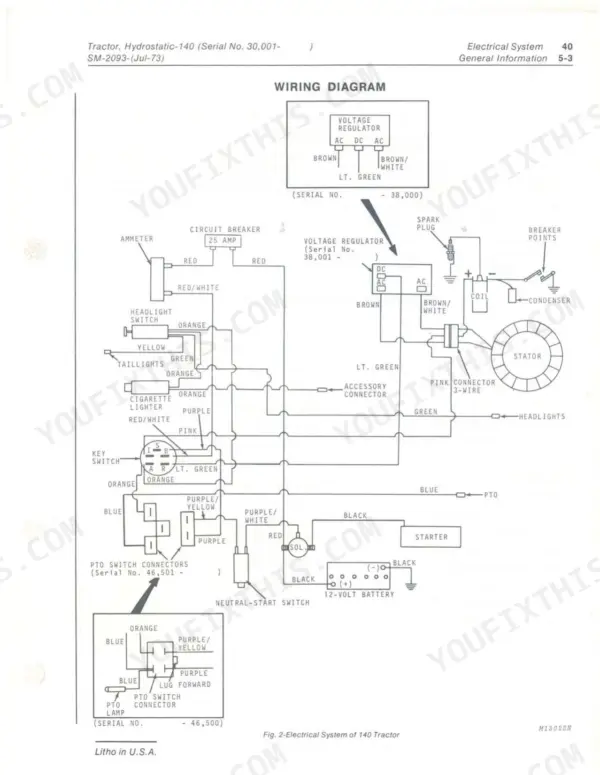
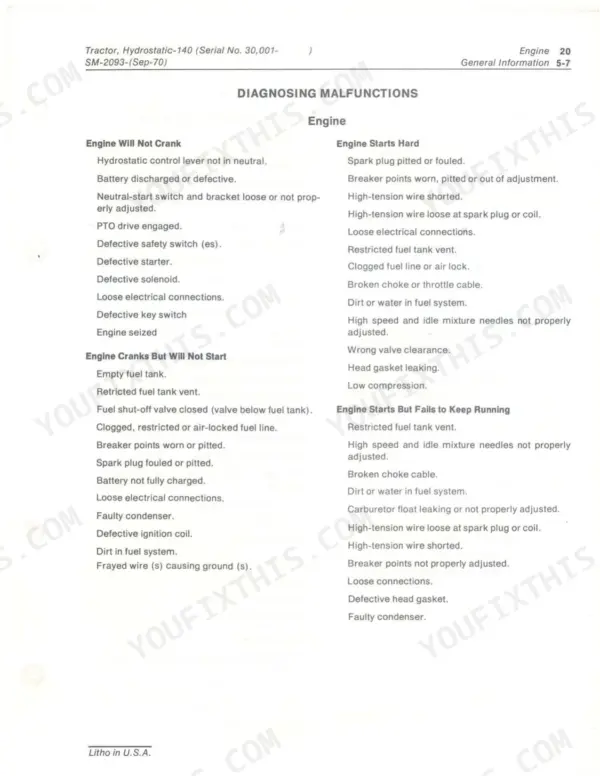
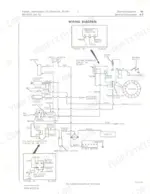
This 227-page John Deere 140 Hydrostatic Tractor Service Manual puts every system on the bench: engine, fuel, electrical, power train, and the hydraulic lift circuit that makes this compact tractor tick. You get full wiring diagrams for tracing cranking, ignition, and charging faults, plus hydraulic schematics covering the lift cylinders and control valves. Inside, a dedicated troubleshooting section walks you through diagnosing malfunctions before you pull a single bolt, backed by torque specs and tune-up adjustments pulled straight from the factory floor. Set your implement relief valve to 500 PSI, and run John Deere All-Weather Hydrostatic Fluid or Type F ATF in the transmission and rear axle, no substitutions, no guesswork. Your hydrostatic drive filter and crankcase oil intervals are spelled out too, so you're not eyeballing service life. No more chasing electrical gremlins with a test light and hope. Bookmarked by system, searchable by keyword, ready on your phone the moment you're under the hood.
What's Inside This John Deere 140 Manual
| System | Pages | Key Topics |
|---|---|---|
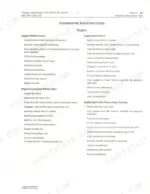
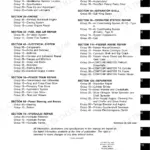
| Introduction | 3 | Service and Maintenance Information, Diagnosing Malfunctions, Analysis and Testing, Specifications, Special Tools |
| General | 4-15 | Tractor Identification, Specifications, Tune-Up and Adjustment, Fuel and Lubricants |
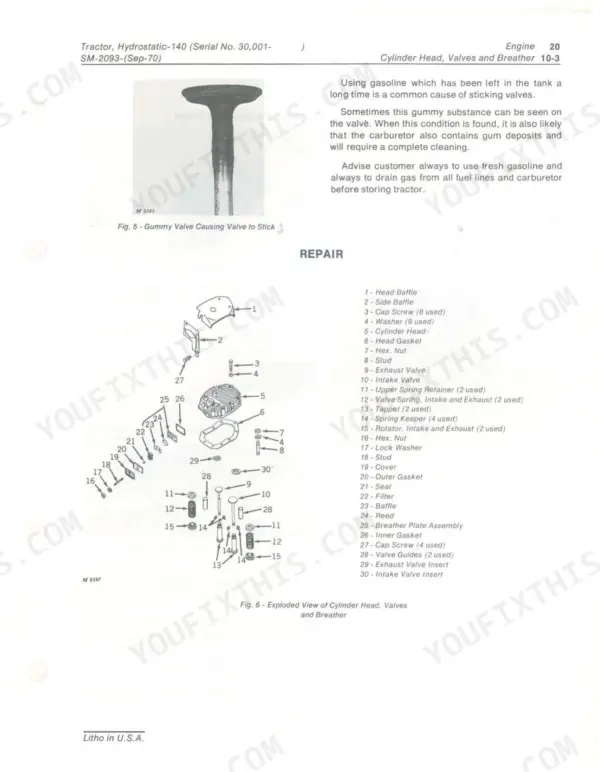
| Engine | 16-69 | General Information, Cylinder Head, Valves and Breather, Piston, Crankshaft, Main Bearings, Balance Gears, Flywheel |
| Fuel System | 70-81 | General Information, Carburetor, Air Cleaner, Fuel Strainer, Gas Tank |
| Electrical System | 82-119 | General Information, Cranking System, Ignition System, Charging System, PTO Clutch, Lights and Accessories |
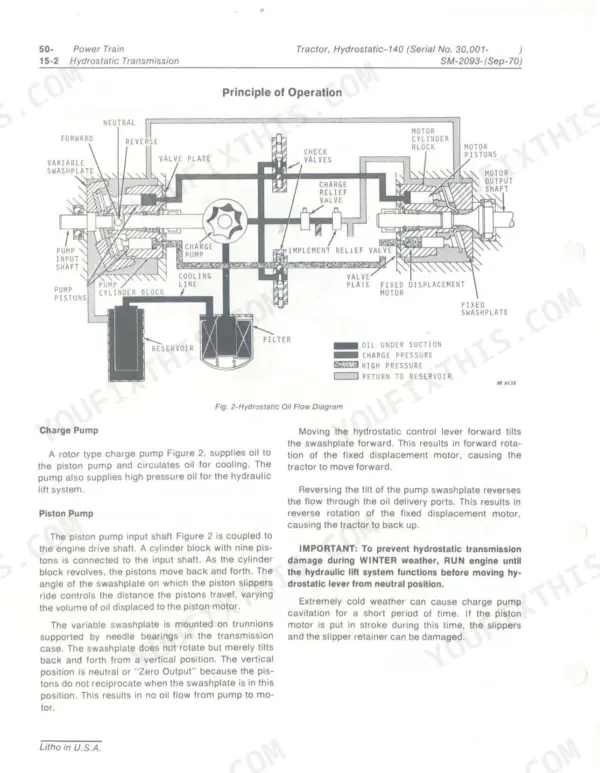
| Power Train | 120-185 | General Information, Clutch, Neutral Return and Drive Shaft, Brakes, Hydrostatic Transmission, Control Cam and Linkage, Differential and Axle |
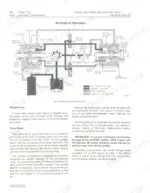
| Hydraulic Lift System | 186-199 | General Information, Hydraulic Circuits, Hydraulic Couplers, Hydraulic Control Valves, Hydraulic Cylinders |
| Miscellaneous | 200-227 | General Information, Steering Assembly, Front Wheels and Axle, Fender-Deck and Seat Assembly |
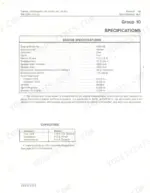
Quick Reference Specifications
| Specification | Value | Page |
|---|---|---|
| Transmission/Rear Axle | John Deere All-Weather Hydrostatic Fluid or Automatic Transmission Fluid Type "F" | p. 13 |
| Implement relief valve pressure | 500 pounds per square inch | p. 187 |
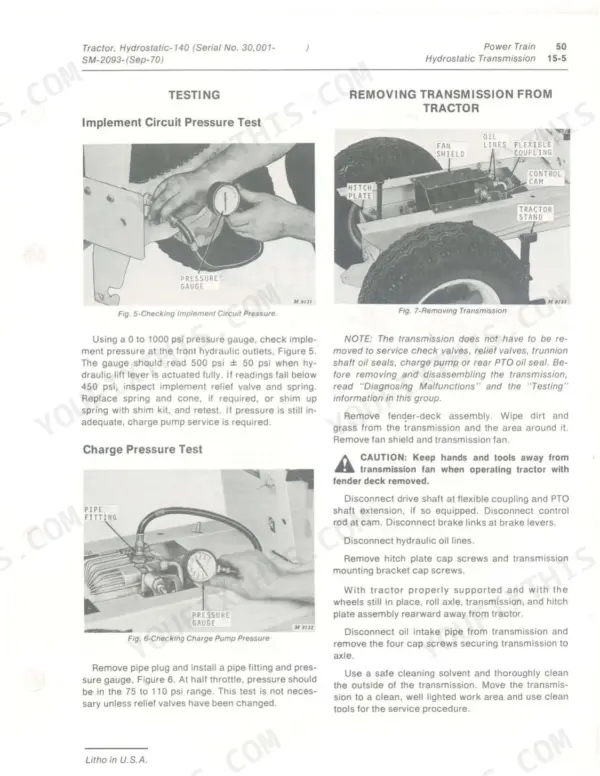
| Oil flow pressure | 75 to 110 pounds per square inch | p. 187 |
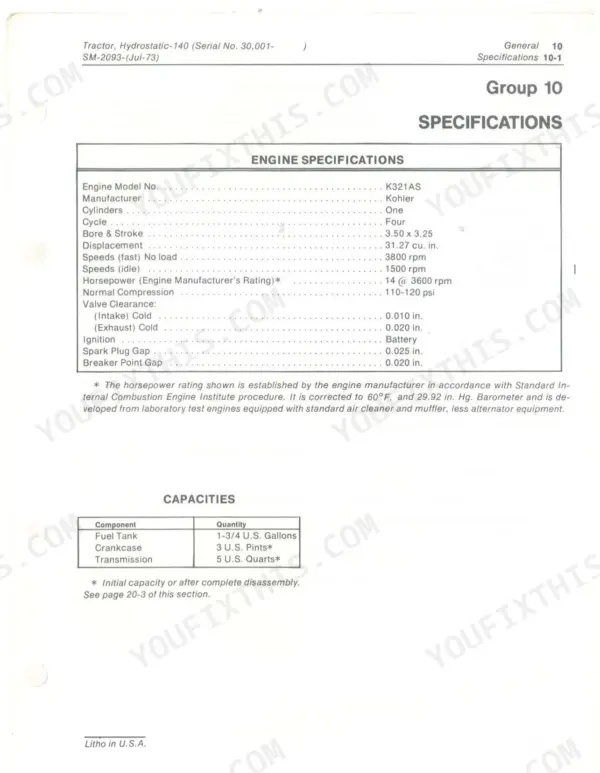
| Engine Horsepower | 14 @ 3600 rpm | p. 6 |
| Engine Normal Compression | 110-120 psi | p. 6 |
| Spark Plug Gap | 0.025 in. | p. 6 |
| Crankcase Oil Capacity | 3 U.S. Pints | p. 6 |
| Transmission Oil Capacity | 5 U.S. Quarts | p. 6 |
John Deere 140 Common Problems This Manual Covers
John Deere 140 hydrostatic transmission whining loudly under operation, worse when fluid runs low
Check the hydrostatic fluid level first; low fluid is the most common cause of whine. Refill with John Deere All-Weather Hydrostatic Fluid or ATF Type F to the 5 U.S. quart capacity on page 6. Tap a gauge into the charge circuit and confirm 75 to 110 psi per page 164; a lower reading means the pump needs the Sundstrand seal kit.
Manual Section: Hydrostatic Transmission Malfunctions p. 164Transmission leak at the check valves returns after replacing O-rings, oil seeping from valve housings
Pull the check valve bodies and inspect for hairline cracks; a leak that returns after fresh O-rings per page 161 means the valve body itself is bad, not the seal. Order the full check valve rebuild kit instead of O-rings alone, refill to the 5 U.S. quart transmission capacity on page 6, and bleed air from the circuit before road testing.
Manual Section: Hydrostatic Transmission Malfunctions p. 161Valves on top of the transmission working loose and partially depressing during operation
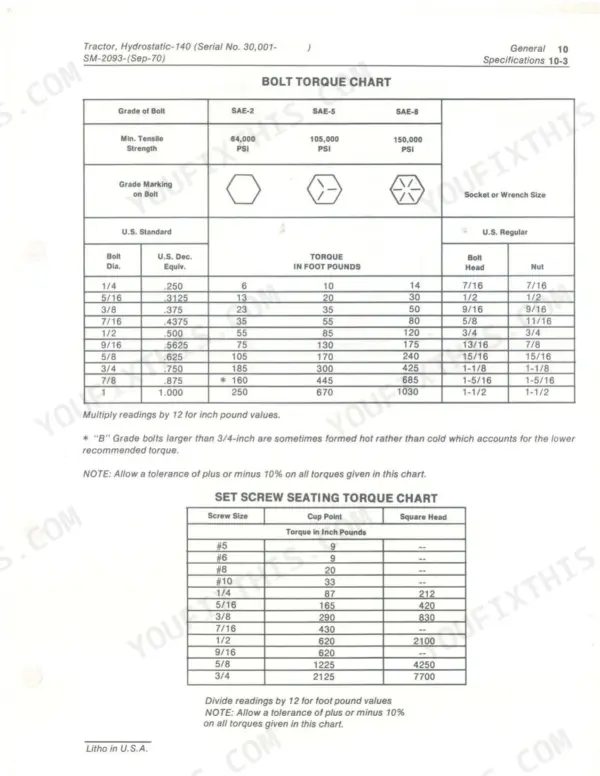
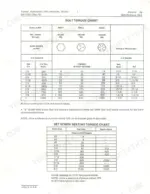
Inspect the valve mounting hardware on top of the transmission housing for looseness; a valve that partially depresses under vibration bleeds pressure and drive becomes erratic. Snug the retaining cap slightly, not tight enough to bind the spool, per the guidance on page 196. Recheck after every 25 hour oil change interval on page 13 and retorque hardware per the chart on page 8.
Manual Section: Power Train: Service Procedures p. 196Engine won't start or cranks slowly in cold weather, battery seems fine
Pull the spark plug and verify the gap is set to 0.025 in. as specified on page 6; a widened gap is a common cause of cold, hard starting. Check compression next and confirm it falls within the 110 to 120 psi range also listed on page 6. If both check out, move to the carburetor cold-start adjustment in the fuel system starting page 70.
Manual Section: Engine: Troubleshooting ProceduresHydraulic lift has little to no power, load drops back down under its own weight
Tap a gauge into the lift circuit and check the implement relief valve; it should hold 500 psi plus or minus 50 psi as specified on page 187. If pressure reads low, pull the relief valve and inspect the seat for wear. Also confirm oil flow pressure reaches 75 to 110 psi on page 187, and check the rockshaft cylinder for internal leakage letting the load settle.
Manual Section: Hydraulic Lift System Malfunctions p. 187Frequently Asked Questions
How do I adjust the hydraulic levers on a John Deere 140 Hydrostatic Tractor?
To adjust the hydrostatic control lever, first ensure the free wheeling valve is closed, the parking brake is released, and the lever is in neutral. Then, with the tractor blocked up and the engine running, move the control lever forward and reverse to check the travel distance before wheel rotation occurs. If the travel is unequal, adjust the control rod ball joint by turning it one or two turns to lengthen or shorten the control rod as needed, then repeat the check. p. 169
What are the torque specifications for engine bolts on a John Deere 140 H3?
For the K321AS Kohler Engine used in the John Deere 140 Hydrostatic Tractor, the cylinder head bolts should be torqued to 25-30 ft-lbs. The spark plug should be torqued to 27 ft-lbs. p. 36
What are the error codes for the John Deere 140 hydrostatic transmission?
The manual does not list specific error codes for the John Deere 140 hydrostatic transmission. Instead, it provides a "DIAGNOSING MALFUNCTIONS" section that describes symptoms and their probable causes for various transmission issues. p. 151
How do I tune up a John Deere 140 H3?
A tune-up for the John Deere 140 involves preliminary engine testing, minor tune-up procedures, and major tune-up procedures. Minor tune-up includes changing oil, cleaning and regapping the spark plug to 0.025 in., cleaning the air cleaner, adjusting carburetor needles, and adjusting governor speed to 3800 rpm no load. Major tune-up adds reconditioning the carburetor, inspecting the breather assembly, cleaning the engine and cylinder head fins, and testing/replacing ignition components. p. 10
How do I fix a bad key switch on a John Deere 140?
If a key switch is suspected to be bad on the John Deere 140, it should be tested for electrical continuity as described on page 92. If the tests indicate a defective solenoid or switch, replacement is necessary as the solenoid is a sealed unit and cannot be repaired. p. 92
Is this John Deere 140 Hydrostatic Tractor manual a PDF I download?
This is a 227-page searchable PDF ready for immediate download. Works on any device, so pull it up on your phone while you're under the hood. No shipping, no waiting.
Are there any print restrictions on this John Deere 140 Hydrostatic Tractor?
Absolutely. No DRM or copy protection. Print the whole manual or just the pages you need. Any home or office printer works.






Reviews
There are no reviews yet.