

Part of the John Deere Repair Manuals.
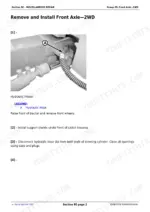
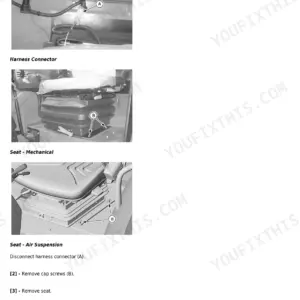
This is the factory Repair Technical Manual for the John Deere 5076E, 5076EL, 5082E, 5090E, 5090EL and 5090EH utility tractors - the book a dealer tech pulls when one of these 5E machines is on the floor with the hood off. It covers teardown and reassembly of the engine, fuel and air intake, electrical system with wiring harness routing, the full power train (clutch, synchronized and PowrReverser transmissions, PTO, differential, final drives, MFWD, creeper), steering, brakes, hydraulics from pump to rockshaft and SCVs, plus front axle, 3-point hitch, ROPS, cab, A/C and heating. Real numbers throughout: 300 N-m front wheel nut torque, 130-135 bar steering relief, 1530 kg hitch lift capacity. Dealer fabricated special tools are included.
Complete the set for your 5076E–5090EH Series
- Operation & Tests: John Deere 5076E, 5082E, 5090E Diagnostic Technical Manual — Wiring Diagrams
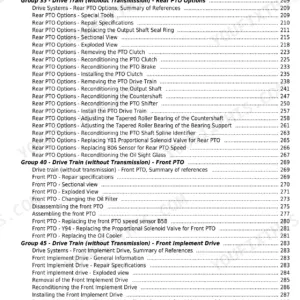
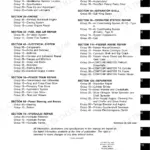
What's Inside This John Deere 5076E–5090EH Series Repair Manual
| System | Pages | Key Topics |
|---|---|---|
| General Information | 9-119 | Safety, Specifications & Capacities, Fuel and Lubricants, Serial Number Locations, Features and Accessories |
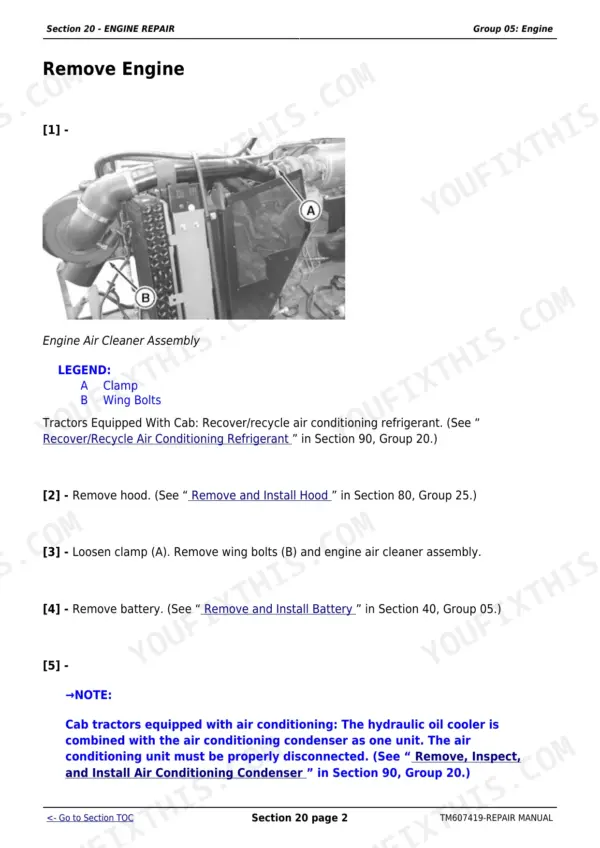
| Engine Repair | 120-178 | Engine, Cooling System |
| Fuel System | 179-227 | Air Intake System, Speed Control Linkage |
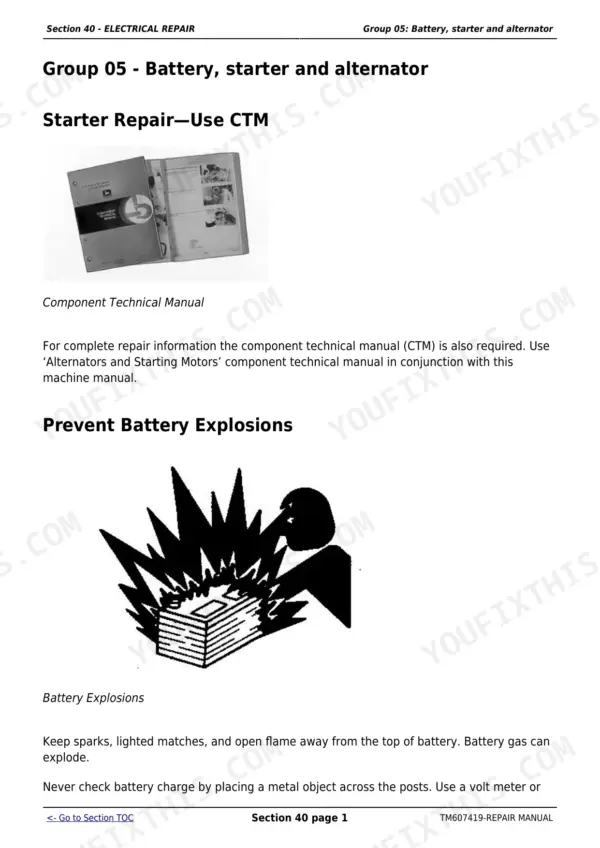
| Electrical Repair | 228-372 | Battery, Starter and Alternator, Electrical System Components, Wiring Harness |
| Power Train Repair | 373-726 | Clutch, Transmission (Synchronized and PowrReverser), PTO Drive Shaft, Differential, Final Drive, Mechanical Front-Wheel Drive, Creeper Assembly |
| Steering and Brake Repair | 727-804 | Steering, Brakes |
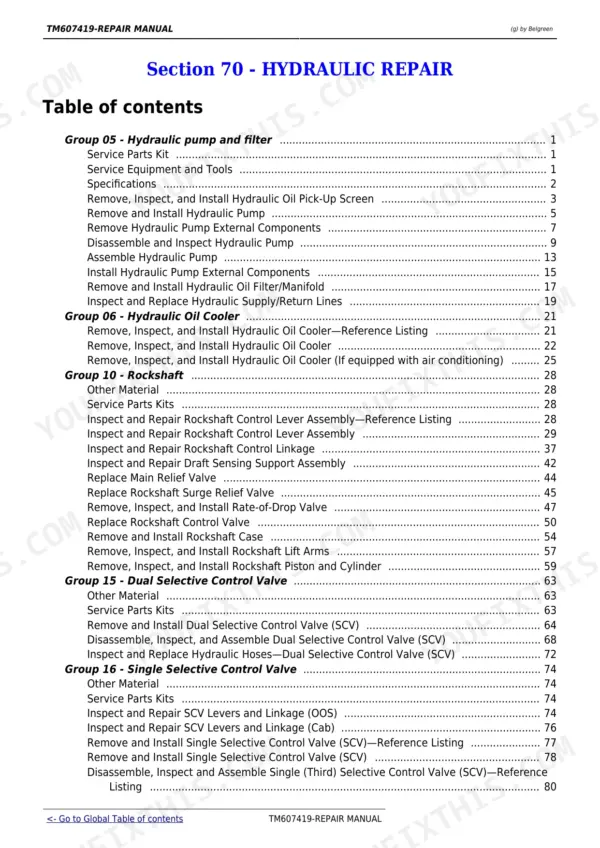
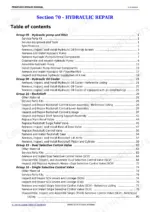
| Hydraulic Repair | 805-931 | Hydraulic Pump and Filter, Oil Cooler, Rockshaft, Selective Control Valves, Power Beyond Hydraulics |
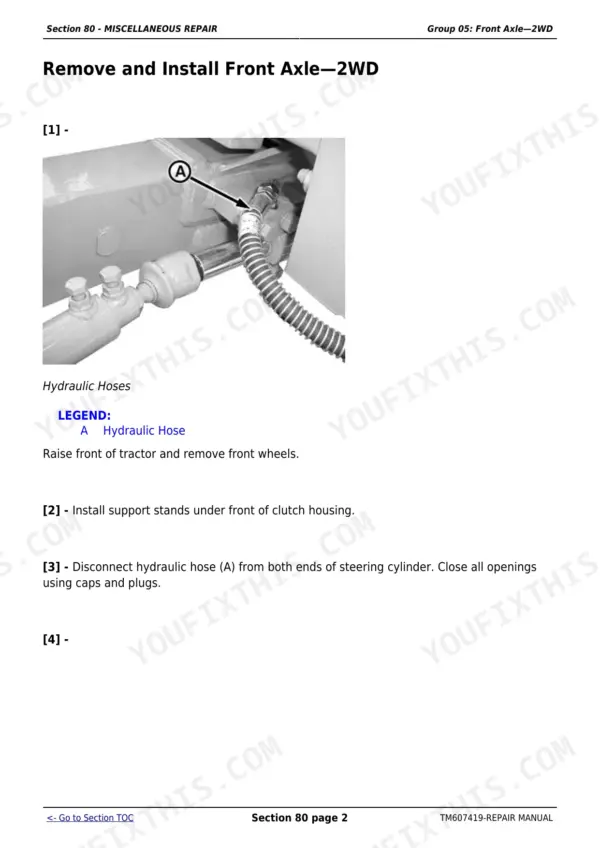
| Miscellaneous Repair | 932-1008 | Front Axle, Wheels, 3-Point Hitch, Fenders, Hood, Final Axle Spacers |
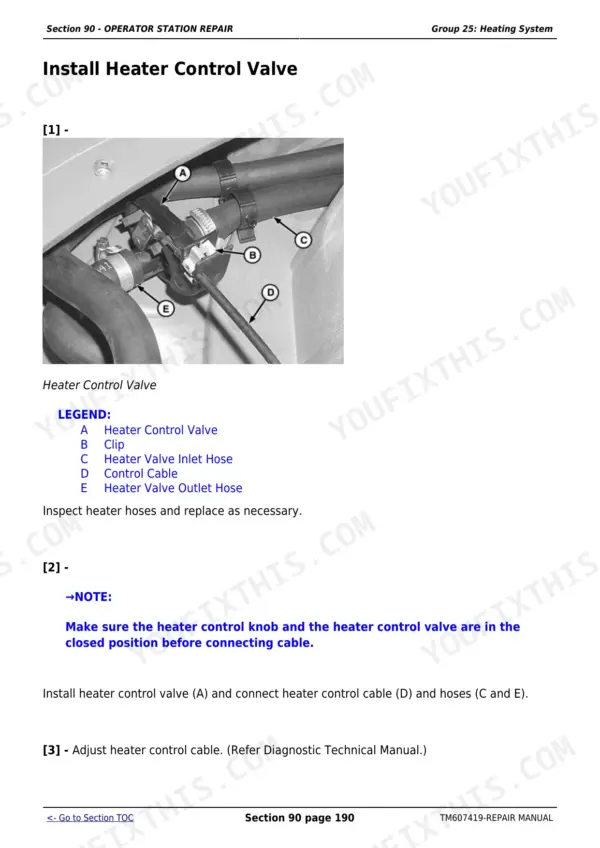
| Operator Station Repair | 1009-1200 | Seat, Control Console, ROPS, Cab Components, Air Conditioning, Heating System |
| Dealer Fabricated Tools | 1201-1205 | Special Tools |
Quick Reference Specifications
| Specification | Value | Page |
|---|---|---|
| Front wheel nuts torque | 300 N-m (220 lb-ft) | p. 628 |
| Engine-to-front-support cap screw torque | 318 N-m (235 lb-ft) | p. 120 |
| 3-point hitch lift capacity | 1530 kg (3374 lb) | p. 58 |
| Steering system max pressure | 130-135 bar (1885-1958 psi) | p. 58 |
| Implement hydraulic max pressure | 190-197 bar (2755-2856 psi) | p. 58 |
| SCV flow rate | 60.2 l/min (15.9 gpm) | p. 58 |
| Electrical system type | 12 V negative ground | p. 56 |
| Battery | 12 V 550 CCA | p. 56 |
John Deere 5076E–5090EH Series Common Problems This Manual Covers
Hydraulics respond slowly, the loader or hitch feels weak, or fluid is showing up on the ground
Start with fluid level and the filter, then gauge-test the pump against the 190-197 bar implement circuit spec. The Hydraulic Repair section walks through pump and filter service, oil cooler, rockshaft, SCV and power beyond repair so you replace the actual failed part.
Manual Section: Hydraulic Repair - Hydraulic Pump and Filter / Selective Control ValvesHard shifting, shuttle hesitation or noise from the transmission
Check oil level and condition first, since contaminated or low oil ruins drivability before anything mechanical fails. The Power Train Repair section then covers clutch service and full teardown of both the synchronized and PowrReverser transmissions with inspection points for worn components.
Manual Section: Power Train Repair - Clutch / Transmission (Synchronized and PowrReverser)Starter drags, charging is weak, or a circuit goes dead intermittently
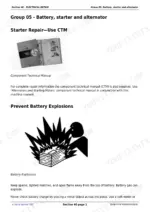
Use the wiring harness coverage to trace the circuit with continuity, voltage and resistance checks rather than swapping parts on a hunch. The Electrical Repair section covers battery, starter and alternator removal, testing and repair plus harness routing and connector locations.
Manual Section: Electrical Repair - Battery, Starter and Alternator / Wiring HarnessSteering feels heavy, wanders, or the front end has play after loader work
Pressure-test the steering circuit against the 130-135 bar spec to separate a hydraulic fault from mechanical wear, then follow the front axle and MFWD procedures for bushings and bearings. Front wheel nuts torque to 300 N-m, a spec loader tractors need checked often.
Manual Section: Steering and Brake Repair - Steering / Miscellaneous Repair - Front AxleFrequently Asked Questions
Does this manual cover the PowrReverser transmission, or just the synchronized gearbox?
Both. The Power Train Repair section has separate procedures for the synchronized transmission and the PowrReverser, plus the clutch, PTO drive shaft, differential, final drives, mechanical front-wheel drive and the creeper assembly. If you are splitting the tractor or chasing a shuttle problem, the disassembly and reassembly steps are here.
My hydraulics are slow or weak. Will this book help me find out why?
Yes. The Hydraulic Repair section covers the pump and filter, oil cooler, rockshaft, selective control valves and power beyond, with the pressure specs you need to test against - implement circuit relief is 190-197 bar and rated SCV flow is 60.2 l/min. That lets you put a gauge on it and know whether the pump, a valve or a leak is the culprit instead of guessing.
Are there fault codes or a diagnostic reset procedure in this manual?
No. This Repair manual doesn't cover fault codes or electronic diagnostics - it is the physical remove, inspect, repair and install book. John Deere publishes diagnostics in a separate companion Diagnostic Technical Manual, which this manual references throughout where step-by-step troubleshooting is needed.
Does it include internal engine overhaul specs like bearing clearances and piston specs?
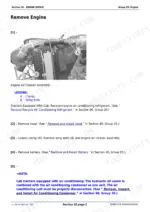
The Engine Repair section covers engine removal, installation, external components and the cooling system, with mounting torques such as 318 N-m for the engine-to-front-support cap screws. For deep internal overhaul specs, Deere puts those in the PowerTech 4.5L and 6.8L Diesel Engines Base Engine component technical manual, which this book directs you to. For in-frame service, cooling work and R&R, this manual is what you need.
Will this help me trace an electrical problem like a no-crank or a dead circuit?
Yes. The Electrical Repair section covers the battery, starter and alternator, individual electrical components and the wiring harness, so you can work through a circuit with a multimeter doing continuity, voltage and resistance checks and know where each connector and wire actually runs instead of pulling the harness apart blind.







Reviews
There are no reviews yet.