


![John Deere 200CLC 230CLC 270CLC Repair Manual [Excavator]](https://youfixthis.com/wp-content/uploads/2012/02/Manual_Download-300x300.jpg)

Part of the John Deere Repair Manuals.
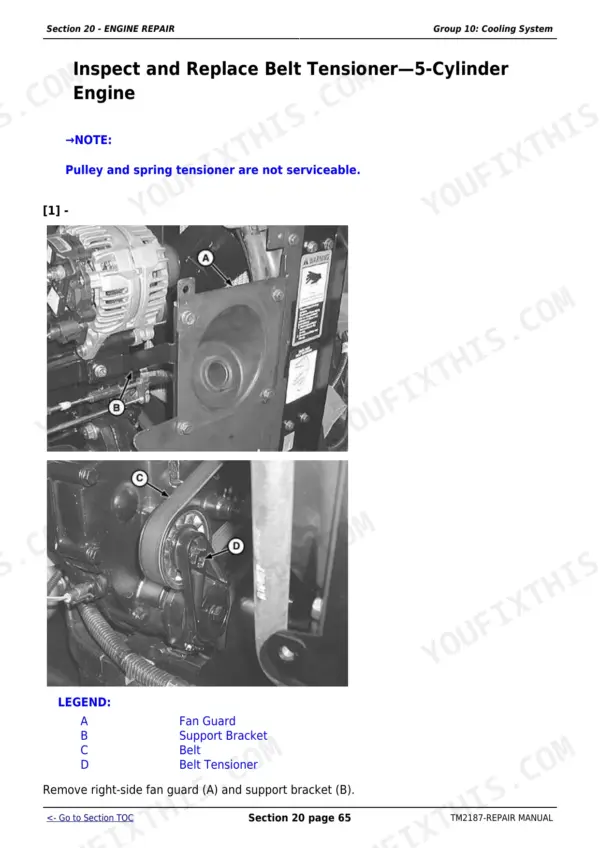
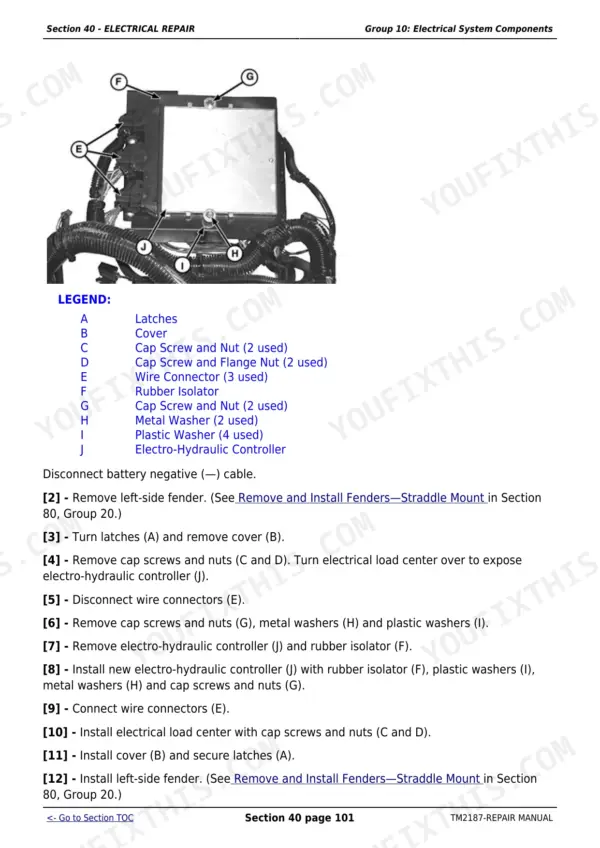
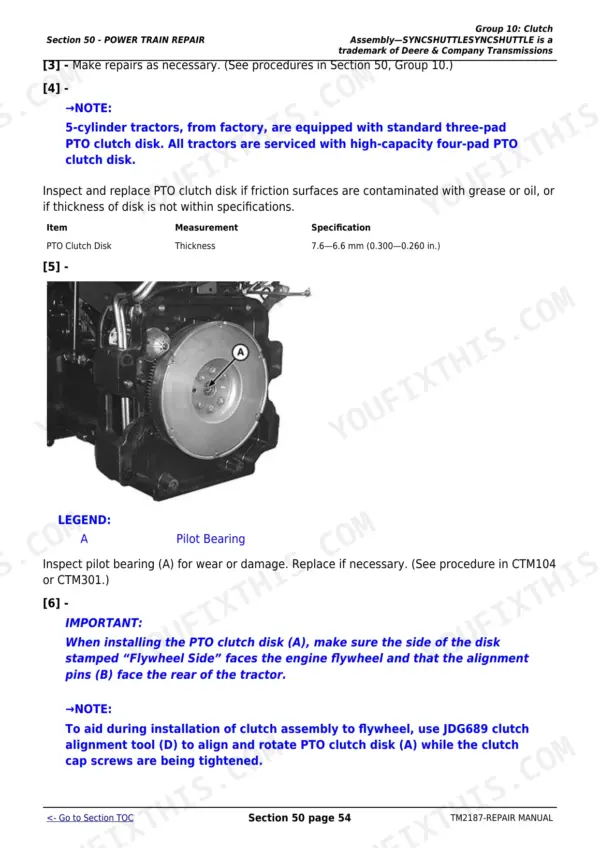
This is the complete John Deere factory repair manual (TM2187) for the 5225, 5325, 5425, 5525, 5603 and 5625 mid-range utility tractors. Across 1,529 pages it covers every major system on the machine: pulling and rebuilding the engine, servicing both the SYNCSHUTTLE and POWRREVERSER transmissions, repairing the hydraulic pump and rockshaft, tracing the full electrical system with wiring harness diagrams, and servicing the cab and operator station. It is the same information a John Deere dealer technician works from, with torque values, fluid capacities and test pressures called out so a repair is done to factory spec the first time.
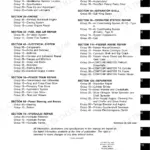
What's Inside This John Deere 5225-5625 Repair Manual
| System | Pages | Key Topics |
|---|---|---|
| General Information | Safety, General Specifications, Fuel and Lubricants, Serial Number Locations, Features and Accessories | |
| Engine Repair | Engine Remove and Install, Cooling System Service | |
| Fuel and Air Repair | Fuel System, Air Intake System, Speed Control Linkage | |
| Electrical Repair | Battery/Starter/Alternator, Electrical System Components, Wiring Harness | |
| Power Train Repair | Clutch Housing, Syncshuttle Transmission, Powrreverser Transmission, Rear PTO Drive Shaft, Differential, Final Drives, Hi-Crop Final Drives, Mechanical Front Wheel Drive, Creeper Assembly | |
| Steering and Brake Repair | Steering Repair, Brake Repair | |
| Hydraulic Repair | Hydraulic Pump and Filter, Hydraulic Oil Cooler, Rockshaft, Selective Control Valve, Hydraulic Mid-Mount Control Valve | |
| Miscellaneous Repair | Front Axle (2WD), Wheels, 3-Point Hitch, Fenders, Hood | |
| Operator Station Repair | Seat and Support, Control Console and Panel, ROPS, Cab Components, Isolated Open Operator Station, Air Conditioning System, Heating System |
Quick Reference Specifications
| Specification | Value | Page |
|---|---|---|
| 5225 | ||
| Rated Power (5225) | 42 kW (56 hp) | |
| 5325 | ||
| Rated Power (5325) | 50 kW (67 hp) | |
| 5425 | ||
| Rated Power (5425) | 60 kW (81 hp) | |
| 5525 | ||
| Rated Power (5525) | 68 kW (91 hp) | |
| 5603 and 5625 | ||
| Rated Power (5603/5625) | 74 kW (99 hp) | |
| Models with SYNCSHUTTLE Transmission | ||
| Transmission (Syncshuttle) | 9 speeds forward, 3 reverse | |
| Models with POWRREVERSER Transmission | ||
| Transmission (Powrreverser) | 12 speeds forward, 12 reverse | |
| Straddle Mount and Hi-Crop configurations | ||
| Fuel Tank Capacity (Straddle/Hi-Crop) | 96.5 L | |
| 5225 2WD | ||
| Approximate Shipping Weight (5225 2WD) | 2264 kg (4991 lb) | |
| 5425 2WD | ||
| Approximate Shipping Weight (5425 2WD) | 2585 kg (5700 lb) | |
| 5525, 5625 and 5603 2WD | ||
| Approximate Shipping Weight (5525/5625/5603 2WD) | 2823 kg (6224 lb) | |
| 5225, 5325 and 5425 2WD | ||
| Turning Radius without Brakes (5225/5325/5425 2WD) | 3444 mm (135.6 in.) | |
John Deere 5225-5625 Common Problems This Manual Covers
Hydraulic lift loses pressure or fails to raise heavy implements
First check the hydraulic filter service interval - an overdue filter is a common cause of low pump output. The Hydraulic Repair section covers removing and testing the hydraulic pump and filter, inspecting internal seals in the rockshaft, and verifying relief pressure. Rebuild the pump or replace seals in the lift cylinder as indicated, then reset relief pressure to spec before returning the tractor to work.
Manual Section: Hydraulic RepairClutch slips under load or fails to fully disengage when stopping
Clutch slip after high-hour use points to worn friction plates or glazed pressure plate surfaces. Section 50 Power Train Repair covers both the SYNCSHUTTLE and POWRREVERSER clutch assemblies - inspect clutch plate thickness against the minimum spec in that section, check pressure plate release travel, and replace the clutch pack if plates are below minimum thickness or show uneven wear patterns.
Manual Section: Power Train RepairEngine overheats during normal field operation
Overheating on these tractors is most often a blocked radiator core from chaff and debris or a failing water pump. The Engine Repair and Cooling System groups cover removing and flushing the cooling system, pressure-testing the radiator, and inspecting the water pump impeller and seal. Clean the radiator core from the rear (air blow-out), confirm the thermostat opens at spec, and replace the water pump if flow is reduced, before suspecting the head gasket.
Manual Section: Engine RepairStarter motor fails to crank or cranks slowly after 2-3 seasons of use
Slow crank or no-crank with a good battery is usually corroded battery cables or a worn starter motor after several years of cold-start cycling. The Electrical Repair section covers battery, starter and alternator service. Clean and torque both battery cable terminals at the battery and block ground, test the starter solenoid pull-in and hold-in voltages, and replace the starter motor if the no-load RPM falls below the minimum speed listed in the electrical specifications.
Manual Section: Electrical RepairFrequently Asked Questions
What are the engine power ratings for the John Deere 5225, 5325, 5425, 5525, 5603 and 5625 tractors?
Rated power steps up by model: 42 kW (56 hp) on the 5225, 50 kW (67 hp) on the 5325, 60 kW (81 hp) on the 5425, 68 kW (91 hp) on the 5525, and 74 kW (99 hp) on the 5625 and 5603. The General Specifications section lists full engine data for each model so you can confirm you are looking at the right spec sheet before any engine work.
Why does the hydraulic lift system fail to raise implements or lose pressure on these tractors?
The most common causes are a worn hydraulic pump or failed seals inside the lift cylinder or rockshaft. The Hydraulic Repair section covers removing and testing the hydraulic pump and filter, inspecting the oil cooler, and rebuilding the rockshaft so you can isolate whether the fault is a pump output problem or an internal leak in the lift circuit before you start replacing parts.
Does this manual cover both SYNCSHUTTLE and POWRREVERSER transmissions?
Yes. Section 50 covers both transmission families in dedicated groups. The SYNCSHUTTLE coverage includes 9 forward and 3 reverse speeds; the POWRREVERSER section covers 12 forward and 12 reverse with the power reverser clutch pack and solenoid valve. Clutch housing, PTO drive shaft, differential, final drives and the creeper assembly are also in that section.
How do I diagnose a starter motor that clicks but will not crank the engine?
A clicking starter with no crank is typically a battery ground problem or a failing starter motor. The Electrical Repair section covers the battery, starter and alternator, electrical system components and wiring harness. Start by checking battery voltage and the main ground cable at the block, then bench-test the starter solenoid pull-in and hold-in windings per the specification in that section before pulling the starter.
What clutch issues are common on the 5425 and 5525 and where is that covered?
Clutch slip under heavy implement loads is the most reported clutch complaint on these models. It usually traces to worn clutch plates or a clutch housing that needs attention after high-hour use. Section 50 Power Train Repair covers the SYNCSHUTTLE and POWRREVERSER clutch assemblies and the clutch housing with the removal, inspection and reassembly steps needed to restore full engagement without guessing at clearances.
Do I get instant access to this John Deere 5225 Repair?
You get a 1529-page searchable PDF (32 MB) that downloads instantly after checkout. Open it on your laptop, tablet, or phone, and bring it right to the shop floor.
Am I able to print pages from this John Deere 5225 manual?
Yes. Print the pages or sections you need for your own shop use. Any standard printer works.







Reviews
There are no reviews yet.